Occupied France, 1942. Gilles is arrested by SS soldiers alongside other Jews and sent to a camp in Germany. He narrowly avoids sudden execution by swearing to the guards that he is not Jewish, but Persian. This lie temporarily saves him, but Gilles gets assigned a life-or-death mission: to teach Farsi to Head of Camp Koch, who dreams of opening a restaurant in Iran once the war is over. Through an ingenious trick, Gilles manages to survive by inventing words of "Farsi" every day and teaching them to Koch.
Harry Haft is a boxer who fought fellow prisoners in the concentration camps to survive. Haunted by the memories and his guilt, he attempts to use high-profile fights against boxing legends like Rocky Marciano as a way to find his first love again.
1942 Paris. Annette is 20 years old, Jean is barely older, they love each other and the future is bright for them. But the deportation of the Jews of France will change their destiny. Upset at the idea of their only son marrying a Jewish woman, Jean Jausion's parents decide to keep young Annette Zelman away from them... and denounce her to the Gestapo. The machine was launched, but it was too late. Annette was deported to Auschwitz on June 22, 1942.
Set in 1901, this period epic follows Willem Morkel, a Boer family man whose wife and son are murdered during the Anglo-Boer War. Captured as a prisoner of war, Willem must survive incarceration in the notorious St. Helena concentration camp and defeat the ruthless Colonel Swannell, at his own game—Rugby
Concentration camp commander Kraft finds out that prisoner Kominek is a former professional boxer. Overnight, the prisoner is made Kraft's exercise partner and unwillingly rises to a privileged position at the camp. His anger over the death of his friend and co-prisoner leads to open revolt. The film brings a new view of human degradation during fascism by a tragic story of one man whose only chance for survival is to accept the rules of an unequal game.
The plot is based on the dramatic fate of the Red Army commander Aleksei Ivanovich Pavlov. Having been captured in January 1942 and being among the displaced persons, he didn't immediately decide to return to the USSR. Having rolled around the foreign country for 17 years, Aleksei nevertheless returned to his homeland. He goes to his brother in the south of the country to Sevastopol. Aleksei accidentally meets the doctor Anna Andreyevna, who was saved from death in besieged Leningrad. She travels by car from Moscow and also to the south, with her daughter Tanya; she suggests he join them. Aleksei tells about his life on the road.
Germany, late 90s: Johanna is an intern at a local newspaper and is struggling with the death of her grandmother. In addition to her grief, she is burdened by conflict with her family after she angrily confronts her uncle, who is only interested in his inheritance, at the funeral. She seeks balance by throwing herself headlong into her work. In the process, she comes across an old photograph of a concentration camp guard named Anneliese Deckert. With this find, she hopes to advance her journalistic career: Johanna tracks down the now 80-year-old, but does not expect to meet her entire family on the spot, nor does she expect the fuss the photo causes.
Auschwitz, la machine de mort nazie
In 1945, Allied troops invaded Germany and liberated Nazi death camps. They found unspeakable horrors which still haunt the world’s conscience. A film was made by British and American film crews who were with the troops liberating the camps. It was directed in part by Alfred Hitchcock and was broadcast for the first time in its entirety on PBS FRONTLINE in 1985.
George Stevens's remarkable film is acclaimed by historians as the most important colour footage taken during the war. Milestones covered include the liberation of Paris, the link-up between the Russian and American armies on the River Elbe and the Allied capture of the Dachau concentration camp.
A biography of Auschwitz commander Rudolf Höss.
In one of the occupied European cities, the commandant of the garrison gathers a troupe of circus performers. Coming from different countries, they are in the humiliating position of people forced to serve their enslavers. Many of them, recruited from camps and workhouses, were quite content with their lot. Only after a chain of subsequent events, the artists raise an uprising. Unarmed people are not able to resist the arrived guards. They die, but at the cost of their lives they regain their lost human dignity.
The story of black and mixed race people in Nazi Germany who were sterilised, experimented upon, tortured and exterminated in the Nazi concentration camps. It also explores the history of German racism and examines the treatment of Black prisoners-of-war. The film uses interviews with survivors and their families as well as archival material to document the Black German Holocaust experience.
Nazi occupied Poland, during the World War II. Hans, a former brilliant student, has become an SS officer stationed at the Auschwitz-Birkenau concentration camp. When he is commissioned by his superior officer to build an efficient gas chamber, Hans, facing the harsh reality, begins to realize the magnitude of the atrocious acts of which he is being accomplice.
A Jewish couple and a homosexual doctor fall to prejudice and scandal in 1938 Italy.
Manuel passes 18 months at Buchenwald before his return to Paris. He wonders even before his arrival who will have the patience and passion to listen to his narrative. He chooses silence.
The commandant of Auschwitz, Rudolf Höss, and his wife Hedwig, strive to build a dream life for their family in a house and garden next to the camp.
In the last days of the Nazi-occupied France, writer Marguerite Duras awaits the return of her husband, Robert Antelme, arrested for being a Resistance fighter and then deported, while she maintains a tense relationship with her ambiguous lover and a dangerous game with a French collaborationist. Even when the Liberation arrives, she must still endure the unbearable pain of waiting.
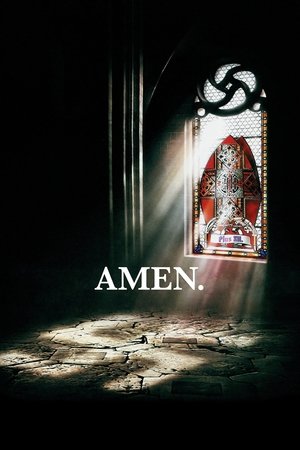
Kurt Gerstein—a member of the Institute for Hygiene of the Waffen-SS—is appalled to discover that a poison gas he helped discover is being used to kill Jews. Driven by his conscience to alert the rest of the world, Gerstein teams up with a young Jesuit priest, Riccardo Fontana, but their protestations fall on deaf ears in the Vatican.
The story of Jewish counterfeiter Salomon Sorowitsch, who was coerced into assisting the Nazi operation of the Sachsenhausen concentration camp during World War II.