An English peace judge in an Irish district is married to an Irishwoman. She is a caring patriot. He is heavily indebted by a life of luxury, and doesn't shy away from dark deeds to maintain his lifestyle. Anti-Britsh propaganda film.
In 1912, the Titanic embarks on its inevitable collision course with history. In the wake of the over-spending required to build the largest luxury ship in the world, White Star Line executive Sir Bruce Ismay schemes to reverse the direction of his company's plummeting stock value. Onboard the Titanic, brave German 1st Officer Petersen struggles to convince his self-important British superiors not to overexert the ship's engines.
In a settlement in the northern mining country. The Marles, Bréhard and Gohelle families wake up and prepare for a new day at work. The young engineer Larzac, newly appointed to the mine, will soon oppose the authoritarian and conservative methods of his superior Dubard. Georges Gohelle would like to marry Marie Bréhard, but housing difficulties thwart their plans. Brezza, a Polish immigrant, who must return to his country, would like to hate his marriage to Louise Gohelle. Roger, Marie's little brother, has just turned 14. He does not want to go down to the mine as his elders have always done. He will however have to resign himself to it. Marles evokes for him the social struggles of 1906. Roger is injured during a landslide. In front of his family and his friend Marles, who had come to the hospital, he announced his decision to continue his profession. Larzac, invited to the Marles, reveals that he refused a quiet position at the Charbonnages de Paris. He too stays.
A Nazi propaganda movie from 1941 directed by Max W. Kimmich, covering a story of Irish heroism and martyrdom over two generations under the occupation of the British.
A newlywed fears she's going mad when strange things start happening at the family mansion.
Shortages in postwar Berlin have created a blooming black market, and the goods rounded up during a major police raid all seem to come from the same source. The trail leads Commissioner Naumann to the Alibaba Cabarett, but he is unable to find conclusive evidence to convict its owner Goll.
Non-musical account of Puccini's opera: Tosca and Cavaradossi are in love, but the tyrant Scarpia desires Tosca and oppresses Cavaradossi who is fighting for freedom.
A musical film based on biographical facts about Clara Wieck's love for composer Robert Schumann (1810-1856), her marriage against her will, Schumann's triumph, and his tragic end due to mental illness. The film is beautiful and entertaining, full of noble spirit and beautiful words about art and love, which only conflict in a theoretical context; not least thanks to its solid cast, this film is quite serious and far from kitsch. Completed in 1944, during World War II, the film was rejected by the Nazi leadership, but was eventually released and enjoyed success with an audience already weary of war.
The famous tightrope artist Truxa is drinking at the Artisan bar in New York. He meets a young man, Husen, and gives him his stage name Truxa. He is to take the real Truxa's place at a circus show in Wintergarten, Berlin.
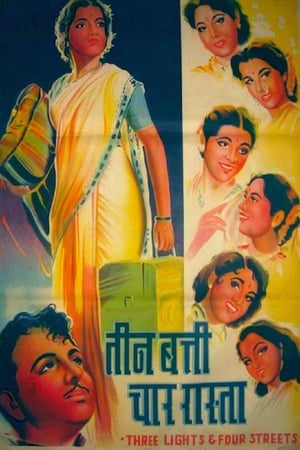
Ramesh, the youngest son of a well-to-do family, falls in love with a woman he hears singing on the radio -- even though he's never seen her. When he finds out his mystery woman is Ksama, a servant in his parents' house, everything is thrown into turmoil. Will Ramesh accept Ksama? Will they get married? Love may just conquer all in this classic Bollywood melodrama.
Professor Sonnenbruck is a scientist who is not particularly interested in politics. Even the meeting in 1943 with his former assistant Peters does not change him. He does not betray Peters, who has escaped from a concentration camp, but that is already enough for him. But after the war Sonnenrbruck gets into a conflict of conscience. He thought that science was finally free of politics again only to find the opposite happening at his university in Göttingen. A medical congress in the GDR brings him together with Peters, who is working on a major research contract there. Sonnenbruck decides to visit Peters.
Carola has been running the family-owned circus alone since her husband’s death, but she suddenly finds herself at odds with her three adult sons who are also performance artists and want to have a say in how the business is run. The family discord leads Carola to turn her back on the circus, leaving the three inexperienced sons in charge. This turn of events forces the family to learn to work together or face bankruptcy.
The lives of a young man and woman, an infamous gangster and a group of street kids converge one day in a volatile New York City slum.
Famous Romania communist propaganda movie, one of the templates to what followed. It is about the volunteers that built the Bumbești-Livezeni railroad.
Communist Szczęsny juggles between his revolutionary activities and love to a fellow party member Madzia in this sequel to "Cellulose".
The young Schiller, whose heart and soul are writing and poetry, is forced into the military academy (the pride and joy of the Duke of Württemberg). Schiller is disgusted by the everyday routine of the military, always back and forth between breeding and drills. Conversation, conflict or even critique are discouraged – the oppression insufferable for the young rebel. Disgusted by the brutality, he writes his drama "The Bandit", which he would later publish anonymously. But following a frank conversation with the Duke, Schiller is dishonored and must leave the land.
Roberto, a 10-year-old boy, is drawn to music. An old organist discovers his gifts, and begins his musical education which will lead him to the head of an orchestra.
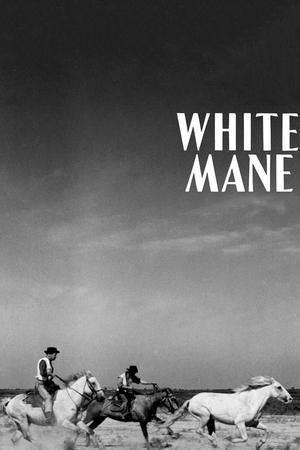
In the south of France, in a vast plain region called the Camargue, lives White Mane, a magnificent stallion and the leader of a herd of wild horses too proud to let themselves be broken by humans. Only Folco, a young fisherman, manages to tame him. A strong friendship grows between the boy and the horse, as the two go looking for the freedom that the world of men won’t allow them.
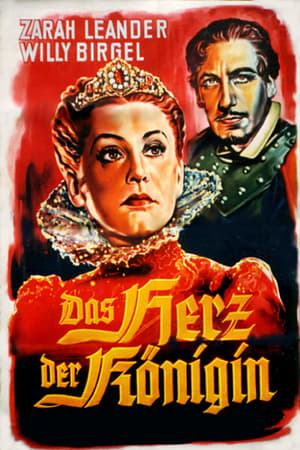
As the title "The Queen's Heart" suggests, this early German black and white version of Mary Queen of Scott's eventful reign and death focuses on her emotional perception rather lyrically, with some songs, mainly by her.
A female worker in Socialist Hungary gains the acceptance of her male colleagues.