Toro (Spanish for "Bull") is a young con man and the right hand of Romano, a powerful mob boss in Torremolinos, Málaga (Andalusia, south to Spain). After Toro decides to leave Romano to get a life free of crime, his last sting fails, resulting one of his brothers dead and he sent to jail. Five years later, Romano realizes that López, Toro's older brother, is robbing him money from his tourism business and he orders to kidnap Diana, López's little daughter, until this one get back the money. Without options, López visits Toro, now a touristic driver with the third grade prison close to get the parole, who only wants to be free to marry his girlfriend Estrella. When Toro accepts to help López and both meet Romano looking for a solution, Toro ends attacking Romano's men and fleeing with Diana, trying to escape from Romano's revenge. But Romano starts a ruthless searching for they three, meanwhile Toro counts the hours to back the prison according to the third grade...
Three celluloid letters sent from different parts of the globe to Paul Morrissey, director of Trash, Flesh and Heat, collaborator with Warhol and agent for the Velvet Underground.
A TV film made as part of The Buick-Electra Playhouse.
The theatre as a courtroom, the courtroom as a theatre. Alejo Moguillansky’s film draws loosely on Raúl Quirós Molina’s El pan y la sal (The Bread and the Salt), a 2015 verbatim theatre piece compiled from the testimonies provided during the 2012 trial of Judge Baltasar Garzon, for investigating the forced disappearances of the Spanish Civil War and the Franco regime. Juxtaposing the testimonies of the relatives of those who lost loved ones with references to Argentina’s and Chile’s recent dictatorships, this film explores issues around international law and forced disappearance - tracing a line between Francisco Franco, Augusto Pinochet and Jorge Videla’s Military Junta: Garzón has investigated Argentine torturers and criminal perpetrators and had Pinochet arrested in London in 1998 for crimes against humanity.
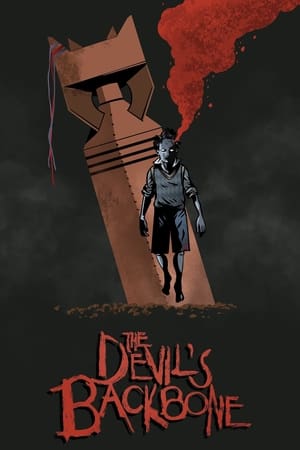
This drama concerns a seven-year-old boy, Pepe Luis (Lucas Martin, as the younger Pepe and Paco Rabal Cerezales as Pepe at ten) who lives through the rise of Franco and the ensuing years under the fascist dictator. Presented from the perspective of the young Pepe, the Civil War and Franco are irrelevant to his own concerns: daydreaming about a pretty girl he likes, fighting with other boys, helping the priest at a funeral service, and similar activities. Pepe lives with his uncle and grandparents, and whether he is aware of it or not, the war impinges on their lives in several ways. The title of the film derives from little Pepe's contention that God is not responsible for the war, just some "bastard brother" of the Creator.
The sailor Quico Carola, alleged war hero of the Francoist side, emigrated to America and amassed a great fortune. Fifteen years later he returns to Ferrera (Asturias), his homeland, in search of a wife who makes him forget his late girlfriend. There he will see his old friends and Armandina, the widow of a Republican shot during the Spanish civil war.
Manuela is left behind when her husband Justo fights for his ideals against Franco's Nationalists during the Spanish Civil War. He is deported to a concentration camp, and upon his release, continues the fight against nationalism in the French resistance. Years pass without a word from him, but his wife never gives up hope of seeing him again.
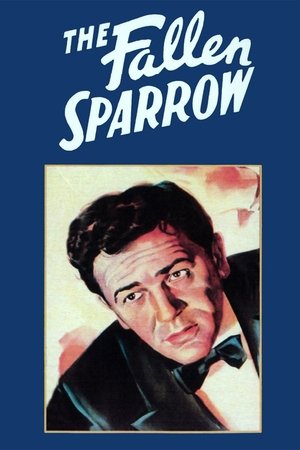
Imprisoned during the Spanish Civil War, John "Kit" McKittrick is released when a New York City policeman pulls some strings. Upon returning to America, McKittrick hears that a friend has committed suicide, and he begins to smell a rat. During his investigation, McKittrick questions three beautiful women, one of whom has a tie to his refugee past. Pursued by Nazi operatives, McKittrick learns of the death of another friend, and begins to suspect the dark Dr. Skaas.
Robert is a war photographer who moves to an andalusian village after the Spanish Civil War, watching in the population a panorama of sadness and pain. Because of his arrival, stories that happened there in the past resuscitate.
During the Spanish Civil War, a family of farmers must face the fascist threat. Tired of turning the other cheek, they will make an unexpected decision.
Based on the life of Marino Ayerra, who was appointed as parson priest of Alsasua (Navarra) two days before the start of the Spanish Civil War.
In the last four days of his life, fear took over the figure of the poet Federico García Lorca.
When, in a very strict Catholic school, a teacher enters a bathroom and surprises two students engaged in forbidden sexual practices, some of their classmates do not know whether to remain silent or rat out their own friends when questioned by school authorities.
At the end of the Spanish civil war, Fando, a boy of about ten, tries to make sense of war and his father's arrest. His mother is religious, sympathetic to the Fascists; his father is accused of being a Red. Fando discovers that his mother may have aided in his father's arrest. Sometimes we witness Fando imagining explanations for what's going on; sometimes we see him at play, alone or with his friend Thérèse. Oedipal fantasies and a lad's natural curiosity about sex and death mix with his search for his mother's nature and his father's fate. Will Fando survive the search?
A short opera about the assassination of poet and dramatist Federico García Lorca at the hands of Nationalist forces at the beginning of the Spanish Civil War.
Spanish poet Federico García Lorca is condemned to death by Captain Nestares after an absurd interrogation that serves to make it clear to the people that the Spanish Civil War is a war of ideas, and that there is no place for individuals like Lorca in Spain.
At the outbreak of the Spanish Civil War, the nun Maria is forced to flee her convent. She takes refuge in a brothel, until it is liberated by a woman's anarchist group. Maria joins the group and eventually goes to the front. The women's group faces the problems of fighting not only the nationalists, but also factions on the left seeking to impose a more traditional military structure.
Spain, 1973. Dictator Francisco Franco has ruled the country since 1939 with an iron fist; but he is now a very old and sick man. The future of the weakened regime is in danger. Admiral Carrero Blanco is his natural successor. The Basque terrorist gang ETA decides that he must die to prevent the dictatorship from continuing.
The young but traveled Ana arrives in a manor in the countryside of Spain to work as nanny of three girls and finds a dysfunctional family.
This is movie is about the story of the people who keep on fighting after the Spanish Civil War were officially finished. They were republicans who took shelter among the mountains (principally the mountains in the north of Spain, between Asturias and León). These people were called "maquis" and defended the thought of a Spain free of the implacable fascism of the illicit military government of General Franco, who took the power in a bloody cruel civil war. Ramiro, Santiago and Gildo are the three main characters of the movie. Santiago and Gildo got killed and eventually Ramiro decided to escape to France, bored of being isolated by the democratic governments of other countries in Europe what kept General Franco in despite of the Republican Government, elected by the Spanish people and not by the power of guns.