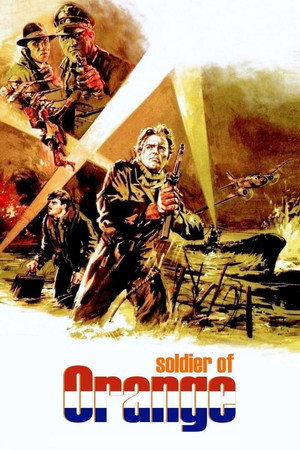
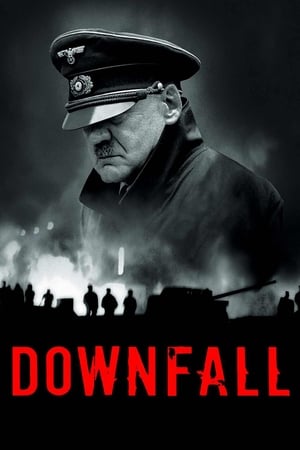
The year is 1940 and Nazi Germany is at the height of its military prowess, having captured most of Europe and eyeing the Soviet Union to the East. The Russian military command suspects hostile intent from Germany and so arranges for its spies to infiltrate ranks of the German military and the SS. Alexander Belov is a Russian spy, who travels from Soviet-held Latvia to Nazi Germany under an alias of Johann Weiss. His mastery of the German language, steel nerves and an ability to manipulate others help him to use his connections in the SS to ascend the ladder of the German intelligence. He uses his position to identify sympathetic Germans, who help him to procure vital intelligence, and to help local resistance movements in their collective fight against Nazism.
Short documentary about the Italian town of Salò during World War 2 and what it endured.
On the Pacific front, towards the end of World War II, Japan's imperial armed forces launched 'kamikaze' attacks - suicide missions by aircraft laden with bombs. It was a mad operation with no hope of returning alive, but the nation went wild, and the attacks continued for ten months, literally until the very last day of the war. Close to 4,000 Japanese airmen died, and nearly 7,000 Allied military personnel were killed, and thousands more were injured by the attacks. How could this happen? Utilising 15 years' worth of extensive interviews with US and Japanese World War II veterans, Takayuki Oshima’s film delves into the mechanism of how a crazed madness swept through an entire nation.
Mexican American Rodolfo P. Hernandez faced death along the 38th parallel, earning a Congressional Medal of Honor for valor during the Korean War. A story of heroism, perseverance and service, Hernandez proved that even in the most dire circumstances a wounded soldier can accomplish his mission and go on to greater service as a veteran.
Mai 40, les 30 jours du désastre
Stella, grows up in Berlin during the rule of the Nazi regime. She dreams of a career as a jazz singer, despite all the repressive measures she is forced to go into hiding with her parents in 1944, her life turns into a culpable tragedy.
About the events of the final stage of the Second World War — the defeat by Soviet and Mongolian troops of the selected Kwantung army. Bacteriological weapons were created in the laboratory of Japanese General Ishii Shiro. Experiments were conducted on prisoners of war and political prisoners. Epidemiologist Dmitry Sokolov was assigned to solve the mystery of this laboratory. At the cost of his own life, he completed the task. The march of Soviet and Mongolian formations through the Gobi sands and the Khingan spurs was not only a brilliant military operation, but also a warning of the use of bacteriological weapons by Japan.
Besides martial arts, Bruce Lee's contribution to Chinese society was instilling a strong sense of nationalism. After his death, anti-Japanese films found new breathe especially in Taiwan. Based on a King Hu’s script, Heroes Of The Underground tapped into Lee's nationalistic fervor and the Confucian ethic of country above family and starred the popular Ching Li as a World War II, Chinese secret agent planted into the Japanese Headquarters at Changsha. Tears flow in the name of country pride.
In 1942, a convoy of 35 civilian ships, carrying vital supplies from Iceland to the Soviet Union, faces deadly challenges in the Arctic. Despite Allied naval escort, catastrophic intelligence errors expose the convoy to relentless German air and naval attacks. In the brutal conditions, inexperienced civilian sailors fight for survival, with only 12 ships making it to their destination.
A group of partisans fight to the last man to cover a retreat, leaving only five, who take the newborn child of a dead woman with them. Based on the novel by Mihajlo Ranovcevic.
Continuing their exploits against the Yugoslav National Liberation Army, the Ballists attack an echelon of wounded warriors led by Dr. M. He takes the wounded to a nearby town. Aware that the justice is on the side of Doctor M., Ramadan, son of one of the Ballist leaders, joins him and contributes to defeat of the Ballists.
Professor Lo Yeung-guo (Hou Yao) and his students escape death from the Japanese army, and call on villagers in the countryside to form a guerrillas group. His son Lo Yung (Lau Hark-suen), however, indulges in debauchery. Entrapped by the Japanese, chicken-hearted Yung leaks information about the guerrilla that leads to deaths and injuries in the group. Yeung-guo reprimands his son for being an invisible traitor, inflicting even more harm than an outright traitor. Placing righteousness before family, he decides to execute his own son. As a writer-director-actor in the film, Hou Yao proclaimed his unwavering stance on resistance on the screen, and delivered a scathing attack on the cowardly ‘invisible traitors‘ at that time. Not long after, Hou was sadly arrested and executed by the Japanese army in Singapore.
Belgique nazie
During the German occupation of World War II, François, Eusèbe, and Lisa, three courageous children, embark on a secret adventure: resisting the Nazis in the heart of France. Through sabotage, hidden messages, and perilous escapes, they carry out clandestine actions right under the enemy's nose. Daring and friendship are their only weapons in the fight against injustice.
August 1944. With the American Eighth Air Force poised to strike over Nazi Germany, British Intelligence learns that they could be flying into a deadly trap. With only hours to spare, Flight Lieutenant Edward Barnes must fly a life and death mission over Berlin in his unarmed Spitfire to obtain photographic evidence and save the lives of 1200 men.
Following the tradition of military service in her family, Alene Duerk enlisted as a Navy nurse in 1943. During her eventful 32 year career, she served in WWII on a hospital ship in the Sea of Japan, and trained others in the Korean War. She became the Director of the Navy Nursing Corps during the Vietnam War before finally attaining the rank of Admiral in the U.S. Navy. Despite having no other women as mentors (or peers), Admiral Duerk always looked for challenging opportunities that women had not previously held. Her consistently high level of performance led to her ultimate rise to become the first woman Admiral.
Nazi propaganda film about the Condor Legion, a unit of German "volunteers" who fought in the Spanish Civil War on the side of eventual dictator Francisco Franco against the elected government of Spain.
USSR, November, 1941. Based on the account by Vasiliy Koroteev this is the story of Panifilov's Twenty-Eight, a group of twenty-eight Red Army soldiers commanded by General Ivan Panfilov, that stopped the advance on Moscow of a column of fifty-four Nazi tanks of the 11th Panzer Division for several days. Though lightly armed they fight tirelessly and defiantly, with uncommon bravery and unwavering dedication, to protect Moscow and their Motherland.
An unassuming young lawyer leads a fight against the Nazis near the end of the Second World War.
This Danish movie "Out of The Darkness" ( in Danish 'De Forbandede år 2' ) is a continuation of the popular WW II drama "Into The Darkness" ( in Danish 'De forbandede år' ) and it portraits the Danish Resistance movements fight. This movie takes place after 1943 where the official politic of 'corporation' comes to an end, and the Danish Resistance movement is gaining traction. The movie follows the Skov family from 1943 to the end of WWII. The growing opposition to the occupation and the increased brutality of the Germans have fatal consequences for the family.