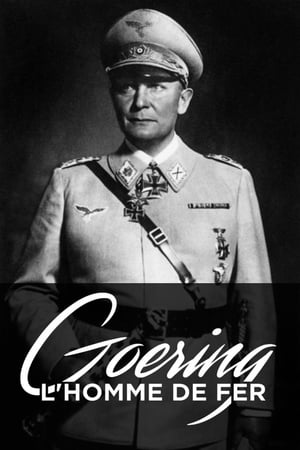
This is the story of an incredible rise to power, the most comprehensive documentary on Hermann Goering ever made. He was a man of many faces: vain, ambitious, more brutal than any other of Hitler's minions, yet the most popular Nazi official of all, at times even more popular than Hitler himself. He embodied the jovial side of the Third Reich. Yet the same man who organised dissolute bacchanals also founded the Gestapo, set up the first concentration camps, and had his own comrades murdered in the purge of 1934. These unique personal records form the largest and most important single film find from the Nazi era in past years.
The film begins with the First World War and ends in 1945. Without exception, recordings from this period were used, which came from weekly news reports from different countries. Previously unpublished scenes about the private life of Adolf Hitler and Eva Braun were also shown for the first time. The film was originally built into a frame story. The Off Commentary begins with the words: "This film [...] is a document of delusion that on the way to power tore an entire people and a whole world into disaster. This film portrays the suffering of a generation that only ended five to twelve. " The film premiered in Cologne on November 20, 1953, but was immediately banned by Federal Interior Minister Gerhard Schröder in agreement with the interior ministers of the federal states of the Federal Republic of Germany.
For the first time, some of Vidkun Quisling's closest followers as well as his opponents come forward and describe their impressions of the Norwegian Nazi leader. The documentary uses unique archive material; films, photos, secret documents, letters and facsimiles. Quisling's own words are also presented to give a deeper profile of the man who still is a Norwegian riddle.
This movie tells a true story about events in Zagreb in 1941. Nazis and their collaborators organized the great gathering of students on Dubrava stadium. The intention was to publicly separate Jews from them which would lead to future pogrom. The event, however, took an unexpected turn.
Prince Siddhartha is heir to the Shakya kingdom, which is constantly at war with the more powerful Kosala kingdom. His father tries to raise as him as a warrior leader and to shield him from the miseries of the world. Meeting the young outcast girl Migaila, Siddhartha experiences love for the first time but also witnesses the suffering that afflicts humankind. Meanwhile, in Kosala, Chapra rises through the military, despite his lowly origins, to become a hero and general of the army. A final showdown between the two kingdoms forces Siddhartha to re-evaluate the path he is following.
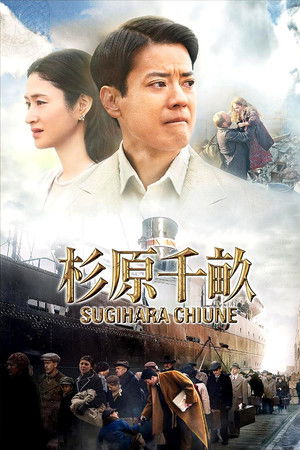
The story of a Japanese diplomat, sometimes called the Schindler of Japan, and his life lading up to and after his decision to issue over 2,000 visas to Jewish refugees in Kaunas, Lithuania resulting in saving the lives of over 6,000 people. This is the story of a man who believed in doing all he could do for the benefit of his beloved Japan, including trying to keep her from becoming embroiled in a worldwide conflict he saw as inevitable. Along the way, he came face to face with the plight of the European Jews as they tried to escape the onslaught of the Nazi's and the rapidly advancing German army. Caught between the unbending policies of his country now bound by treaty with Nazi Germany and his awakening moral responsibilities, we follow his life from his early days in Manchuria to his eventual posting in Lithuania and his appointment with destiny which would forever brand him a hero.
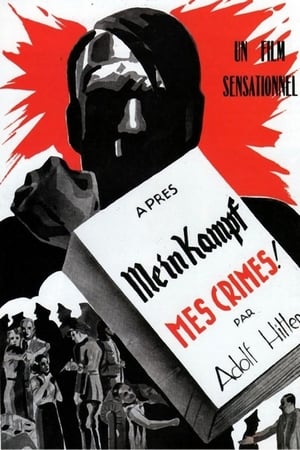
The film shows the seizure of power by the Nazis and Hitler wants a trial, at a time when France has just declared war on Germany (Sept. 3, 1939). Hybrid composition, it alternates originals and reconstructions performed by actors (docudrama). A not-so-subtle condemnation of Hitler, Nazism and Germany by the movie's French film makers, which conveniently makes no mention of how the policies of Great Britain and France created Hitler and allowed him to go as far as he did prior to the beginning of the Second World War.
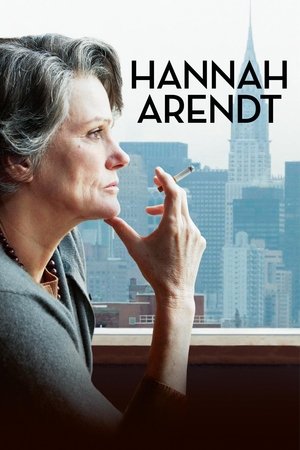
A portrait of the genius that shook the world with her discovery of “the banality of evil.” After she attends the Nazi Adolf Eichmann’s trial in Jerusalem, Arendt dares to write about the Holocaust in terms no one has ever heard before. Her work instantly provokes a furious scandal, and Arendt stands strong as she is attacked by friends and foes alike. But as the German-Jewish émigré also struggles to suppress her own painful associations with the past, the film exposes her beguiling blend of arrogance and vulnerability — revealing a soul defined and derailed by exile.
Dramatization of the career of John Fitzgerald Kennedy.
Women held in prison by the Nazi's in Italy during WW2.
After being abandoned by their Nazi parents at the end of World War II, five German siblings embark on a harrowing journey across their war-torn country. Led by the eldest, 14 year-old Lore, the children are forced to confront their parents’ actions and the reality of a new world.
Hitler, les secrets de l’ascension d’un monstre
During World War II, an orphaned young girl seeks to survive and perhaps even help resistance fighters battle the Nazis.
A 1985 British made-for-television film based on the novel by Erich Maria Remarque, which was previously adapted in 1948 for a film of the same name with Ingrid Bergman and Charles Boyer. Dr. Ravic (Anthony Hopkins) is an Austrian doctor who helps Jews escape from the Nazis. In 1939, he meets Joan Madou (Lesley-Anne Down), a woman he saves from suicide, and their relationship flourishes until he is arrested as a refugee without documentation and realizes he has some unfinished business with the Nazis. After a prolonged separation, without explanation, the two are finally reunited and struggle to put their relationship back on the right course as mayhem breaks out all around them.
London, June 29th, 1613. The Globe Theater, ran by the famous playwright William Shakespeare, accidentally burns to ashes. Seriously affected, he stops writing and returns to his hometown, where his wife Anne and daughters Judith and Susanna get surprised to hear he intends to stay there definitively, after two decades working in the capital, neglecting his sincere affections for them.
In 1543, at the University of Salamanca, in Spain, Fray Antonio Román, an Augustinian monk who spreads humanist ideas, considered heretical, among his more inquisitive students, a clandestine group of four led by the brilliant novice Luis de León, mysteriously dies in unspeakable circumstances. In the present day, the historian Lara Cabanes is hired to find out if the monk was murdered, as is suspected and she is told, but the task will not be easy to achieve.
The rise and fall of Nazi Germany in part through the use of classical allegory.
In 1942, an intelligence officer in North Africa encounters a female French Resistance fighter on a deadly mission behind enemy lines. When they reunite in London, their relationship is tested by the pressures of war.
Allied propaganda in the form of cartoons and newsreels shows the rise of Adolf Hitler and the Nazis.
A Nazi spy sneaks into the U.S., hoping to release hundreds of German prisoners. He fails, but not until plenty of bullets have been spent.