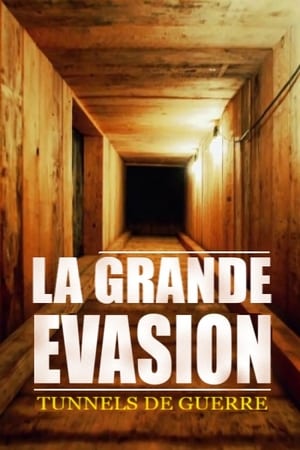
A documentary produced by the French armed forces which chronicles the way of France’s “1ere armée” in the second world war from the days it first crossed the Rhine in March of 1945, through the liberation of a POW-camp in Swabia, until the forces reached the Danube and the Alps at the end of the war and the day French troops marched in the victory parade in Berlin.
12 American military prisoners in World War II are ordered to infiltrate a well-guarded enemy château and kill the Nazi officers vacationing there. The soldiers, most of whom are facing death sentences for a variety of violent crimes, agree to the mission and the possible commuting of their sentences.
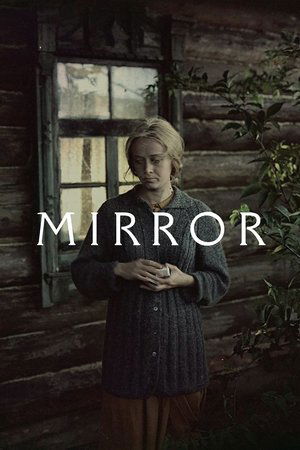
A Russian village struggles through the German occupation during World War II in this tense drama from the Soviet Union. As the town doctor finds his home has been taken by German troops, his daughter becomes involved in the anti-Axis resistance, and his son -- confined to a mental hospital -- escapes to fight the invading armies.
Russian front, January, 1943. It's hell: the flurries of sleet take the breath away and Sergeant Bisi can make out nothing in the landscape in front of him.
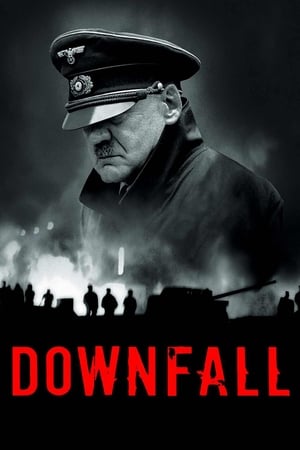
The story of Hitler’s final hours told by people who were there. This special features exclusive forgotten interviews, believed lost for 65 years, with members of Hitler’s inner circle who were trapped with him in his bunker as the Russians fought to take Berlin. These unique interviews from figures such as the leader of the Hitler Youth Artur Axmann and Hitler’s secretary Traudl Junge, have never before been seen outside Germany. Using rarely seen archive footage and dramatic reconstruction, this special tells the story of Adolf Hitler’s final days in his Berlin bunker.
Orphaned after a Nazi air raid, Paulette, a young Parisian girl, runs into Michel, an older peasant boy, and the two quickly become close. Together, they try to make sense of the chaotic and crumbling world around them, attempting to cope with death as they create a burial ground for Paulette's deceased pet dog. Eventually, however, Paulette's stay with Michel's family is threatened by the harsh realities of wartime.
After the Germans flooded large parts of The Netherlands towards the end of WWII, the Brouwer family find themselves trapped in their attic surrounded by water. With their rations dwindling, tensions arise within the household.
Just 80 years ago, the peaceful sea was a battlefield. Soldiers continued to fight, dreaming of returning home, and their families continued to pray and wait for their safety. What stories were there in each of their lives, and what were they each thinking?
The story of a resistance fighter in the Nazi era: Communist Hans Löning was arrested in 1933, imprisoned in a concentration camp and tortured. The Gestapo plans to smash the resistance group around Löning. Despite the imminent threat to his life, Löning, together with his wife, organized the passive resistance of the Hamburg workers against the Hitler regime. In 1944, Löning was again taken and killed.
The movie tells the story of Franz, a Waffen-SS soldier who deserts, and Polina, a Belarusian woman whose village is razed and people massacred.
During World War II, a tough officer organizes a commando raid into Germany.
Le Temps des assassins
A bitter battle is fought between Australian and Japanese soldiers along the Kokoda trail in New Guinea during World War II.
A World War II submarine commander finds himself stuck with a damaged sub, a con-man executive officer, and a group of army nurses.
The war in the South Pacific, a country doctor in Colorado, victims of industrial pollution in a Japanese village — all were captured in unforgettable photographs by the legendary W. Eugene Smith. This program showcases over 600 of Smith’s stunning photographs and includes a dramatic recreation in which actor Peter Riegert (Crossing Delancey, Local Hero) portrays the artist using dialogue take from Smith’s diaries and letters. Interwoven through the program are archival footage and interviews with family and friends of this brilliant, complicated man, whose work developed from twin themes of common humanity and social responsibility.
At the turn of the sixteenth century, Michelangelo (Mark Frankel), Raphael (Andrea Prodan), and Leonardo Da Vinci (John Glover) create their masterpieces, while dealing with religious persecution, political turmoil, and the discovery of America.
Filmed in 1962 but not released in the US until 1966 (with 20 of its 108 minutes removed), Conquered City is an all-star World War II drama financed in Italy and filmed in Greece. An Athens hotel, full of refugees and expatriates of all nationalities, is captured by Allied troops in the closing days of the War. British Major David Niven has been ordered to prevent a cache of weapons hidden in the hotel from falling into the hands of renegade troops. He cannot allow himself to trust anyone--not even the most innocent-looking (or attractive) of guests. Originally titled La Citta Prigioniera. Conquered City was released in English-speaking countries outside the U.S. as Captive City.
Young Tom and his misfit friends fight to save 'Buster' the baby elephant during the German air raid bombings of Belfast in 1941.
Casanova, a young patriot in 18th-century Sicily, upon learning that his father and sister have been murdered, returns to Palermo and engages in guerilla tactics against the forces of the Governor. Lady Bianca, the Governor's daughter, is in love with one of the patriots, Lorenzo, and desires to escape from the palace. Her lady-in-waiting, Zanetta, enlists the aid of Casanova and he rescues them and takes them to the partisan's camp. The rebels are victorious. Lady Bianca makes plans to marry Lorenzo, and Casanova and Zanetta have similar plans.
Rommel, chef de guerre