Peixe-de-Espada (literally, sword-fish), a retired Army colonel, his wife and nubile daughter are spending their holidays at the Palace Hotel, in the company of a lady doctor, Doctor Pilulas (literally, pills). He tells tall-tales of his African adventures, and she finds ways to promote the excellency of the pills of her own fabrication. To spend some time with Gabriela, his girlfriend, Rito appears disguised as a woman, pretending to be the new post-office operator. Desguises will come and go, and all ends well after a turmoil of twisted plots.
Mickey and the gang are preparing for an Easter party; however, Pete says the password incorrectly, blowing the clubhouse away, and Mickey must travel far and wide to get it together again.
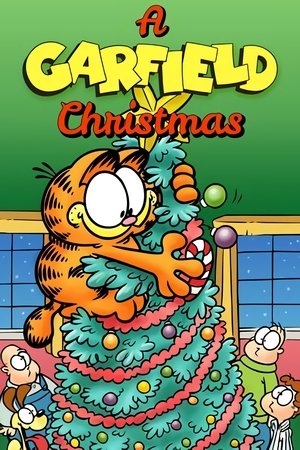
Garfield, Jon and Odie go to Jon's family farm for Christmas, where Garfield finds a present for Grandma.
Get ready to join Mickey and friends on their most amazing adventure ever -- a new movie classic inspired by Disney's ALICE IN WONDERLAND. It's Daisy Duck's birthday, and, in preparation, Mickey Mouse and Donald Duck have arranged a surprise party and bought a cuckoo clock as a present. However, the bird inside the clock escapes, leading Donald and Mickey into a strange fantasy world, modeled after Lewis Carroll's Wonderland. Some friends tag along for the journey, and some even appear as characters from the original tale. Goofy becomes the Goofy Hatter and Clarabelle Cow becomes Queen Clarabelle.
When Madame Adelaide Bonfamille leaves her fortune to Duchess and her children—Bonfamille’s beloved family of cats—the butler plots to steal the money and kidnaps the legatees, leaving them out on a country road. All seems lost until the wily Thomas O’Malley Cat and his jazz-playing alley cats come to the aristocats’ rescue.
On a golden afternoon, wildly curious young Alice tumbles into the burrow and enters the merry, madcap world of Wonderland full of whimsical escapades.
One of the two earliest horror films ever made. This film is presumed lost.
One of the two earliest horror films ever made. This film is presumed lost. In this black comedy scene, the bottom falls out of a coffin, the corpse tumble out, and is jolted back to life. Short sequences like this, as well as street scenes and dancing geisha girls were the main subjects of early Nippon cinema, pioneered by Shiro Asano and Shibata Tsunekichi from 1897 onwards. In creating dramatic, scenes, film-makers naturally chose the most striking or bizarre. Another undocumented film, recalled by cameraman Shiro Asano.
A doctor must remove a parasite infestation from within a patient's breast.
Enter Hamlet is a collage of images in cartoon form of a word put in balloon in each jump-cut scene as that word is said by the narrator Maurice Evans during his “To be or not to be…” soliloquy recording.
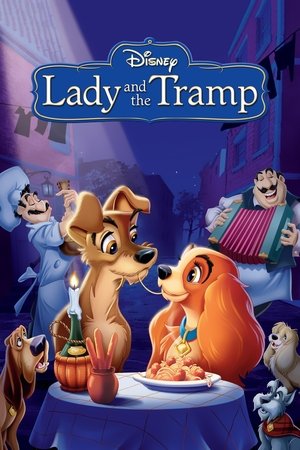
Lady, a golden cocker spaniel, meets up with a mongrel dog who calls himself the Tramp. He is obviously from the wrong side of town, but happenings at Lady's home make her decide to travel with him for a while.
Follow a day of the life of Big Buck Bunny when he meets three bullying rodents: Frank, Rinky, and Gamera. The rodents amuse themselves by harassing helpless creatures by throwing fruits, nuts and rocks at them. After the deaths of two of Bunny's favorite butterflies, and an offensive attack on Bunny himself, Bunny sets aside his gentle nature and orchestrates a complex plan for revenge.
Thelma and Patsy find themselves in a spooky house inhabited by a nut who is a mechanical genius and has made a robot who does everything. The inventor manipulates the robot's control board from a hidden room. The girls are soon in a panic. Patsy gets into an argument with the robot and loses the match of wits. Blackie Burke, an escaped convict, is using the house as a hideout, and this adds to the problems the girls already have.
As a practical joke, an actor impersonates the screen monster he made famous. A lost film.
At Thanksgiving, a tramp arrives in a homeless-hostile town.
A tramp tries to earn money by playing the violin, but he’s soon facing off against the jealous competition.
With script and direction by Pablo Villaça and starring the comedian Geraldo Magela, Morte Cega has as main character a failed filmmaker named Francis (Maurício Canguçu, producer and one of the main actors of the theatrical success "Believe, a Spirit Downloaded Me"). One night, Francis has a frightening dream about Magela, known throughout the country for playing the character O Ceguinho. Determined to make a short film based on this dream, Francis uses his producer friend, Martinho (Carlos Magno Ribeiro, who acted in Villaça's first short, A_ética), to get to the comedian. From then on, the meeting brings unexpected results for everyone involved.
La Guerre des Romands
In the year 2150, Johnny, a lazy Space Delivery Man, must deliver a package on a planet he does not fully understand.
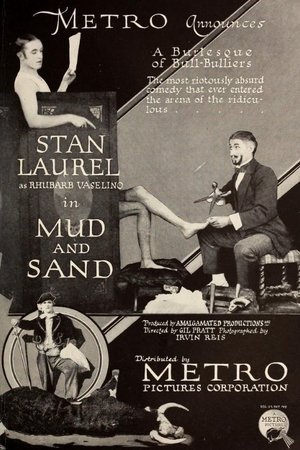
A tall, shy and reserved young actor accidentally signs himself up for a wrestling match.