The Himalayan mountain Makalu, located in Nepal, is the fifth highest mountain in the world. In 1973, a Czechoslovak expedition also attempted to climb it via the challenging route, the so-called South Pillar, but it ended tragically. The group of climbers led by the experienced Ivan Kaščák (real-life Ivan Gálfy) is composed of the fittest men. In the base camp and during the preparation of the advanced camps, the expedition struggles with common health problems - a sore tooth, intestinal problems or a cold. For the actual climb to the summit of Makalu, Kaščák chooses a young engineering student Milan, a colleague Karol who is a generation older than him, and a young man Jož. In the advanced camp, without Kaščák's knowledge, he gives up his place to the ambitious Karol. However, due to fatigue and lack of oxygen, Milan falls down a snowy slope and injures his head and spine. He can‘t be transported down.
Swiss girl Adelheid 'Heidi' is orphaned young. Aunt Detie brings her to grandpa Alp and his wife, who live isolated in the Alps since his murder charge. Heidi soon takes to the wild country, especially accompanying young goatherd Peter. Grandpa refuses to send her to school in the city, but aunt Detie returns and forces him to give in. She's sent to a posh lady in Frankfurt, where she'll be a companion for crippled daughter Clara after school hours.
Catherine Destivelle has deservedly become the most famous female climber in the world. She rose to prominence with historic climbs, such as the free ascent of the Nameless Tower in Pakistan, and solo winter ascents of the classic north faces of the Matterhorn and the Eiger, climbs that have never been repeated by any woman. She also made history in sport climbing by winning the world championship title. In 1997, this time in Scotland, on the iconic Old Man of Hoy route, opened by Bonington, Patey & Baillie, Martin Belderson crowned Destivelle Queen of the Rock. She was four months pregnant when she made this 137-meter ascent, which was not difficult but on tricky rock.
Adventure in Bleau is a documentary about bouldering that takes place in Fontainebleau. Directed by Jean-Paul Janssen in 1980 and produced by Antenne 2, it is part of the series "Les Carnets de l'Aventure" and broadcast on the same television channel. It features different generations of the finest free climbing artists of the time: Patrick Edlinger, Catherine Destivelle, Lucien Bérardini, Jean Pierre Bouvier, and Bertrand Roche 'Zébulon'.
In the shady campgrounds of Yosemite valley, climbers carved out a counterculture lifestyle of dumpster-diving and wild parties that clashed with the conservative values of the National Park Service. And up on the walls, generation after generation has pushed the limits of climbing, vying amongst each other for supremacy on Yosemite's cliffs. "Valley Uprising" is the riveting, unforgettable tale of this bold rock climbing tradition in Yosemite National Park: half a century of struggle against the laws of gravity -- and the laws of the land.
When an experimental atomic rocket crashes somewhere off-radar, its three developing scientists are joined by three Air Force men in tracking it down to a small Pacific island, where it apparently has landed on the plateau of the island's steep-walled, taboo mountain.
Le Pilier de la Solitude
TSR documentary on the 1979 expedition to Algeria in the Atakor massif (Hoggar desert), organized by Geneva mountaineer Michel Vaucher and Jean-Blaise Fellay. The climbers make a dozen ascents including the famous summit of Adaouda (which means "finger" in Tamasheq, the Tuareg dialect), by several routes. Then a new route on the peaks of the southern Tezoulegs. They discover the volcanic geological characteristics of the Atakor massif and meet the nomadic inhabitants of the region, the Tuaregs, who are increasingly settling in the town of Tamanrasset.
In February 1966, Pierre Mazeaud and Lucien Berardini traveled to the Atakor massif, in the Hoggar mountain range of the Sahara in southern Algeria. There, they attempted a challenging first ascent: the Takouba spur, one of the peaks adjacent to Garet El Djenoun, a legendary mountain in the Hoggar massif, first climbed by Roger Frison-Roche and Raymond Coche in 1935. The documentary, superbly filmed by Jacques Ertaud, won the Grand Prize at the Trento International Mountain Film Festival in 1966.
For nearly three years, director Dina Khreino interviewed world-class mountain climbing athletes, listening to what compels them to leave behind families, friends, and everyday comforts to risk everything for a fleeting glimpse into the unknown. What she found was a tribe, a diverse group of professional adventurers and amateur philosophers forged by the ultimate test of body, mind, and spirit. In the face of shifting winds, sheer granite cliffs, and impossible odds, they climb. Each for their own reason, but every one connected by the vertical world. In this rarefied air, these athletes are fundamentally changed, not just as climbers, but as human beings.
Lucien Berardini and Edmond Denis are two mountaineers who took part in the French expedition to Aconcagua (Andes Mountains) in 1954. Both suffered severe frostbite to their fingers and toes, and three years later, they set out to climb the Aiguille du Géant, a legendary route in the Mont Blanc massif. The camera closely follows the efforts of the roped party, an example of strength and self-sacrifice, until their victorious arrival at the summit.
7 young filmmakers climbed the 7 highest mountains in Indonesia and bring 7 cameras along with them. Experiencing a lot of emotions, meeting new people during the exploration across places, every piece of story show how big, rich, dynamic, and vary.
As darkness fell on May 10, 1996, a fast moving storm of unimaginable ferocity trapped three climbing teams high on the slopes of Mount Everest. The climbers, exhausted from their summit climb, were soon lost in darkness, in a fierce blizzard, far from the safety of High Camp at 26,000 feet. World-renowned climber and filmmaker David Breashears, who aided the rescue efforts back in 1996, now returns to Everest to tell the fuller story of what really happened on that legendary climb. Through remarkably intimate interviews with the climbers and Sherpas many who have never spoken before on American television Breashears sheds new light on the worst climbing tragedy in Mount Everest s history.
Joshua Tree: Climb On! Series - Volume I
Bishop: Climb On! Series - Volume II
Las Vegas: Climb On! Series - Volume III
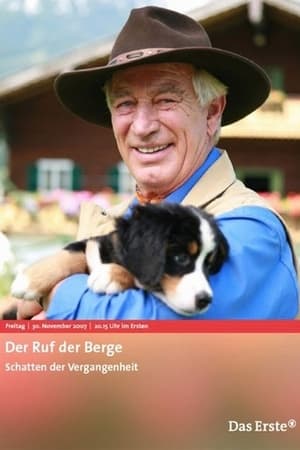
In an alpine valley lies an idyllic village. High up in the mountains, facing each others across live two men: a "good grandpa" and an "evil man".
1967: Two of the world's best climbers, Yvon Chouinard and Royal Robbins, tackle the west face of Sentinel Rock, an iconic 2,100-meter granite peak located in Yosemite National Park, considered one of the most difficult in the world. The film's atmosphere is immersive, driven by a sober narrative that highlights the intimate relationship between man and the wall. The technical difficulty of the route, the prolonged physical effort, and the isolation reinforce the heroic dimension of this ascent. The documentary also reveals the essential solidarity between the climbers: each progression requires rigor, inventiveness, and total trust in both the equipment and the partner. This film is considered a benchmark in the history of mountain cinema. It testifies to the pioneering spirit of the era and the evolution of climbing techniques, perfectly illustrating the transition to a more athletic and thoughtful approach to large rock faces.
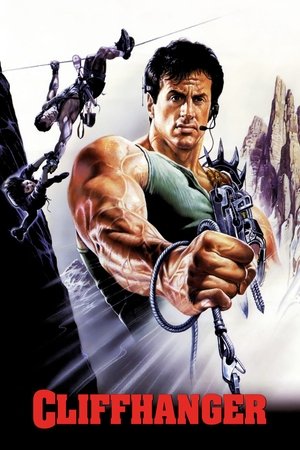
Selfish Chris Teller pressures his older brother, a retired climber, to accompany him on a treacherous Alpine climb to loot the bodies of plane crash victims.
A post-WW2 story about the village largely involved in wine-making business. The peasants who claimed possessions of lands, woods, and churches after communist party seized the power hold a party where a member of so-called reactionary forces (kulaks, clergy and Axis collaborators) tries to break in and stop it.