After a 15-year absence, the famous actress' expatriate husband returns to Hungary to settle their divorce. The actress is rehearsing the role of a young boy back home when her husband walks in. Seeing the little boy, the husband thinks that Janika is his child, but the actress fails to inform him of the mistake.
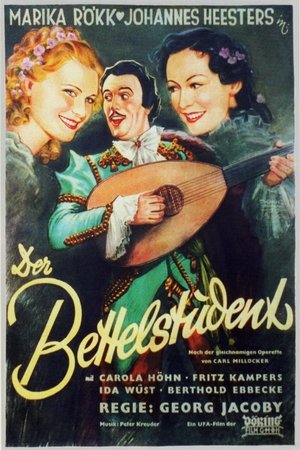
To take a revenge on countess Laura, who slapped him at his proposal, the Governor of the occupied Poland gets her fall in love with a poor student, and exposes him during wedding banquet.
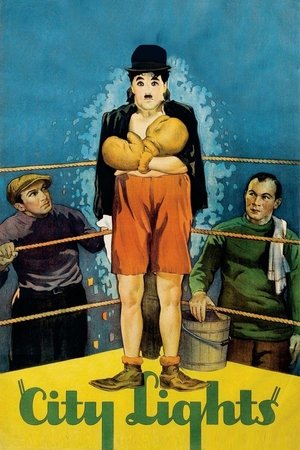
A bumbling tramp desires to build a home with a young woman, yet is thwarted time and time again by his lack of experience and habit of being in the wrong place at the wrong time...
After the death of a United States Senator, idealistic Jefferson Smith is appointed as his replacement in Washington. Soon, the naive and earnest new senator has to battle political corruption.
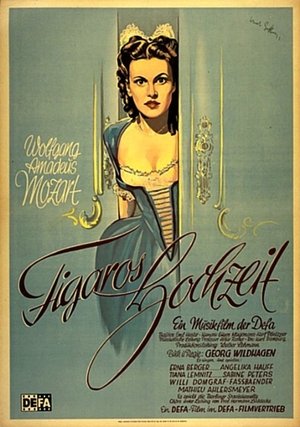
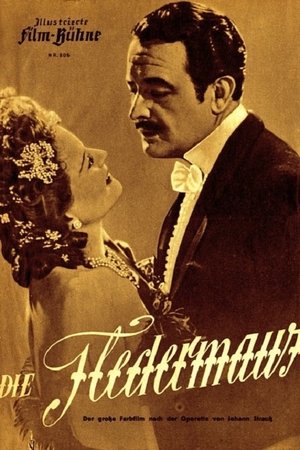
Theater director Falke, dressed as a bat, ends up in prison after a merry carnival night. Director Frank only releases him after some time. Falke decides to take revenge on his friend Gabriel von Eisenstein, to whom he owes the whole affair. The annual masked ball at Prince Orlofsky's provides the opportunity. Falke stages a game of mistaken identity in which Eisenstein does not recognize his own wife and courts her, while maid Adele appears as the countess. Eisenstein is duped, Falke has taken his revenge.
The young ice skating talent, Liesl, lands a part in a new Revue at the Palast Theatre simply because she is confused with someone else. In reality, the roll was to be awarded to Lu Panther, the untalented girlfriend of the theatre's owner, Wildner. After a series of accidents and little disasters, Wildner shuts down the theatre before the Revue can take place. But the Revue's director, Ernst Eder, decides shortly thereafter to present the Revue on an ice skating rink belonging to Liesl's uncle. After a successful run, at first at the Wiener Prater, the performers move on to Spain, Hungary, and a night club with a Jazz orchestra. The Revue becomes a huge success ... and, of course, Ernst and Liesl end up together, too.
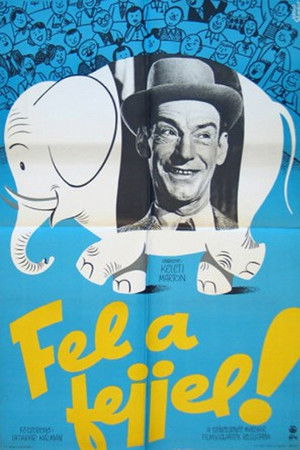
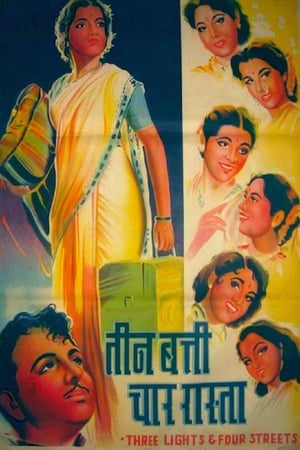
Pista Rácz, bearer of the title "outstanding workman" is opposed to all forms of sport, and is especially antagonized by Jóska Teleki, a first-class sportsman, who seems to be a drawback for Rácz's brigade in terms of work quantity performance figures.
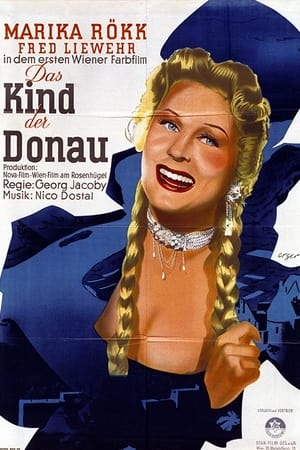
Marika is a cheerful girl who lives on the Danube aboard an old barge she inherited from her father. She works as a waitress in her aunt's inn, entertaining the guests with singing and dancing. Her greatest dream is to save enough money to repair the old barge and sail down the Danube. One day, she meets three young artists, Georg, Oskar, and Christoph, who all fall in love with her. Together, they put on an open-air revue and raise the necessary money. And with Georg, Marika is lucky in love.
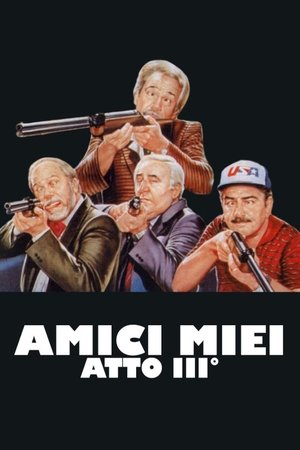
This time the "amici" (friends) are just four: Necchi, Meandri, Mascetti and Sassaroli. Nevertheless they are older they still love to spend their time mainly organizing irresistible jokes to everyone in every kind of situation. Mascetti is hospitalized in a geriatric clinic. Of course the place become immediately the main stage for all their jokes. After some jokes they decided to place an ultimate incredible and farcical joke to the clinic guests.
Shortly after WWII, the DEFA Studios produced a series of operas and operettas which belonged to the classical German musical heritage. This enchanting film, the very first opera production of DEFA, stands out because of its lavish decor and costumes, its outstanding actors and their masterful voices of that time.
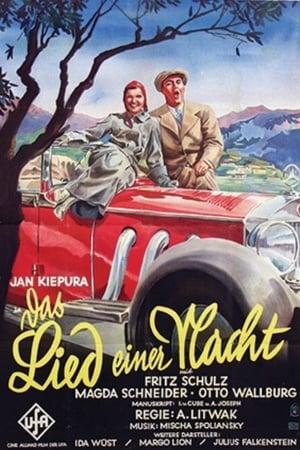
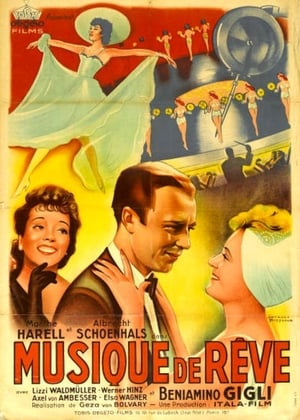
The young opera singer Carla is in love with the talented young composer Michele, who wants to make it big with classical music and writes his first opera, "The Return of Odysseus," for Carla. But Carla is more successful than he is and gets a gig at La Scala in Milan. Through her connections, she manages to find a publisher for Michele's opera. But when Michele learns what the publisher really thinks of his work, he leaves and abandons Carla. A year later, Carla finds Michele again. He has since become a sought-after composer, but is embittered because he is only successful with pop songs. His new revue "Dream Music," a reworking of his opera, is about to premiere. Carla then arranges for Michele's original opera to premiere in Budapest with her in the lead role.
The Emperor's mismanagement of his country is provoking some in his court to plot to overthrow him. He feels successful, at least, when he discovers the legendary Golem, which he believes can protect him and even cure his imaginary illnesses but, when he disappears while on a bender, his kindly baker, who looks just like him, is mistaken for him, and begins to put things in order. However, the conspirators, not to be outdone, determine to bring the Golem back to life to do their bidding.
Diederich Heßling is scared of everything and everyone. But as he grows up, he comes to realize that he has to offer his services to the powers-that-be if he wants to wield power himself. His life motto now runs: bow to those at the top and tread on those below. In this way, he always succeeds: as a student in a duel-fighting student fraternity and as a businessman in a paper factory. He cajoles the obese district administrative president Von Wulkow and wins his favor. He slanders his financial rivals and hatches a plot with the social democrats in the town council. On his honeymoon with his rich wife Guste, he finally finds a chance to do his beloved Kaiser a favor. And when a memorial to the Kaiser is unveiled in the town where Diederich lives and works, he delivers the address. He stands behind the lectern in the pouring rain, saluting his Kaiser. The crowd is dispersed. Everything is laid in ruins...
A young man asks a hat check girl to pose as his fiancée in order to make his dying father's last moments happy. However, the old man's health takes a turn for the better and now his son doesn't know how to break the news that he's engaged to someone else, especially since his father is so taken with the impostor.
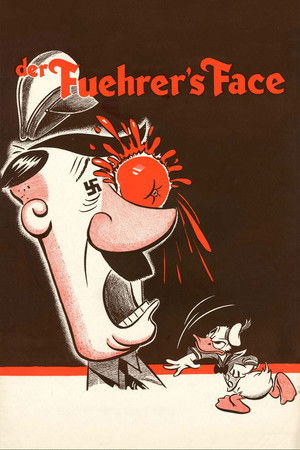
A marching band of Germans, Italians, and Japanese march through the streets of swastika-motif Nutziland, serenading "Der Fuehrer's Face." Donald Duck, not living in the region by choice, struggles to make do with disgusting Nazi food rations and then with his day of toil at a Nazi artillery factory. After a nervous breakdown, Donald awakens to find that his experience was in fact a nightmare.
There is great excitement in the Palazzo Urbino. Much to the delight of the ladies, the Duke, known as Don Juan, is expected. But the men of the city are less pleased by his arrival. Senator Delagua therefore decides to hide his beautiful wife in a convent and introduce the lady's maid to the Duke as his wife. When the Duke's valet devises a ruse of his own, the complications seem endless.
1947, in France, Antoine and Antoinette, a young couple living in Paris, lead a monotonous existence: he works in a print shop while she is a shop assistant. But one evening, they regain hope: Antoine finds a winning lottery ticket in his girlfriend's handbag. He decides to cash it in, but loses his wallet. What follows is a series of twists and turns that redefine the couple's priorities while forcing them to remain optimistic.
Verlorene Melodie
Without his brother's knowledge, Joseph Schrammel popularizes his songs in Vienna. When Johann learns of this, a dispute breaks out between the siblings and their two fellow musicians, which can only be resolved with the help of the singer Fiakermilli. The reconciled quartet then performs under the name "Die Schrammeln" and becomes famous. But another dispute is already looming.
The two pigs building houses of hay and sticks scoff at their brother, building the brick house. But when the wolf comes around and blows their houses down (after trickery like dressing as a foundling sheep fails), they run to their brother's house. And throughout, they sing the classic song, "Who's Afraid of the Big Bad Wolf?".