In the early 1900s, the fictional Catfish Row section of Charleston, South Carolina serves as home to a black fishing community. Crippled beggar Porgy, who travels about in a goat-drawn cart, loves the drug-addicted Bess, who lives with stevedore Crown, the local bully.
37-year-old Italian-American widow Loretta Castorini believes she is unlucky in love, and so accepts a marriage proposal from her boyfriend Johnny, even though she doesn't love him. When she meets his estranged younger brother Ronny, an emotional and passionate man, she finds herself drawn to him. She tries to resist, but Ronny, who blames his brother for the loss of his hand, has no scruples about aggressively pursuing her while Johnny is out of the country. As Loretta falls for Ronny, she learns that she's not the only one in her family with a secret romance.
Although he is unanimously credited with having democratised opera, making it accessible to the greatest number, focus is rarely put on the strategy he devised and implemented in order to carry out his actions, nor what his actions reveal of the man and artist, and of the resulting metamorphosis from opera singer to pop artist. Through this angle, this film sets out to pay tribute to the man who summed up his credo, obsession and life’s work, in the following way: “They led the public to believe that classical music belonged to a restricted elite. I was the way to prove to the world that was wrong.
One night in Judea, a disabled shepherd boy-turned-beggar and his mother are visited by three strangers. They are the Three Kings, and they are on their way to Bethlehem to visit the Christ Child, who has just been born.
Visionary artist Matthew Barney returns to cinema with this 3-part epic, a radical reinvention of Norman Mailer’s novel Ancient Evenings. In collaboration with composer Jonathan Bepler, Barney combines traditional modes of narrative cinema with filmed elements of performance, sculpture, and opera, reconstructing Mailer’s hypersexual story of Egyptian gods and the seven stages of reincarnation, alongside the rise and fall of the American car industry.
Between two Thanksgivings, Hannah's husband falls in love with her sister Lee, while her hypochondriac ex-husband rekindles his relationship with her sister Holly.
Siv works as a prompter for the Norwegian opera. As the rehearsals for Aida starts, she marries a demanding man, Fred, who still has a strong connection to his ex-wife. Starting at her wedding, Siv must repeatedly take a back seat, both to Freds children and their mother. But when she meets a man who shares her passion for music, she starts to question the path her life has taken.
Prince Abesalom runs into an orphaned Eteri while hunting, falls for her and brings the woman to his palace as his fiancé. The Prince’s aid Murman loses his self-control at Eteri’s beauty and gives her a spelled necklace as a wedding gift. Eteri contracts a mysterious disease that only Murman is capable to heal.
A Ukrainian comic opera with spoken dialogue in three acts with music and libretto by the composer Semen Hulak-Artemovsky (1813–1873). The orchestration has subsequently been rewritten by composers such as Reinhold Glière and Heorhiy Maiboroda. This is one of the best-known Ukrainian comic operas depicting national themes.
Adapted from the opera written by the composer Semen Hulak-Artemovsky.
Disciplined Italian composer Antonio Salieri becomes consumed by jealousy and resentment towards the hedonistic and remarkably talented young Salzburger composer Wolfgang Amadeus Mozart.
Cio-Cio-San, the young Japanese bride of American naval officer Lieutenant Pinkerton, finds her romantic idyll shattered when he deserts her shortly after their marriage. She lives in hope that one day he will return.
Simultaneously filmed English language version of a period operetta, in which a Polish noblewoman is romantically linked with a revolutionary student activist.
The indebted owner of the Dubanský chateau sees the only way out of his debts in marrying his daughter Jana to the son of his childhood friend Bernard, now a millionaire. Without knowing each other, the young people are both against an arranged marriage. Dubanský himself marries a con artist who pretends to be a rich American and takes her on a honeymoon to the Tatras. In the meantime, the enterprising staff rents out the chateau under the name Bílá vrána to spa guests.
This all-star cast is framed by Peter Hall’s gritty, realistic production and conducted by James Levine, who brings out all the surging emotion and gripping drama in Bizet’s score. At the center of the story is Agnes Baltsa, whose smoky mezzo is tailor-made for the gypsy Carmen, an independent woman who glories in obeying only her own rules, but who is haunted by fate. Superstar tenor José Carreras is Don José, the solider from a small town who catches Carmen’s eye and is destroyed by his growing obsession with her. Samuel Ramey is the charismatic matador Escamillo, who lures Carmen away from Don José with tragic result. Leona Mitchell is Micaëla, the simple girl from Don José’s hometown who cannot save him. March 21, 1987 Matinee Broadcast.
As Blanche’s fragile world crumbles, she turns to her sister Stella for solace – but her downward spiral brings her face to face with the brutal, unforgiving Stanley Kowalski. This is the world premiere performance by the San Francisco Opera on September 19, 1998.
Rossini’s opera based on the fairy-tale Cinderella, filmed in real-life Italian locations in the ballrooms and gardens of some of Turin’s finest palaces. For this special production of the opera, the scenes were filmed at the same time of day as they occur in the story, with the famous ballroom scene filmed as the clock struck midnight
Tchaikovsky's Swan Lake, a ballet in three acts, is present by the Ballet Company of the National Opera of Ukraine, with music provided by the Orchestra of the National Opera of Ukraine, conducted by Mykola Dyadura
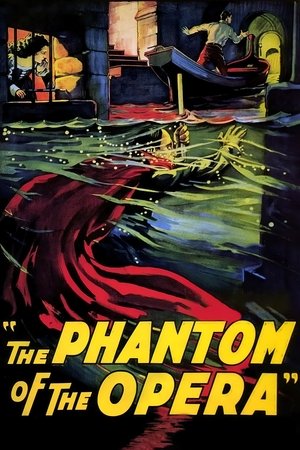
The deformed Phantom who haunts the Paris Opera House causes murder and mayhem in an attempt to make the woman he loves a star.
Soprano Anna Netrebko appears in her highly anticipated Met role debut as Leonora, the tortured heroine who sacrifices her own life for the love of the Gypsy troubadour. Dmitri Hvorostovsky sings Count di Luna, Yonghoon Lee is Manrico in his Met role debut as the title character, Dolora Zajick sings her signature role of the gypsy Azucena, and Štefan Kocán is Ferrando. Marco Armiliato conducts Sir David McVicar’s Goya-inspired production.