In the GDR, purchasing a car was such a difficult process that many families applied for one years in advance. For example, Gisela secretly orders a Wartburg model after the birth of her first child. By the time the vehicle is ready, her daughter is a teenager, and Gisela's husband, who actually prefers walking, has already bought a second Wartburg from a friend in financial trouble. As a result, the couple decides to sign up for driving school together.
In the south of France, in a vast plain region called the Camargue, lives White Mane, a magnificent stallion and the leader of a herd of wild horses too proud to let themselves be broken by humans. Only Folco, a young fisherman, manages to tame him. A strong friendship grows between the boy and the horse, as the two go looking for the freedom that the world of men won’t allow them.
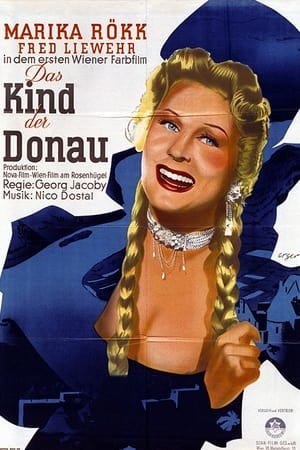
Marika is a cheerful girl who lives on the Danube aboard an old barge she inherited from her father. She works as a waitress in her aunt's inn, entertaining the guests with singing and dancing. Her greatest dream is to save enough money to repair the old barge and sail down the Danube. One day, she meets three young artists, Georg, Oskar, and Christoph, who all fall in love with her. Together, they put on an open-air revue and raise the necessary money. And with Georg, Marika is lucky in love.
As the city of Paris and the French people grow in consumer culture, a housewife living in a high-rise apartment with her husband and two children takes to prostitution to help pay the bills.
Alice Tate, mother of two, with a marriage of 16 years, finds herself falling for a handsome sax player, Joe. Stricken with a backache, she consults herbalist Dr. Yang, who realizes that her problems are not related to her back, but in her mind and heart. Dr. Yang's magical herbs give Alice wondrous powers, taking her out of her well-established rut.
A henpecked housewife ekes out a meager existence, surrounded by a host of colorful characters: her ungrateful husband, her delinquent sons, her headstrong mother-in-law, and her sex worker neighbor, among others.
A desperate husband chases a bus full of beautiful women headed for Paris, France.
Blessed with a keen sense of smell and cursed with a philandering pornographer husband, a parasitic mother, and a pair of delinquent children, the long-suffering Francine Fishpaw turns to the bottle as her life falls apart -- until deliverance appears in the form of a hunk named Todd Tomorrow. Originally screened with "Odorama" scratch and sniff cards so the audience could (at their own risk) smell along with the film.
Louise, who has just written a novel, comes to Paris to meet with a potential publisher. While in the city, she stays with her older sister, Martine, who in many ways is the exact opposite of Louise: she lives in a fashionable neighborhood, is cold to others, and has snobby friends, while Louise lives in a small town and is thoroughly unpretentious. Louise's apparent happiness -- and similarities to their mother -- gradually gets on Martine's nerves.
The young ice skating talent, Liesl, lands a part in a new Revue at the Palast Theatre simply because she is confused with someone else. In reality, the roll was to be awarded to Lu Panther, the untalented girlfriend of the theatre's owner, Wildner. After a series of accidents and little disasters, Wildner shuts down the theatre before the Revue can take place. But the Revue's director, Ernst Eder, decides shortly thereafter to present the Revue on an ice skating rink belonging to Liesl's uncle. After a successful run, at first at the Wiener Prater, the performers move on to Spain, Hungary, and a night club with a Jazz orchestra. The Revue becomes a huge success ... and, of course, Ernst and Liesl end up together, too.
Marion and Jack try to rekindle their relationship with a visit to Paris, home of Marion's parents — and several of her ex-boyfriends.
Catherine refuses to believe that her business partner, the unlikeable François, has a best friend, so she challenges him to set up an introduction. Scrambling to find someone willing to pose as his best pal, François enlists the services of a charming taxi driver to play the part.
The brains of a Russian taxi driver and a wealthy businessman are brought together in one body by a mad scientist.
An old man living in an oriental city tells the story of his life to a group of kids: He too was once a young boy by the name of Little Muck - much like them, but with better manners and a heap of problems. Having lost his father at early age, little Muck is expelled from home by his greedy relatives. He wanders off into the desert hoping to find the merchant who sells good fortune. Amidst the dunes of sand he comes across a small house owned by a wicked woman and her many cats. She wants to make Little Muck her servant, but he manages to escape by stealing a pair of magic shoes which enable him to run faster than any man in the country. From there he heads right into the next set of challenges...
Jack and Caroline are a couple making a decent living when Jack suddenly loses his job. They agree that he should stay at home and look after the house while Caroline works. It's just that he's never done it before, and really doesn't have a clue...
Love Thing captures the emerging multicultural spirit and personal freedom of the late 1970s with an outrageous attitude and experimental style. A work in progress now finally completed it's the last American musical comedy from that era which can be viewed today as a prophetic satire. Through its provocative, entertaining storyline highlighted by song and dance, the movie answers the burning question of our time, "What happens after the marriage?
A mouthy and feisty taxicab driver has hot tips for a green and inept cop set on solving a string of New York City bank robberies committed by a quartet of female Brazilian bank robbers.
Swedish efficiency researchers come to Norway for a study of Norwegian men, to optimize their use of their kitchen. Folke Nilsson (Tomas Norström) is assigned to study the habits of Isak Bjørvik (Joachim Calmeyer). By the rules of the research institute, Folke has to sit on an umpire's chair in Isak's kitchen and observe him from there, but never talk to him. Isak stops using his kitchen and observes Folke through a hole in the ceiling instead. However, the two lonely men slowly overcome the initial post-war Norwegian-Swede distrust and become friends.
Kazakh journalist Borat Sagdiyev travels to America to make a documentary. As he zigzags across the nation, Borat meets real people in real situations with hysterical consequences. His backwards behavior generates strong reactions around him exposing prejudices and hypocrisies in American culture.
A quintet of cabbies in five cities and their remarkable fares on the same eventful night.