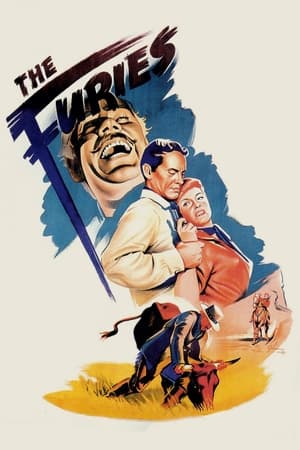
A New Mexico cattle man and his strong-willed daughter clash over land and love.
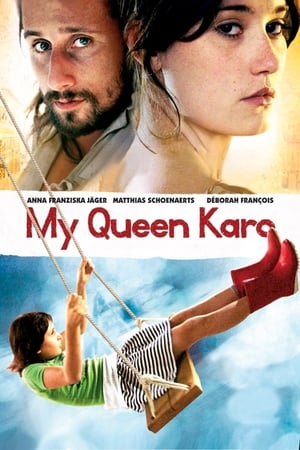
Nine-year-old Karo grows up with her parents in an Amsterdam commune in the Seventies. She leads a carefree existence in this utopia-for-adults. Everything is shared in the squat, but not everyone is able to honor these ideals. Karo gets confused because of the internal conflicts that start to divide the group. Karo slowly realizes that nothing can stay the same forever.
A young woman, Abby, makes a deal with her younger brother Danny, allowing him to seek refuge at her apartment after an illegal job gone wrong. However, as days pass, she begins to question the faithfulness of his side of the deal, as well as the oddly intimate relationship he shares with his mannequin-shaped package.
A squatter is remanded in custody for trespassing. In a long conversation, her mother manages to irritate the investigating detective so much that the daughter is able to escape (for the time being).
A taxi drives through the city of Berlin. Its driver is a punk, left and a well-known figure in the autonomous scene. The stations of his trip are the most important places of the autonomous scene: all in the struggle for survival. The last evictions have not yet been processed and the next ones are coming right up.
Filmed for television at the legendary SO36 Club in Berlin, 1983.
1989, New York City's Alphabet City and East Village. A year after the Tompkins Square Park Riot, squatters and their community allies try to stop the demolition of their building after an arson. Police forces occupy the neighborhood while the demolition continues. A portrait of an East Village that is no more. An homage to the voices and sounds of a neighborhood before its gentrification.
"For Sale! Including 500 violent stone throwers from Hell", was the message from the controversial squat 'Ungdomshuset' in Copenhagen, Denmark. The film takes a balanced look behind the barricades and follows the definitive last year in the life of the squatters before all was demolished in March 2007 and riots broke out in Copenhagen.
Explores the lives of Sara, Gigi and Giovanna, three Latino transvestites who for years have lived on the streets of Manhattan supporting their drug addictions through prostitution. They made their temporary home inside broken garbage trucks that the Sanitation Department keeps next to the salt deposits used in the winter to melt the snow. The three friends share the place known as "The Salt Mines".
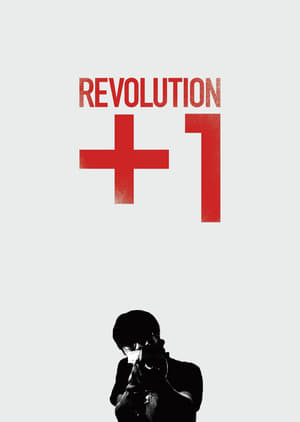
Tatsuya Kawakami's mother becomes a member of a religious group after her husband commits suicide, and makes a large donation to the organization. Her three children are forced to live in poverty, and her eldest son, who is blind in one eye due to illness, takes his own life. Kawakami comes to believe that the religious group has ruined his life, so he creates a homemade gun and carries out an assassination plot against former prime minister Shinzo Abe, who has close ties to the religious group, which has been accused of siphoning off money from its members.
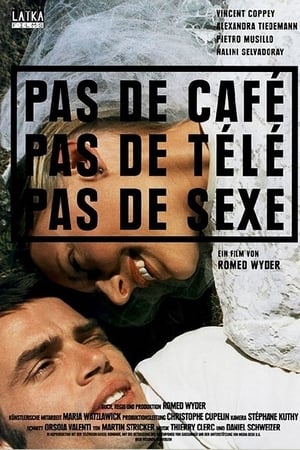
No coffee, no TV, no sex is a dramatic comedy. It is the story of Arno, a 27 year old living in the Geneva squats. His best friend, Maurizio, obtained a residence permit for Switzerland through an convenience wedding. Nina, Maurizio’s girlfriend, is French but would also like to live in Geneva: she faces the same administrative obstacle. In order for her to obtain a permit, Maurizio convinces Arno, for the sake of their friendship, to marry her out of convenience. Reluctantly, Arno accepts and Maurizio, unsuspecting, leaves for a few days. Alone with Nina, Arno, usually shy with women, falls in love with her. She falls in love with him. When Maurizio returns, Arno cannot hide the truth from him. He and Nina end up telling him about their relationship. They reconsider the arrangement and try to settle the dilemma together…
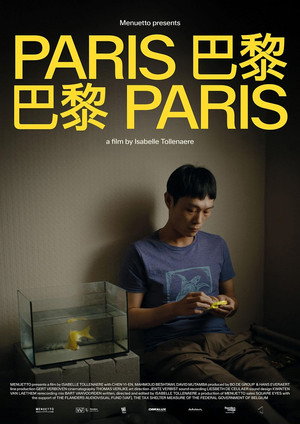
Three men—from China, the Democratic Republic of Congo, and Palestine—live together in a squatted apartment in a seemingly abandoned building in Paris. The group is bound together by their shared experience of life in exile and the fleeting nature of their possessions, relationships, and sense of home, but the temporary safe space is threatened by outside forces and events.
When a woman crashes at an empty Italian villa, posing as the owner's fiancée, she discovers an unexpected romance that could transform her life.
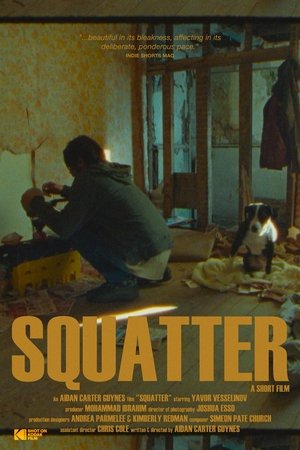
A squatter spends his days with his dog in a decrepit, abandoned house until a discovery entices him out.
Two chipmunks have made a cozy little home for themselves in the wood-burning stove of an empty cabin. They sleep in a matchbox, wash up in an empty acorn shell filled with water and look at their reflections on the back of a spoon, which serves as their bathroom mirror. They even have a staircase made with a pocket comb. Invading their space are Mickey Mouse and his dog Pluto, who are all set for a swell vacation. They don't reckon on the two squatters. Pluto immediately discovers the presence of these two pests, but Mickey never finds out. All he knows is that when he tries to light the stove, the matches go out; he doesn't know the chipmunks are blowing them out. Soon, Mickey is outside chopping wood, while Pluto is alone with the chipmunks. Pluto wants blood, but he'll end up with a bottle of ketchup.
To wait or provoke
After a hugely successful debut novel, Stewart Paylor is supposed to be delivering chapters of his new book. Unbeknownst to everyone around him, including Cynthia, his literary agent/girlfriend, Stewart has writer’s block and has not written a word. His life goes even further astray when he returns home from a vacation to find a homeless mother, Cassandra, and her two children, 12-year old Jake and 9-year old Vera have been squatting in his house, with nowhere to go.
A group of tenants facing eviction due to a city renovation unite to fight back, but as they clash with the landlord and his ruthless attorney, they each transform into the opposite of who they once were.
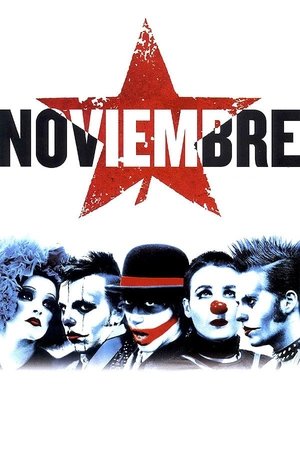
Impelled by a spirit which still preserves a patina of idealism, Alfredo arrives to Madrid with the intention to create "a performance that is free, straight from the heart, capable of making people feel alive". His concept of what acting should be begins beyond the stage, out in the streets face to face with the public. Outdoors, in any town square, in a park or in the city's most commercial street, Alfredo and his troupe November start the show; demons to provoke passers-by, displays of social conscience, actions taken to the extreme to put the forces of law and order on full alert. There are no limits, no censorship; only ideas which are always valid so long as the public ceases to be the public and becomes part of the show swept by surprise, fear, tears or laughter. Theater as life, life as theater… there is no longer any difference.
A school teacher discusses types of government with his class. His students find it too boring to repeatedly go over national socialism and believe that dictatorship cannot be established in modern Germany. He starts an experiment to show how easily the masses can become manipulated.