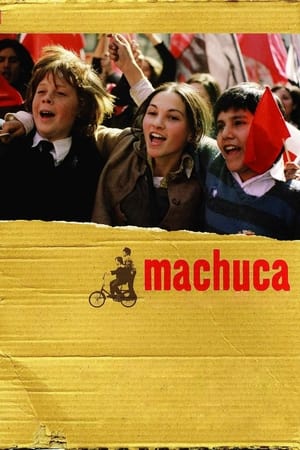
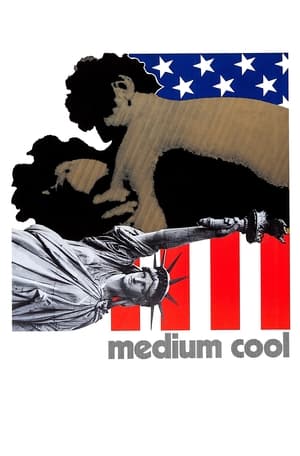
Santiago, capital of Chile during the Marxist government of elected, highly controversial president Salvador Allende. Father McEnroe supports his leftist views by introducing a program at the prestigious "collegio" (Catholic prep school) St. Patrick to allow free admission of some proletarian kids. One of them is Pedro Machuca, slum-raised son of the cleaning lady in Gonzalo Infante's liberal-bourgeois home. Yet the new classmates become buddies, paradoxically protesting together as Gonzalo gets adopted by Pedro's slum family and gang. But the adults spoil that too, not in the least when general Pinochet's coup ousts Allende, and supporters such as McEnroe.
On September 11, 2001, the unimaginable transpired when devastating attacks on the World Trade Center forced the shutdown of the entire U.S. airspace. Thousands of kilometres away in Gander, Newfoundland, a group of Nav Canada air traffic controllers suddenly had the lives of 33,000 people in their hands and had to think fast to find a place for them to go. Discovery uncovers how these unsung heroes managed to safely land 224 planes in four hours, without incident.
It was one of the great crimes of the Second World War: from 1941 to 1944, a total of 872 days, the siege and starvation of Leningrad by the German Wehrmacht on Hitler's orders lasted. Over a million people fell victim to the blockade, most of them dying of hunger. Countless of these starving people wrote diaries with the last of their strength, and cameramen filmed in the paralyzed city. Evidence from the hell of the siege, many of the film recordings, but above all the written memories on which this documentary on the occasion of the 80th anniversary of the liberation is based, remained under lock and key after the war. The voices of those who had suffered through this terrible time should not be heard by anyone, because they did not fit the pathos of the Leningrad heroic song that was officially sung. Most of the recordings come from women. The writers feared neither the enemy nor the Communist Party or Stalin, who often proved incompetent in providing for the population.
From the acclaimed director of American Movie, the documentary follows former Los Angeles police officer turned independent reporter Michael Ruppert. He recounts his career as a radical thinker and spells out his apocalyptic vision of the future, spanning the crises in economics, energy, environment and more.
The life of Moses as told through the Book of Exodus, the imagination of a dying boy, and the ballads of his father.
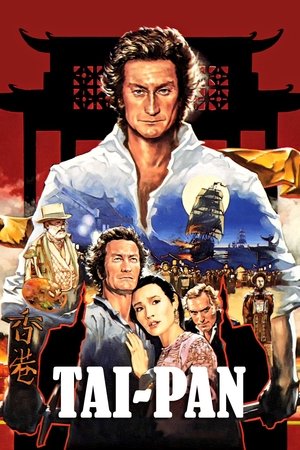
The film begins following the British victory of the first Opium War and the seizure of Hong Kong. Although the island is largely uninhabited and the terrain unfriendly, it has a large port that both the British government and various trading companies believe will be useful for the import of merchandise to be traded on mainland China, a highly lucrative market.
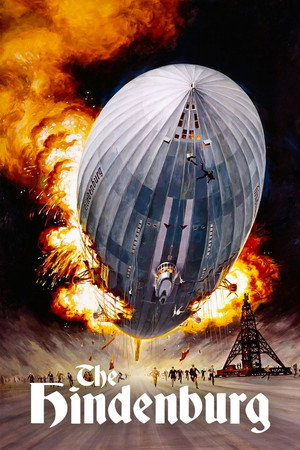
Colonel Franz Ritter, a former hero pilot now working for military intelligence, is assigned to the great Hindenburg airship as its chief of security. As he races against the clock to uncover a possible saboteur aboard the doomed zeppelin he finds that any of the passengers and crew could be the culprit.
It was one of the greatest natural disasters of all time. On the morning of Boxing Day 2004, a massive tsunami hit the coast of the Indian Ocean. More than 230,000 people died, including many holidaymakers from Germany and France. On the occasion of the 20th anniversary, survivors tell their stories. How has the disaster affected their lives to this day?
The definitive account of Japan’s struggle as it faced a nuclear catastrophe while still reeling from the devastation of an earthquake and tsunami.
A stylized version of Vijay Tendulkar’s radical Marathi play chronicling the Peshwa regime in western India, a collective effort of direction and cinematography made by an independent group of young filmmakers.
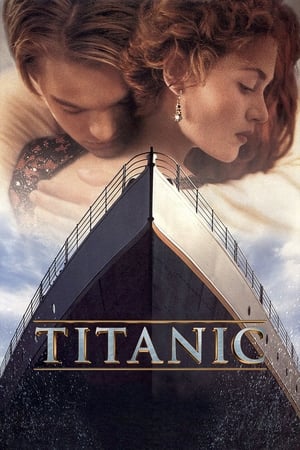
101-year-old Rose DeWitt Bukater tells the story of her life aboard the Titanic, 84 years later. A young Rose boards the ship with her mother and fiancé. Meanwhile, Jack Dawson and Fabrizio De Rossi win third-class tickets aboard the ship. Rose tells the whole story from Titanic's departure through to its death—on its first and last voyage—on April 15, 1912.
On September 1st, 1939, Nazi Germany invades Poland, unleashing World War II. On September 17th, the Soviet Red Army crosses the border. The Polish army, unable to fight on two fronts, is defeated. Thousands of Polish men, both military and government officials, are captured by the invaders. Their fate will only be known several years later.
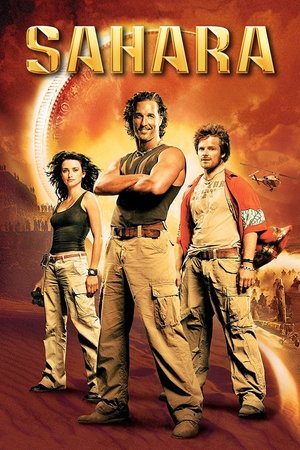
Seasoned adventurer and treasure hunter Dirk Pitt, a former Navy SEAL, sets out for the African desert with his wisecracking buddy Al in search of a confederate ironclad battleship rumored to have vanished long ago, the main draw being the treasure supposedly hidden within the lost vessel. When the daring duo come across Dr. Eva Rojas, a beautiful scientist who is juggling an escape from a warlord and a mission to stop the spread of a powerful plague, their desert expedition begins to heat up.
A close examination of the Whakaari / White Island volcanic eruption of 2019 in which 22 lives were lost, the film viscerally recounts a day when ordinary people were called upon to do extraordinary things, placing this tragic event within the larger context of nature, resilience, and the power of our shared humanity.
Johnnie Cochran defends O.J. Simpson who is on trial for his wife's murder.
Last Hours of Pompeii
On November 25th 1970, a man committed ritual suicide inside the Tokyo headquarters of the Japanese Ministry of Defence, leaving behind a legacy of masterpieces and a controversy that echoes to this day. The man was Yukio Mishima, one of Japan's greatest and most celebrated novelists. With four members of his own private army - the Tatenokai - Mishima had taken the commandant hostage and called upon the assembled military outside the Ministry to overthrow their society and restore the powers of the Emperor. When the soldiers mocked and jeered Mishima, he cut short his speech and withdrew to the commandant's office where he committed seppuku - the samurai warrior's death - tearing open his belly with a ceremonial knife before being beheaded by one of his colleagues. What was Mishima truly trying to express through his actions? And what did he witness during his final moments?
The Defenestration of Prague, which took place on May 23, 1618, was the decisive historical moment that unleashed the Thirty Years War (1618-1648) between several Catholic and Protestant states and changed the course of European history forever. (Additionally released as a heavely edited historical documentary entitled The Defenestration of Prague, 85 min.)
In times of the French Intervention, a student of Nunó, author of the Mexican National Anthem, falls in love with the niece of the French Ambassador, which causes quite amusing complications.
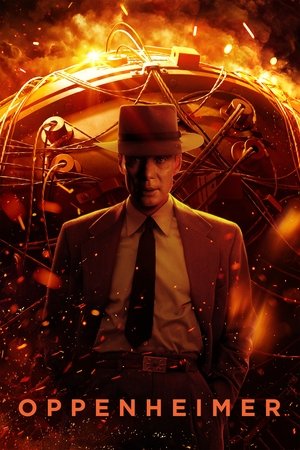
The story of J. Robert Oppenheimer's role in the development of the atomic bomb during World War II.