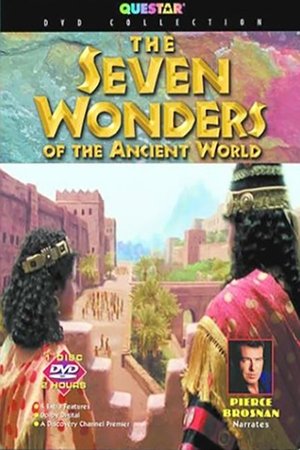
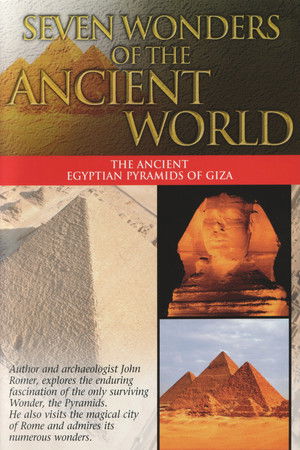
This program presents the stories of the works of architecture regarded by the Greeks and Romans as the most extraordinary structures of antiquity: the Hanging Gardens of Babylon, The Statute Of Zeus, the Temple of Artemis, the Mausoleum of Halicarnassus, the Pharos of Alexandria and the Pyramids of Egypt and more.
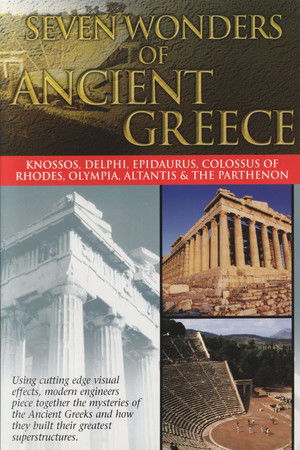
Greece, a land of breathtaking beauty and light. A land where science, art and inspiration from the gods combined to produce some of the world's greatest marvels of architecture and design. The ancient Greeks used buildings and structures to reflect the variety of life at the core of their civilisation - they built the first theatres, staged the first sports events and worshipped in some of the most spectacular temples ever built.
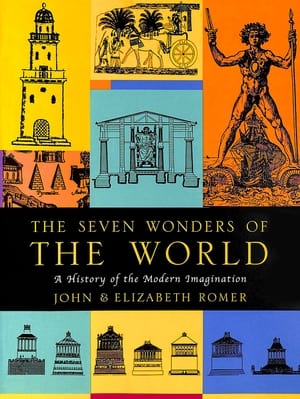
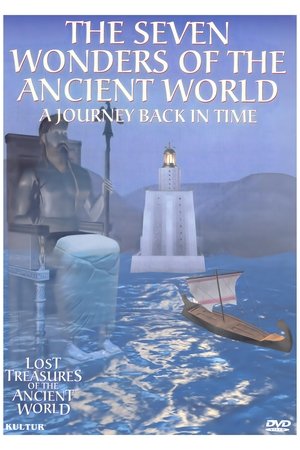
Noted scholar John Romer takes us on a tour of the seven wonders of the ancient world. This program presents the stories of the works of architecture regarded by the Greeks and Romans as the most extraordinary structures of antiquity: the Hanging Gardens of Babylon, The Statute Of Zeus, the Temple of Artemis, the Mausoleum of Halicarnassus, the Pharos of Alexandria and the Pyramids of Egypt and more.
The Romans saw the Seven Wonders of the Ancient World as the crowning achievements of their predecessors. Through stunning on-location and re-created visuals, learn how and why they were built and how they dazzled the ancients.
Documentary discussing the seven manmade wonders listed by Philo of Byzantium 2000 years ago: the Colussus of Rhodes, the statue of Zeus at Olympus, the Mausoleum at Halicarnassus, the temple to Artemis at Ephesus, the pyramid of Giza, the Pharos of Alexandria and the Hanging Gardens of Babylon.
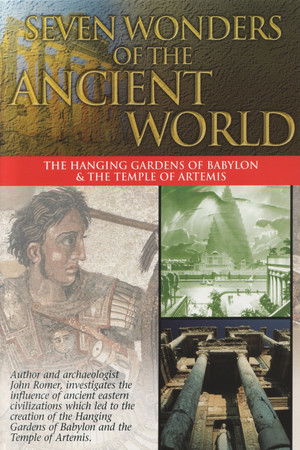
Explore with host John Romer, the influence of ancient eastern civilizations. The Hanging Gardens of Babylon, in what is now Iraq, were rumoured to be part of the palace of Nebuchadnezzar. Today, scientists believe that the exotic gardens were actually more fable than fact. The Temple of Artemis at Ephesusm in modernday Turkey, was built to honour the mother goddess. She was a powerful force for many different people - the Romans knew her as Diana, the Anatolians as Kybele - and her temple was one of the holiest shrines in Alexander the Great's world
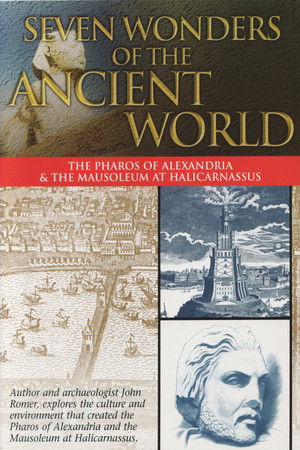
Host John Romer ventures to the sites of two ancient cities created by Alexander the Great - cities that were considered among the most beautiful and unusual the world had ever seen. We also explore the culture and environment that created several of the seven wonders. This episode examines two unparalleled testaments to the power of the era: The Pharos (Lighthouse) at Alexandria, which stood more that 300 feet, making it the tallest structure of its time, and the Mausoleum at Halicarnassus, which was considered one of the greatest tombs ever created. The Mausoleum's perimieter was not decoreated with icons of ancient gods, as was the custom of the time, but with ennobled and enlarged figures of real people. These statues are thought to have been an inspiration for the citizens - telling them they could be as great as the gods.
Author and archaeologist, John Romer, contemplates the mystical aspects of the Seven Wonders, exploring the enduring fascination of the only surviving Wonder, the Pyramids. John then focuses his attention on the city of Rome which had become a magical city, surrounded by a wall of iron enclosing seven hills, one for each day of the Creators rest. There were 365 squares in Rome, 365 streets, 365 palaces for the popes and each palace had 365 steps and each step was covered with bread enough to feed the world. It was a dream of poor people. imagining a legendary past. A past of endless wealth and wonder. Ghosts of Wonder demonstrates how the story of the Wonders is also the story of the modern imagination and has John Romere travelling from Australia to New York to illustrate how people are still haunted by ghosts of the ancient past.
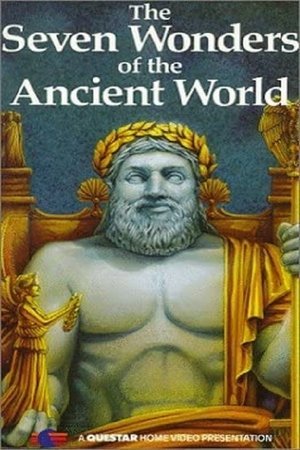
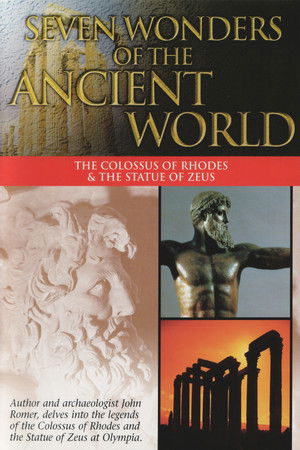
Explore the birth of the iage of "The New Man" in human hostory. Delving into the legends if the Colossus od Rhodes and the Statue of Zeus at Olympia, host John Romer demonstrates how these monuments projected a new vision of the human form into the popular consciousness. A mmoth figure of ivory and gold, the Statue of Zeus at Olympia ruled over the Olympic games. Before this venerable statue lay a huge, shallow pool of olive oil, which reflected light onto the figure. The Colossus of Rhodes was built with sheets of bronze and stood guard over the island of Rhodes. Perhaps the most astounding aspect of both monuments was that the sculptors modelled their faces in the image of man. Today, this image is mirrored in our own Statue of Liberty,
There are many number ones, but only one becomes a legend. The brand new mixed martial arts champion, Ilia Topuria, is clear about it. After defeating Josh Emett in Florida and placing himself in the World Top Five of the all-powerful UFC league, he enters the cage ready to snatch the title from the until then undefeated Alexander “The Great” Volkanovsky. 'Topuria: Matador' is Ilia's story of personal improvement, from his native Georgia at war and his arrival in Spain, to catapulting himself as the world champion. Supported by his wife, family, friends and training partners, he will now face the fight of his life.
Having stood on the gold medal podium a record 8 times during one Olympic Games, Michael Phelps now stands alone as the the greatest Olympic champion in history. With exclusive interviews and commentary, Michael takes us on his personal journey to Olympic stardom. Includes all his races and special behind-the-scenes footage.
Evangelical fundamental Christians used the 2006 World Cup in Germany for their missionary purposes: over 10,000 missionaries were deployed to spread the "Word of God", convert people and collect donations. The documentary aims to inspire reflection on the consequences of religious fanaticism, which, despite the missionaries' friendly demeanor, goes hand in hand with intolerance towards those who think differently. Free of verbiage, it hints at parallels between faith and fanaticism using purely visual means and cleverly intersperses basic information as animated infographics that shed light on the ideology of the evangelicals and how it is spread.
An unconventional point of view on one of the most successful Italian bands: Elio e le Storie Tese.
A behind the scenes look at the background and making of the 2008 TV mini-series
Artist Marianne Lindberg De Geer thinks about her old friends from the 70s, where did they all go?
Director Guy Hamilton and several of the stars of Agatha Christie's "Evil Under The Sun" walk you through the making of the film.
A behind-the-scenes look at the making of Robert Altman's 2001 film 'Gosford Park'. Cast and crew relate some of their experiences with making the film.
Despite his horrible experience as a prisoner of war during WWII, Frank Maselskis stays in the military and goes on to fight in Korea, where he participates in the brutal battle of the Chosin Reservoir. Upon returning home, Frank struggles to live a normal life while raising his daughters.
Drawing on archives and interviews, including one with Italian director Marco Bellocchio, this is a fascinating behind-the-scenes look at the making of his film about reformed mafia member Tommaso Buscetta.
After a woman's at-home DNA test reveals multiple half-siblings, she discovers a shocking scheme involving donor sperm and a popular fertility doctor.