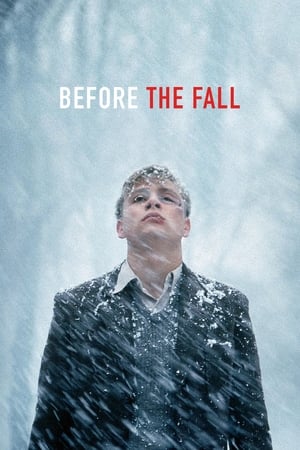
In 1942, Friedrich Weimer's boxing skills get him an appointment to a National Political Academy (NaPolA) – high schools that produce Nazi elite. Over his father's objections, Friedrich enrolls. During his year in seventh column, Friedrich encounters hazing, cruelty, death, and the Nazi code. His friendship with Albrecht, the ascetic son of the area's governor, is central to this education.
In the effervescent Spain of the 80s, Xavi Font, an artistic misfit, together with his friend Lurdes Iribar and her lover Manolo Arjona, founds Locomía. Although he achieves success, he also experiences the dark reality of the industry at the hands of powerful producer José Luís Gil.
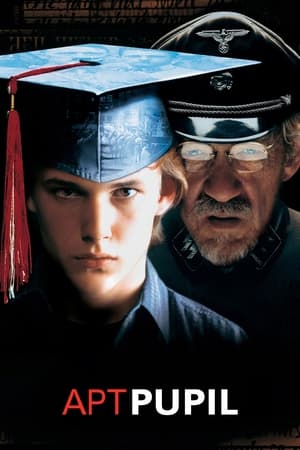
One day in 1984, Todd Bowden, a brilliant high school boy fascinated by the history of Nazism, stumbles across an old man whose appearance resembles that of Kurt Dussander, a wanted Nazi war criminal. A month later, Todd decides to knock on his door.
On Gacchan’s birthday, a wild night in Shinjuku turns into a whirlwind for him and Takayuki, testing their love after a careless mistake and a heated confrontation.
In this sequel to Dawn: Portrait of a Teenage Runaway, Alexander's story is told in both the past and the present. Alexander's parents send him away from home for being too sensitive and not helping enough on their farm. He goes to Los Angeles in hopes of going to art school, but when he can't find a job as a minor, he turns to prostitution. After being arrested, he wants to head to Arizona to marry Dawn, but he falls into a lucrative job/relationship with a gay football star.
José, a fifty-year-old homosexual magician, feels the need to return to Granada, the place where he spent his childhood, perhaps to embrace the painful memory of tragic experiences, perhaps to bury it definitively.
"Race d’Ep!" (which literally translates to "Breed of Faggots") was made by the “father of queer theory,” Guy Hocquenghem, in collaboration with radical queer filmmaker and provocateur Lionel Soukaz. The film traces the history of modern homosexuality through the twentieth century, from early sexology and the nudes of Baron von Gloeden to gay liberation and cruising on the streets of Paris. Influenced by the groundbreaking work of Michel Foucault on the history of sexuality and reflecting the revolutionary queer activism of its day, "Race d’Ep!" is a shockingly frank, sex-filled experimental documentary about gay culture emerging from the shadows.
Elias is a handsome young deputy manager in a garment factory in São Paulo. When he’s not working, he enjoys casual encounters in the big city. The arrival of a young African, Fernando, on the production line piques his interest and Elias finds himself increasingly drawn into socialising with his work colleagues.
In rural Punjab, a schoolboy’s impotence leads to accusations of being gay, triggering relentless bullying. Amid this torment and dark family revelations, he battles inner demons that push him further on the edge. When pressured into an arranged marriage, he’s forced to make a heartbreaking choice.
Two guys bail on a wedding, head to a strip club, and end up in a hotel room...
A portrait of the lives of a disparate group of patrons and employees at an American watering hole today.
At the age of 14 the world around you changes at a dizzying speed. But what if actually it's you that changing? What if these changes take you away from what up until now, has been your world? Ibrahim and Rafa are going to suffer these changes for themselves, experiencing first love in a way they never could have imagined. And having to keep it Hidden away.
Mike, a young hired hand in California is working a small farm with a close friend, Dan. Mike is content on the farm and obviously attracted to the handsome Dan. Dan seems to be attracted to Mike as well but is a drifter and not happy as a farmer. He longs to finish out the contract and move on to a big city, perhaps with Mike. Gary, a boy from the next farm over, befriends them during their daily chores. When an innocent session of skinny-dipping is misconstrued, the young hired hands soon find themselves unjustly suspected of wrongdoing in a suddenly hostile small town.
Lieve Jongens explores the sexual fantasies of a middle-aged writer and the handsome young men who dominate his life. Wolf, a successful writer of romantic novels, is plagued by self doubt and writer's block. Though pleasant looking and well-preserved, he fears age will rob him of the youthful companionship he so desperately craves. With the help of his equally randy and manipulative young sex partner, Wolf plots to seduce the gentle Muskrat from the arms of a much older lover.
Dean has been stumped for some time in his attempt to produce a follow-up to "I was a Teenage Speed Freak," his incredibly successful graphic novel. His fans expect great things from him and his editor, Louise, is hounding him. Instead of working, however, Dean spends his time searching for his Argentine lover Pablo, who went out one night for cigarettes and never came back.
Felix has been raised by his grandmother and has never met his father. His father Johan, doesn't even know he exists. Felix decides to become a regular in his father's bar in Amsterdam to secretly learn more about the man he has never known.
Regulars gather at The Blue Jay, a gay bar in Manhattan's Greenwich Village, to celebrate Christmas Eve 1971 with people they consider family.
Ricky is a young man who takes care of his sick mother. His father hovers at the edge of the picture, so Ricky provides for himself and his mom through prostitution, running errands, and acting as a caregiver for a blind man. Through the course of the film, Ricky befriends Janey, a young woman he finds beaten by her ex-boyfriend, and Trenn, a mysterious young man in trouble with the law. The three of them navigate a dark and confusing world. It uses many of the actors who have come to constitute the Dar A Luz company, including Tony Torn, Tom Fitzpatrick, Juliana Francis, and Tom Pearl. It will disappoint those who approach it looking for a film analogue of the “faster and louder” aesthetic that critics have used to characterize much of Abdoh’s stage work. The Blind Owl does use a variety of techniques reminiscent of his stage direction, giving it an unusual theatricality.
Two Navy fighter pilots find themselves in the midst of a forbidden relationship throwing their lives and careers into disarray.
The hunky John is a closeted small-town cop who moves to L.A., where he is quickly seduced into the gay life of workouts and dusk-to-dawn parties. With actual circuit party footage and mounds of glistening and chiseled flesh, the pulsating Circuit is bound to get your juices flowing.