Screen adapatation of Mozart's greatest opera. Don Giovanni, the infamous womanizer, makes one conquest after another until the ghost of Donna Anna's father, the Commendatore, (whom Giovanni killed) makes his appearance. He offers Giovanni one last chance to repent for his multitudinious improprieties. He will not change his ways So, he is sucked down into hell by evil spirits. High drama, hysterical comedy, magnificent music!
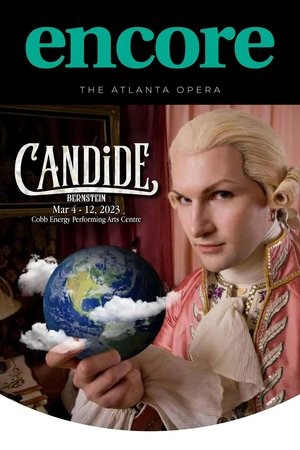
The innocent Candide discovers that human beings aren't all they are cracked up to be and ultimately focuses on building his own life on his own terms.
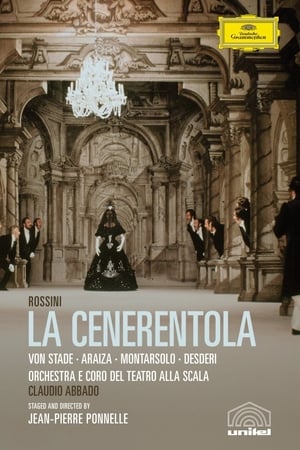
The Prince, Don Ramiro (who has changed places with his valet, Dandini), meets Cenerentola and they are instantly attracted to each other. When the Philosopher, Alidoro, later takes Cenerentola (dressed in magnificent clothing) to the palace, Dandini (still posing as the prince) tries to talk of love to her, but Cenerentola rejects him, saying that she is in love with his 'valet'. Ramiro, who has overheard this comment, is overjoyed, and immediately proposes to her, but Cenerentola says that he must first seek her out and then, if he still felt the same way, she would marry him. She gives him one of a matching pairs of bracelets, telling him to look for its companion on her right arm (she then leaves the palace). Ramiro ends the masquerade, and he and Dandini resume their true identities. The Prince then sets out on his quest - little realising that destiny, in the form of a violent thunderstorm, is about to take a hand in the affair.
The Queen of the Night enlists a handsome prince named Tamino to rescue her beautiful kidnapped daughter, Princess Pamina. Aided by the lovelorn bird hunter Papageno and a magical flute that holds the power to change the hearts of men, young Tamino embarks on a quest for true love, leading to the evil Sarastro's temple where Pamina is held captive.
This opera was filmed live at La Scala in 1992. The all-star cast includes Luciano Pavarotti, Samuel Ramey, aolo Coni, Daniela Dessi, Luciana d'Intio, and Alexander Anismov. Riccardo Muti conducts.
As the saying goes, “Shakespeare invented him, Verdi made him immortal” – and, surely, it was Bryn Terfel who defined him. Terfel first sung Falstaff in 1999, and in 2021, the bass-baritone superstar returns once more to the role at Grange Park Opera. In a production by Stephen Medcalf first shown in the 17th century Farnese theatre in Parma in 2011 with designs that are truly Falstaffian including sensational backcloths by Italian supremo Rinaldo Rinaldi.
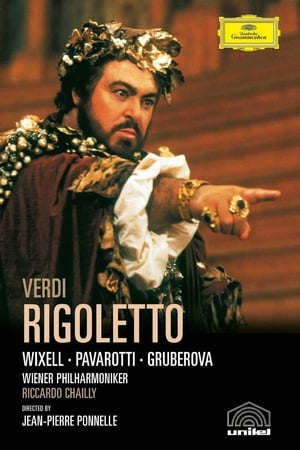
Rigoletto is a jester in the court of the Duke of Mantua. He has a hunch-back and he's rather unattractive, but he's good at his job of humiliating the courtiers for the amusement of the Duke. The courtiers, of course, are not amused. The Duke is a ladies man who feels his life would be meaningless if he couldn't chase every skirt he sees. In fact, we learn as the opera begins that he's recently been noticing a young lady every Sunday on her way to church, and he's vowed to have his way with her. What nobody realizes is that the girl is the jester's beloved daughter, Gilda, and that Gilda has seen the Duke every Sunday and is smitten with him. Suddenly Count Monterone appears at court, furious that the Duke has seduced his daughter. Rigoletto ridicules Monterone, the Duke laughs, and Monterone casts an awful curse on both of them. Later, the courtiers discover that Rigoletto is secretly living with Gilda...
A filmed stage production of the story of Pelle Svanslös, the cat who lost his tail as a kitten, and his interactions with all the other cats in the neighbourhood.
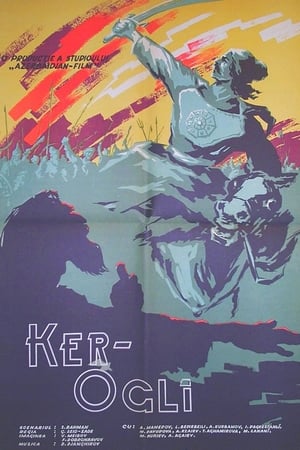
The heroic Koroghlu is a poor youngster who leads a peasants' revolt against the tyrannic Khan.
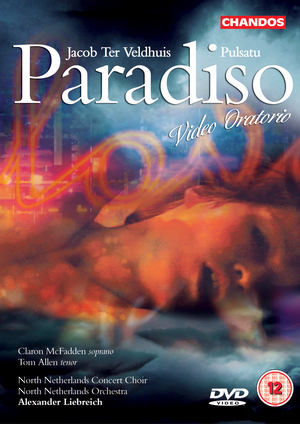
The moon landing is juxtaposed to Dante and Beatrice's journey through paradise in this visual oratorio composed by Jacob ter Veldhuis.
The Gershwins’ modern American masterpiece has its first Met performances in almost three decades, starring bass-baritone Eric Owens and soprano Angel Blue in the title roles. Director James Robinson’s stylish production transports audiences to Catfish Row, a setting vibrant with the music, dancing, emotion, and heartbreak of its inhabitants.
ENO revival of the classic Gilbert and Sullivan operetta as reimagined in a 1930s grand hotel setting with Marx Brothers-inspired humour and Busby Berkeley-style dance numbers
In an epic tale of good versus evil, Faust sells his soul to the Devil and tries to save Marguerite from an eternity in Hell.
Opera in three acts by Christoph Willibald Gluck, Hector Berlioz's version (1859)
Filmed production of Bizet’s Carmen at Earls Court in London, June 1989.
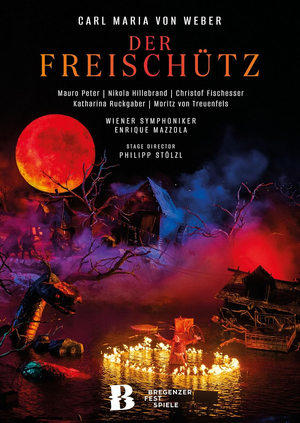
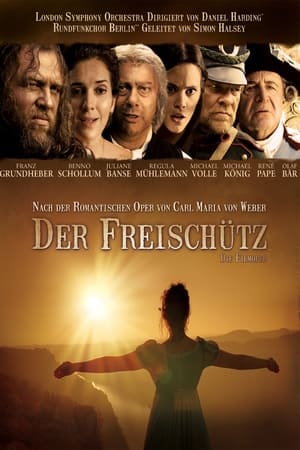
Inspired by Carl Maria von Weber's Der Freischütz, the film opera Hunter's Bride traces the romantic rivalry between two veterans of the Napoleonic Wars who each vie for the heart of the same woman.
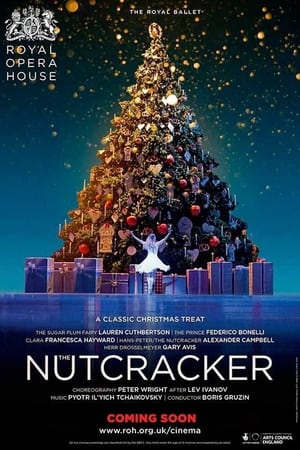
Clara is given an enchanted Nutcracker doll on Christmas Eve. As midnight strikes, she creeps downstairs to find a magical adventure awaiting her and her Nutcracker. The magician Drosselmeyer transforms the drawing room into a battle between mice and toy soldiers. During the battle, Clara saves the Nutcracker’s life – so breaking a magical spell that turned him from a boy to a toy – and the Mouse King is defeated. In celebration, Drosselmeyer sweeps Clara and the Nutcracker off to the Kingdom of Sweets, where they meet the Sugar Plum Fairy and take part in a wonderful display of dances. The next morning, Clara’s adventures seem to have been more than just a dream.
"Despite the multitude of characters and situations, the plot is simple: the eternal flow of life. It is based on Les contes fantastiques d’Hoffmann, a play by Jules Barbier and Michel Carré, who were inspired by some of the stories of the German E.T.A. Hoffmann. On a drunken night in the city, Hoffmann tells how he courted and lost three girls, his impossible loves: Olympia, a mechanical doll that only he believes to be truly human; Giulietta, the courtesan who steals his reflection in a mirror; and Antonia, a young woman who sings until she literally dies." Venue & Opera Company: Teatro Regio di Parma Recorded: 1988 Singers: Alredo Kraus, Ruth Welting, Jonathan Omilian, Barbara Hendricks, Elena Zilio, Nicola Gjiuselev, Bruno Buulgarelli, Francis Egerton, Aldo Bottion Orchestra: Orchestra Sinfonica dell'Emilia-Romagna "Arturo Toscanini" Chorus: Coro del Teatro Regio di Parma Chorus Master: Adolfo Tanhzi Stage Director: Beppe de Tomasi
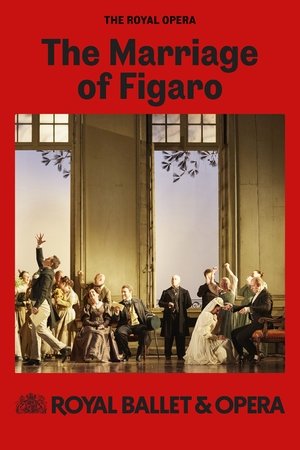
Count Almaviva lives with his Countess on their estate near Seville. The Count has his eye on his wife’s maid Susanna, who is betrothed to the Count’s servant, Figaro. Much to Figaro’s dismay, the Count plans to seduce Susanna on wedding night. Meanwhile, Cherubino, the Count’s young page, is infatuated with the Countess, but has just been dismissed after being discovered with Barbarina, the gardener Antonio’s daughter.
In the court of Princess Turandot, suitors who fail to solve her riddles are brutally killed. But when a mysterious Prince answers correctly, suddenly he holds all the power – and a glorious secret. When life hangs in the balance, can love conquer all?