Decades after serving in WWII and assassinating Adolf Hitler, a legendary American war veteran must now hunt down the fabled Bigfoot.
As World War II rages in Europe, a conflict arises between the French and the Diola-speaking tribe of Africa, prompting the village women to organize their men to sit beneath a tree to pray.
It was one of the great crimes of the Second World War: from 1941 to 1944, a total of 872 days, the siege and starvation of Leningrad by the German Wehrmacht on Hitler's orders lasted. Over a million people fell victim to the blockade, most of them dying of hunger. Countless of these starving people wrote diaries with the last of their strength, and cameramen filmed in the paralyzed city. Evidence from the hell of the siege, many of the film recordings, but above all the written memories on which this documentary on the occasion of the 80th anniversary of the liberation is based, remained under lock and key after the war. The voices of those who had suffered through this terrible time should not be heard by anyone, because they did not fit the pathos of the Leningrad heroic song that was officially sung. Most of the recordings come from women. The writers feared neither the enemy nor the Communist Party or Stalin, who often proved incompetent in providing for the population.
Helena has worked as a kind of midwife on the eve of the Lapland War. She wants to leave everything behind, and a suitable opportunity arises when she falls in love with a German-Finnish officer Johannes, who is leaving to German-led Titovka prison camp in the Soviet Union. Helena enlists into the camp as a nurse, where she experiences the brutality of war.
The story of J. Robert Oppenheimer's role in the development of the atomic bomb during World War II.
Near the end of World War II, a secret American raid on an enemy transportation hub goes very wrong when a turncoat warns the enemy. Led by Capt. Webster Carey, the mission causes the deaths of many bystanders -- among them, Carey believes, his Italian girlfriend, Giulia de Graffi. Back home, Carey stumbles across evidence that might uncover the identity of the informant. But, when he returns to Italy to get even, Carey is stunned by what he finds.
A lavish retelling of the true story of the final voyage and ultimate destruction and sinking of the battleship Yamato, Japan's greatest flagship during the Second World War.
As the world faces its Second World War, John Halder, a good, intelligent German professor, finds himself pulled into a movement with unthinkable consequences.
War correspondent Lopatin takes a 20-day-leave from his hard work at the front in 1942. He travels to faraway Tashkent to meet the family of the killed soldier and visit the film set of the screen adaptation of his war-time stories. Lopatin also manages to walk the streets of Tashkent, take part in a factory workers' meeting and have a short-lived love affair. Although with no bombings and fighting, the city dwellers breathe the atmosphere of the ongoing war.
American soldiers undertake a mission to capture a Japanese admiral who has survived an air crash in China during WWII.
The film is based solely on footage shot in Warsaw in 1939 by Julien Hequembourg Bryan. This American filmmaker and photographer documented life in Poland, the Soviet Union and Nazi Germany between 1935 and 1939. Following the outbreak of the Second World War, he arrived in Warsaw, where he shot a number of films documenting the city under siege, and is said to be the only foreign correspondent in the Polish capital at the time. Bryan also took the first colour photographs of wartime Warsaw.
After being abandoned by their Nazi parents at the end of World War II, five German siblings embark on a harrowing journey across their war-torn country. Led by the eldest, 14 year-old Lore, the children are forced to confront their parents’ actions and the reality of a new world.
During World War II, an American who sympathizes with the Nazi cause defects to Germany, where he is greeted as a hero and given a job broadcasting propaganda to the West. What the Nazis don't know is that he is actually a double agent. Compilation of the show Blue Light.
An edited version of the Pathfinders TV drama set in the Second World War, telling the story of the fictitious Royal Air Force 192 Pathfinder squadron.
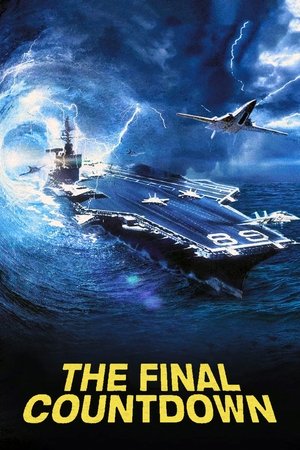
A fictional documentary about the creation of the world's first time machine, the men who created it, and the unintended ramifications it has on world events.
October 24, 1944, the world’s greatest battle at sea begins in the Philippines. Japan’s navy gambles on a decisive victory against the United States to turn the tide of World War II. Instead, Musashi, its top-secret super battleship, ends up at the bottom of the ocean.
Ahti Helpi, the pastor of a rural parish who sees himself as both a priest and a soldier, leaves for the front to continue the war. At home, his pregnant wife Lea takes care of their large family as well as the parishioners. They endure the difficult times by believing in God, home, and their fatherland.
In may 1940, the German troops enter France. Frightened by the progress of the enemy, the people of a small village of Pas-de-Calais decide on the recommendations of the prefecture, to give up everything to go on the road, fleeing to the coast.
Wartime thriller with film noir elements based on a true story as written in A.P. Scotland's autobiography "The London Cage". The plot has greatly exaggerated the actual events of A.P. Scotland's experiences, including the addition of a fictional love interest.
Rytíř