Eddie Hawkins, called Hudson Hawk has just been released from ten years of prison and is planning to spend the rest of his life honestly. But then the crazy Mayflower couple blackmail him to steal some of the works of Leonardo da Vinci. If he refuses, they threaten to kill his friend Tommy.
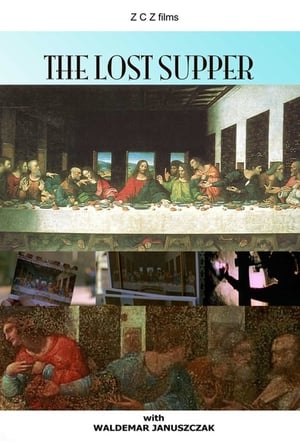
This rare film tells the strange, disquieting and protracted story of the restoration of Leonardo da Vinci’s famous masterpiece, The Last Supper. Some say the results of the restoration are glorious. Others have called them tragic. Da Vinci’s famously fragile fresco was always going to be a challenge for its secretive Italian restorers. No one, however, could have foreseen how problematic and strange their task would become. Marked by a series of extraordinary mishaps, mistakes, and miscalculations, the incredible restoration is hilarious to watch but may have resulted in the loss of a masterpiece.
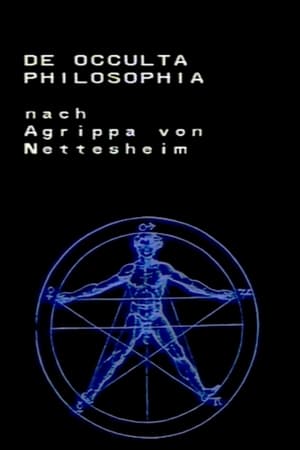
An attempt to visualize a secret knowledge about the nature of man —a philo-clip—, through the use of structures of dissociated geometry and laser beams, with direct references to the Renaissance, Leonardo da Vinci and the work of Agrippa von Nettesheim.
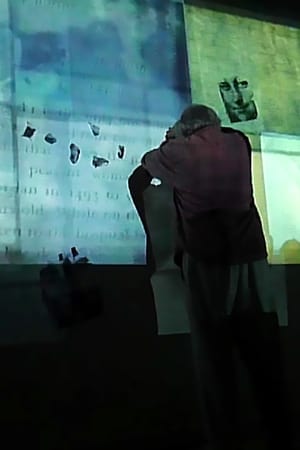
"This installation or performance work puts my own earlier film of the Mona Lisa (1973) through another stage of transformation – my own irretrievable self of some 34 years ago is now also part of the subject I first saw the ‘actual’ ‘Mona Lisa’ when I was about thirteen. Of course I had seen dozens of reproductions in books and postcards by then and the popular mythology of the enigmatic smile was already well engrained in my mind. My strongest impression, as I recall, was how small and unsurprising it was – a heavily protected cultural icon – no longer really a picture – and I was much more excited by the painting of the distant landscape than by the face. My own ‘version’ of ‘la Giaconda’ was never an homage, nor like Marcel Duchamp’s ‘L.H.O.O.Q’, an attack on its cultural power. Instead it came from a fascination with change and transformation – maybe also with arbitrary appropriation." Malcolm Le Grice
Two 20th-century friends accidentally stumble into the year 1492, where they meet a charming teen and try to alter history.
Danielle, a vibrant young woman, was forced into servitude after the death of her father when she was a young girl. Danielle's stepmother, Rodmilla, is a heartless woman who forces Danielle to do the cooking and cleaning, while she tries to marry off the eldest of her two daughters to the prince. But Danielle's life takes a wonderful turn when, under the guise of a visiting royal, she meets the charming Prince Henry.
Janina Ramirez explores the BBC archives to create a TV history of Leonardo Da Vinci, discovering what lies beneath the Mona Lisa and even how he acquired his anatomical knowledge.
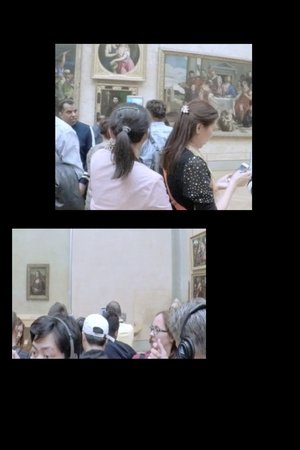
People looking at the Mona Lisa in the Louvre – or are they just looking at themselves?
The sophisticated thief of art Robert "Cuma" Cumiński is released on probation from the local prison by the corrupt Doctor Wiaderny to organize the theft of the famous Leonardo Da Vinci painting "Lady with Ermine" for the dealer Gruby. Three years ago, Cuma was accidentally arrested by the snoopy detective Wilk after a successful heist in the house of the collector Lehman, but he has not ratted his comrade Julian.
At the age of 24, and with serious charges hanging over him, Leonardo da Vinci is thrown into a Florentine dungeon where several common criminals are rotting away.
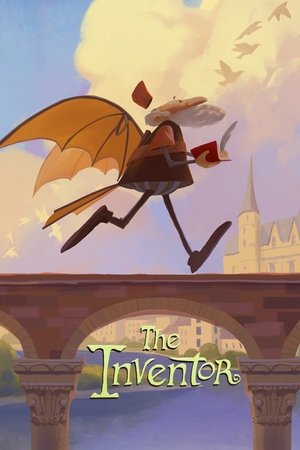
The insatiably curious and headstrong inventor Leonardo da Vinci leaves Italy to join the French court, where he can experiment freely, inventing flying contraptions, incredible machines, and study the human body. There, joined in his adventure by the audacious princess Marguerite, Leonardo will uncover the answer to the ultimate question – "What is the meaning of it all?"
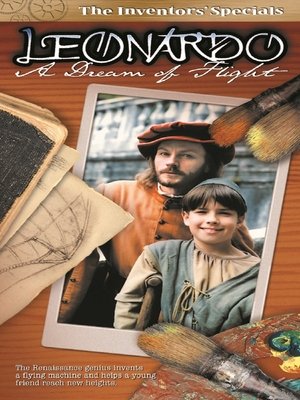
Leonardo da Vinci finds it difficult to pursue his own dreams while serving as the Duke's court artist, but young Roberto takes risks to convince the Master not to give up on his dreams. In this moving story of friendship, the Renaissance genius invents a flying machine and helps Roberto reach new heights.
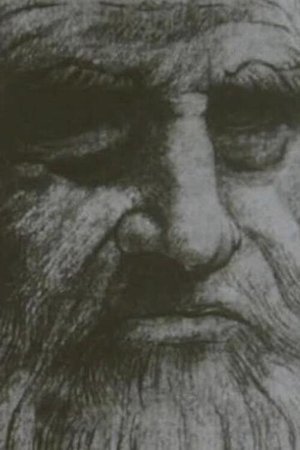
A portrait of the artist as a "sublime demon with the archangel's face", with an innovative musique concrète soundtrack.
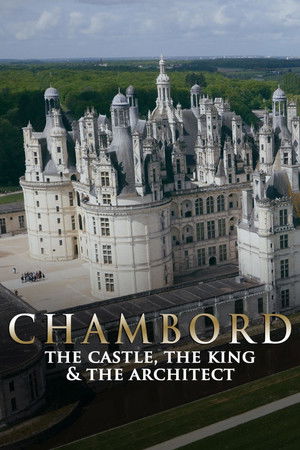
Chambord, the most impressive castle in the Loire Valley, in France, a truly Renaissance treasure, has always been an enigma to generations of historians. Why did King Francis I (1494-1547), who commissioned it, embark on this epic project in the heart of the marshlands in 1519? What significance did he want the castle to have? What role did his friend, Italian genius Leonardo Da Vinci (1452-1519) play? Was he the architect or who was?
Leonardo da Vinci strove to know the world equally through artistic and scientific means. This poetic portrayal of one of history’s most imaginative minds returns to the Goodman nearly three decades after it burst onto the stage in a career-catapulting production for adaptor/director Mary Zimmerman. In a production composed entirely of words from his notebooks and various treatises, da Vinci’s ideas on topics from mathematics, anatomy, architecture and engineering, to philosophy, love and the human spirit come to vivid life.
A guided tour through the corridors of the Louvre to closely contemplate the works of Leonardo in the company of the curators of the exhibition, Vincent Delieuvin and Louis Frank.
Provides a basis for appreciating the style and beauty of Leonardo da Vinci's art by examining his famous works. His versatility as an artist, mathematician, anatomist and architect is also pictured.
This landmark film uses new evidence to investigate the truth behind Mona Lisa's identity and where she lived. It decodes centuries-old documents and uses state-of-the-art technology that could unlock the long-hidden truths of history's most iconic work of art.
Leonardo da Vinci is considered by many to be one of the greatest artists who ever lived. Yet his reputation rests on only a handful of pictures - including the world's most famous painting, the Mona Lisa.
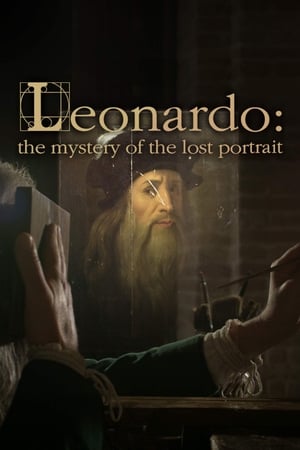
Leonardo da Vinci is not just the most famous and most admired of all painters - he is an icon, a superstar. Yet, the man himself remains elusive. Accounts during his lifetime describe a man too handsome, too strong, too perfect to be accurate. But in 2009, the chance discovery in the South of Italy of an ancient portrait with strangely familiar features takes the art world by storm. Could this be an unknown self-portrait by Leonardo da Vinci? Controversy erupts among the experts. The implications of such a discovery have far-reaching consequences for our understanding of the work of this great Renaissance master.