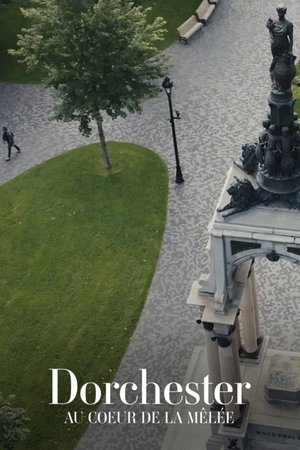
This short documentary visits the 3 Quebec border towns of Rock Island, Stanstead and Beebe, and the Vermont town of Derby Line to see how residents and officials cope with a civic life that is cut down the middle by an international boundary.
Through concerts and interviews, folk-progressive group Harmonium takes Quebec culture to California. This documentary full of colour and sound, filmed in California in 1978, recounts the ups and downs of the journey of the Quebec musical group Harmonium, who came to feel the pulse of Americans and see if culture, their culture, can succeed in crossing borders.
This short film retraces the life of Herman Smith Johannsen – the man who introduced the sport of cross-country skiing to Canadians. From past to present, his life story is portrayed through pictures from sports newsreels, Norwegian archives and his family album. The film catches up with him at both the Canadian Ski Marathon, where he is the honoured guest, and on a return trip to his native Norway.
Documentary on the life of Hubert Aquin. Alive, he was a dazzling and extraordinary character. Dead, he is already legendary. From his legend, everything is both true and false. Neither biography nor critical work, this film is an evocation of his universe.
This pioneering documentary film depicts the lives of the indigenous Inuit people of Canada's northern Quebec region. Although the production contains some fictional elements, it vividly shows how its resourceful subjects survive in such a harsh climate, revealing how they construct their igloo homes and find food by hunting and fishing. The film also captures the beautiful, if unforgiving, frozen landscape of the Great White North, far removed from conventional civilization.
Innucadie (festival du conte et de la légende de Natashquan, 1er édition)
Canada Mania
Au cœur de Mégantic
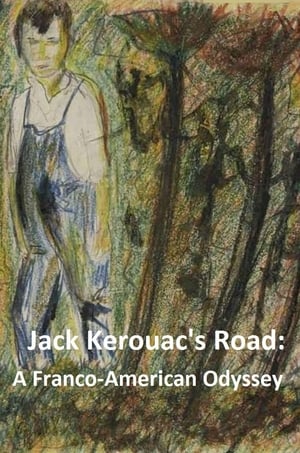
Part documentary, part drama, this film presents the life and work of Jack Kerouac, an American writer with Québec roots who became one of the most important spokesmen for his generation. Intercut with archival footage, photographs and interviews, this film takes apart the heroic myth and even returns to the childhood of the author whose life and work contributed greatly to the cultural, sexual and social revolution of the 1960s.
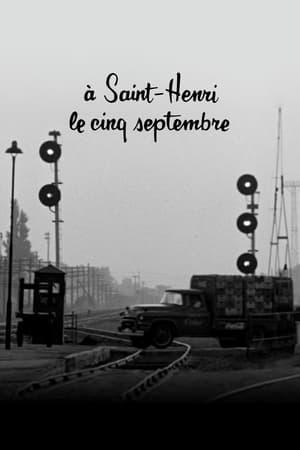
This short film is a series of vignettes of life in Saint-Henri, a Montreal working-class district, on the first day of school. From dawn to midnight, we take in the neighbourhood’s pulse: a mother fussing over children, a father's enforced idleness, teenage boys clowning, young lovers dallying - the unposed quality of daily life.
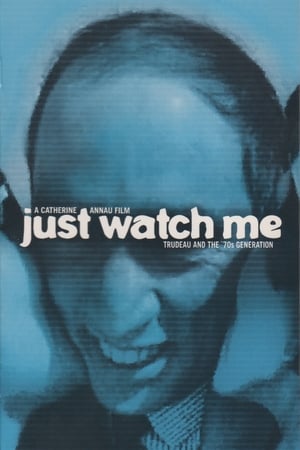
Canadian director Catherine Annau's debut work is a documentary about the legacy of Pierre Trudeau, the long-running Prime Minister of Canada, who governed during the 1970s. The film focuses particularly on Trudeau's goal of creating a thoroughly bilingual nation. Annau interviews eight people in their mid-30s on both sides of the linguistic divide. One tells of her life growing up in a community of hard-core Quebec separatists, while another, a yuppie from Toronto, recalls believing as a child that people in Montreal got drunk and had sex all day long. Annau has all of the interviewees discuss how Trudeau's policies affected their lives and their perceptions of the other side, in this issue that strikes to the heart of Canada's national identity.
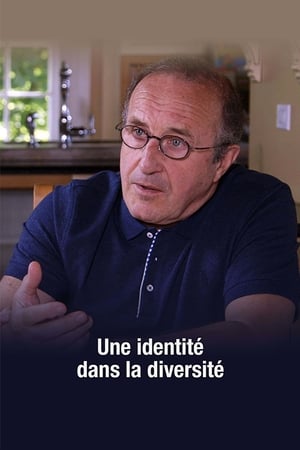
Une identité dans la diversité
This quirky little short by Gilles Carle was filmed on the pierced rock that stands near Quebec’s Gaspé peninsula. It is perhaps the most photographed natural phenomenon on Canada’s East Coast. Shot in the 1960s, the film has a very psychedelic feel to it, with animation, special effects, and a trio of women to guide us through.
In Part 1 of this 3-part documentary series, director Donald Brittain chronicles the early years of Pierre Elliott Trudeau and René Lévesque. From their university days in the 1950s to 1967 when Lévesque left the Liberal Party and Trudeau became the federal Minister of Justice, Brittain attempts to get at the heart of what makes these men so fascinating.
Part 2 of this 3-part documentary series about Pierre Elliott Trudeau and René Lévesque covers the years between 1967 and 1977, a colourful decade that saw Trudeau win three federal elections, the 1970 October Crisis and the sweeping rise to power of the Parti Québécois.
The final instalment of this 3-part documentary series about Pierre Elliott Trudeau and René Lévesque spans the decade between 1976 and 1986. The film reveals the turbulent, behind-the-scenes drama during the Quebec referendum and the repatriation of the Canadian Constitution. In doing so, it also traces both Trudeau's and Lévesque's fall from power.
75e, elles se souviennent
À force d'homme
The Taj Mahal and shots of Jalandhar nestle between footage from Canada and Africa.
Le déluge du Saguenay : une tragédie humaine