Free access to the Gaza Strip has remained closed to international journalists since the war began on October 7, 2023. AFP's permanent reporters are among the few professional witnesses to have experienced this conflict from the inside. They have watched, filmed, photographed, testified, all whilst struggling to ensure their own survival. From their exile, they recount this war, which is the deadliest ever recorded for members of the press.
Montage film by Aymeric Caron, broadcast at the French National Assembly on May 29, 2024. “Is it a dream or a reality? » demands a little girl stunned by her injuries. It is a nightmare, without a doubt, and nothing can justify it, neither the crimes of October 7 nor the detention of Israeli hostages by Hamas. Condemning all the crimes of October 7, before and after, condemning anti-Semitism and all forms of racism is common sense. However, it seems that this needs to be clarified. Everyone present normally wishes that the surviving hostages can one day be reunited with their families and that the massacre in Gaza stops immediately. But to follow through with the process is to see things face to face, to see what has been happening in Gaza since October 7, what the Israeli army is doing, what the television channels are not showing.
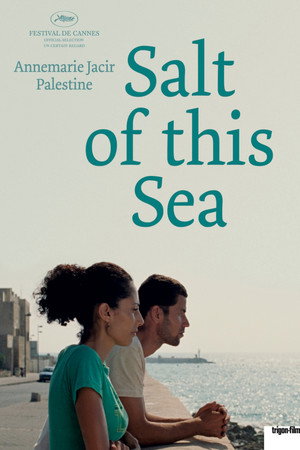
Samir, 43, is the owner of a shoe shop in Ramallah who has never seen the sea. He decides to sneak past Israeli borders with other Palestinian construction workers to fulfill his dream of seeing the sea.
Hussein, a Palestinian young man, receives a letter from the Israeli post office in which he must show up to pick up a mysterious delivery. What he finds out right there is that he has to pay US$ 20,000 to take it out.
An Italian cruise ship carrying passengers from all over the world is hijacked off the coast of Egypt by a Palestinian commando unit. It is the beginning of a three-day ordeal in 1985 that culminates in the murder of an American hostage and an armed clash between two NATO allies to capture his killers.
After years abroad in Italy, Shadi returns to his native Nazareth. But this is no spectacular homecoming. He's back somewhat begrudgingly to honour his "wajib" (or duty) to hand out invitations to his sister's wedding with his father. The simmering tension between the two — who are often stuck in a car, more often than not in traffic — builds, exposing the sometimes-comic chasms that exist between men who live in different worlds but share an unshakable bond.
A Palestinian seeks Israeli permission to waive curfew to give his son a fine wedding. The military governor's condition is that he and his officers attend. The groom berates his father for agreeing. Women ritually prepare the bride; men prepare the groom. Guests gather. The Arab youths plot violence. One Israeli officer swoons in the heat and Arab women take her into the cool house. A thoroughbred gets loose and runs to a mined field; soldiers and Arabs must cooperate to rescue it. As darkness falls, tensions between army and villagers rise, and the groom's wedding-night anger and impotence threaten family dignity and honor. Can cool heads prevail?
Chronicle of a Disappearance unfolds in a series of seemingly unconnected cinematic tableaux, each of them focused on incidents or characters which seldom reappear later in the film. Among the many unrelated scenes, there is a Palestinian actress struggling to find an apartment in West Jerusalem, the owner of the Holy Land souvenir shop preparing merchandise for incoming Japanese tourists, a group of old women gossiping about their relatives, and an Israeli police van which screeches to a halt so several heavily armed soldiers can get off the car and urinate.
In Jerusalem's orthodox neighborhoods, it's Succoth, seven days celebrating life's essentials in a sukkah, a temporary shack of both deprivation and hospitality. A devout couple, Moshe and Mali, married nearly five years and childless, are broke and praying for a miracle...
In 1917 when the British forces are bogged down in front of the Turkish and German lines in Palestine they rely on the Australian light horse regiment to break the deadlock.
Santa Claus tries to outrun a gang of knife-wielding youth. It's one of several vignettes of Palestinian life in Israel - in a neighborhood in Nazareth and at Al-Ram checkpoint in East Jerusalem. Most of the stories are droll, some absurd, one is mythic and fanciful; few words are spoken. A man who goes through his mail methodically each morning has a heart attack. His son visits him in the hospital. The son regularly meets a woman at Al-Ram; they sit in a car, hands caressing. Once, she defies Israeli guards at the checkpoint; later, ninja-like, she takes on soldiers at a target range. A red balloon floats free overhead. Neighbors toss garbage over walls. Life goes on until it doesn't.
Drunk and disillusioned Roman, Marcellus Gallio, wins Jesus' robe in a dice game after the crucifixion. Marcellus has never been a man of faith like his slave, Demetrius, but when Demetrius escapes with the robe, Marcellus experiences disturbing visions and feels guilty for his actions. Convinced that destroying the robe will cure him, Marcellus sets out to find Demetrius — and discovers his Christian faith along the way.
On the Pacific coast of Los Angeles, Ali and Yaffa struggle to remember the Arab Mediterranean cities they have left behind.
When Leah's husband Benjamin dies suddenly, Benjamin's brother Jake is stunned to learn he is expected to marry the childless Leah to carry on his brother's name. Jake suggests to Leah that they get married and maintain a secretly platonic relationship. The harder they try to disguise their "pretend" marriage, the more their appreciation for each other's worlds grow, and out of understanding, a real love develops.
The story follows a day in the life of Ismail, a Palestinian photographer whose American upbringing was shaped by his grandfather’s displacement during the 1948 Palestine Nakba. When Ismail’s mother gifts him his grandfather’s keffiyeh—a traditional Palestinian scarf—it triggers an internal struggle between shame and pride in his cultural identity, all unfolding against the ominous backdrop of rising violence against Palestinians.
A Jewish man discovers his boyfriend of 10 years has been cheating on him, and decides to embark on a dating spree.
The Holocaust began with the indiscriminate mass shootings by the Einsatzgruppen in the bloodlands of Eastern Europe and was perfected in the gas chambers at Auschwitz. “Bullets And Blueberries” explores the motives, methods and madness of the perpetrators, using never-before-seen images captured by the killers themselves — images that fully capture the banality of evil.
This omnibus release consists of three playlets filmed and aired during television's Golden Age, and starring some of the legends of film and television. The collection originally ran as a two-hour segment on December 14, 1959, on the anthology series The Play of the Week, broadcast locally in New York City via the independent radio station WNTA. Each "tale" in the anthology was adapted from a single tale by the inimitable Sholom Aleichem, regarded by many as the "Yiddish Mark Twain". Included are: "A Tale of Chelm" starring Zero Mostel and Nancy Walker in the story of a bookseller attempting to buy a goat; "Bontche Schweig" about a poor man (Jack Gilford) whose recent arrival in Heaven makes the angels cry; and "The High School" about a Jewish merchant (Morris Carnovsky) persuaded by his wife (Gertrude Berg) to let their son attend a particular high school despite the enforcement of quotas for Jewish students.
Born in Brooklyn to Palestinian refugee parents, Soraya decides to journey to the country of her ancestry when she discovers that her grandfather's savings have been frozen in a Jaffa bank account since his 1948 exile. However, she soon finds that her simple plan is a complicated undertaking — one that takes her further from her comfort zone than she'd imagined.
An Israeli film director interviews fellow veterans of the 1982 invasion of Lebanon to reconstruct his own memories of his term of service in that conflict.