A new, original documentary from Connecticut Public, Fake: Searching for Truth in the Age of Misinformation, takes on this topic, just in time for the 2020 election season. Viewers will learn how and why misinformation spreads, and how to be a smarter information consumer in our increasingly digital world.
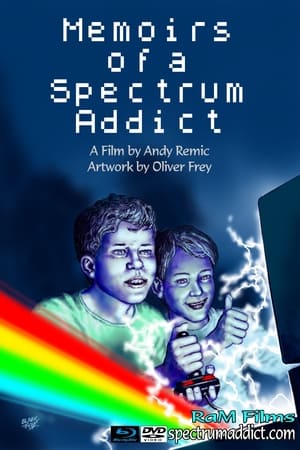
Memoirs of a Spectrum Addict is a full length documentary feature film which takes a detailed look at the ZX Spectrum, its history, developers, games and fans. The film is a unique tribute to the Sinclair ZX Spectrum. Memoirs of a Spectrum Addict has re-enactments, interviews like you’ve never seen before with major Spectrum industry figures, and features real people who grew up influenced by the Sinclair ZX Spectrum!
A college student searches for justice after she discovers deepfake pornography of herself circulating online.
Charles Babbage (1791-1871), computer pioneer, designed the first automatic computing engines. He invented computers but failed to build them. The first complete Babbage Engine was completed in London in 2002, 153 years after it was designed. Difference Engine No. 2, built faithfully to the original drawings, consists of 8,000 parts, weighs five tons, and measures 11 feet long. We invite you to learn more about this extraordinary object, its designer Charles Babbage and the team of people who undertook to build it. Discover the wonder of a future already passed.
Based on the conversations Jösta Hagelbäck and Erik Ostlund had with Lars Kristiansson, a professor of information theory with data communication at Chalmers University in Gothenburg, Sweden. The talks took place at the difficult cancer sufferer Kristiansson's sick-bed and dealt with his insights in computer technology, his hopes and fears for the new technology, the role of religion, the history of mathematics, reasoning about algebra, analytic geometry and the fourth dimension, along with cultural outlooks over the Western society's lack of mysticism and spiritual values.
A documentary about the exciting possibilities of computer animation and the shaping of never before imagined worlds.
It happened more or less by accident; the people who made it happen were amateurs; and for the most part they still are. From his own Silicon Valley garage, author Bob Cringley puts PC bigshots and nerds on the spot, and tells their incredible true stories. Like the industry itself, the series is informative, funny and brash.
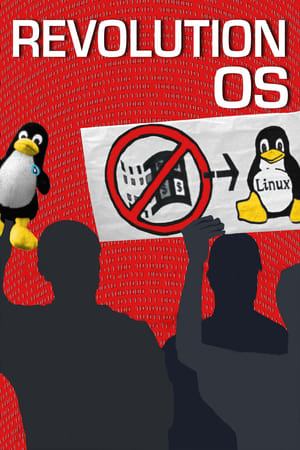
REVOLUTION OS tells the inside story of the hackers who rebelled against the proprietary software model and Microsoft to create GNU/Linux and the Open Source movement.
Startups are using AI to create avatars that allow relatives to talk with their loved ones after they have died. An exploration of a profound human desire and the consequences of turning the dream of immortality into a product.
The ancient Chinese game of Go has long been considered a grand challenge for artificial intelligence. Yet in 2016, Google's DeepMind team announced that they would be taking on Lee Sedol, the world's most elite Go champion. AlphaGo chronicles the team as it prepares to test the limits of its rapidly-evolving AI technology. The film pits man against machine, and reveals as much about the workings of the human mind as it does the future of AI.
A documentary about Commodore 64 game music, featuring later, less well known Commodore 64 musicians.
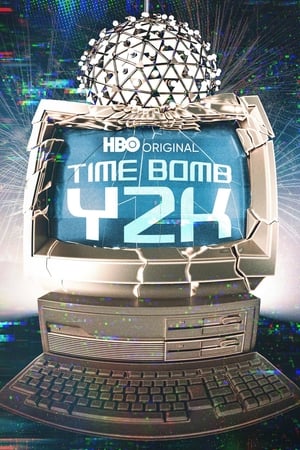
As the clock counted down to the the 21st century, the world faced a potential technological disaster: a bug that could cause computers to misinterpret the year 2000 as 1900. Crafted entirely from archival footage and featuring first-hand accounts from computer experts, survivalists, scholars, militia groups, conservative Christians, and pop icons, Time Bomb Y2K is a prescient and often humorous tale about the power and vulnerabilities of technology.
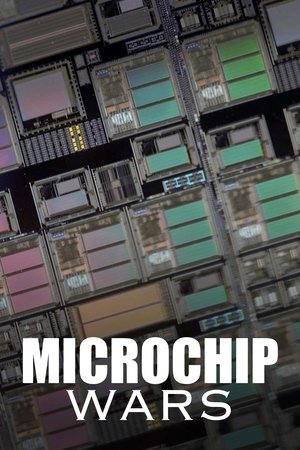
When the pandemic hit it highlighted how much Western countries rely on the chip industry. Today Europe, America and China are involved in an intense commercial struggle to dominate this sector that is so strategic for the future. From Taiwan to Shanghai, via Brussels and San Francisco, investigative journalist Nicolas Vescovacci went to meet the most influential players in this microchip war, which is redefining world geopolitics.
The Cost of AI
A documentary on the rise and fall of Project Cybersyn, an attempt at a computer-managed centralized economy undertaken in Chile during the presidency of Salvador Allende.
Explores the history, technology, people, stories and industry influence of this lesser-known personal computer. The film profiles important individuals involved in the creation of the computer, plus its life after cancellation, both as an entry-level Macintosh compatible and as a collectible. The work of Douglas Engelbart and his team, plus advances from the Xerox Palo Alto Research Center (PARC) with their Alto and Star workstations were the initial innovators of the Graphical User Interface (GUI), but the Apple Lisa stands as the clear foundation for what we all use today -- Macintosh -- Windows -- iOS -- Android.
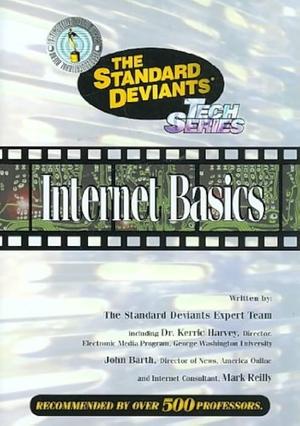
Jump onto the information superhighway with the Standard Deviants! Learn how to log on, surf the web and find everything you need in a matter of minutes!
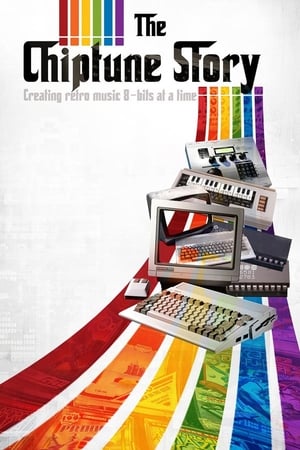
The ChipTune Story focuses on 8-bit music and the C64 SID chip. Featuring interviews with games 8-bit music composers Rob Hubbard, Chris Huelsbeck, Ben Daglish, Mark Knight. We look at the history of ChipTune from 8-bit to 16-bit sampling.
By observing the technological developments of artificial intelligence in several countries, this film sheds light on the advantages and limits of algorithms and their repercussions on the lives of citizens. Whether at the level of the State, the police, universities, or companies, artificial intelligences should be used as a tool, but very often become a substitute for the work of the individual. There are many abuses: manipulations, addictions, or centralization of power. What can governments and States do to best regulate these technological advances?
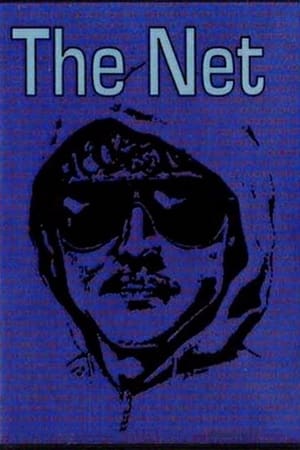
Explores the incredibly complex backstory of Ted Kaczynski, the infamous Unabomber. This exquisitely crafted inquiry into the rationale of this mythic figure situates him within a late 20th century web of technology—a system that he grew to oppose. A marvelously subversive approach to the history of the Internet, this insightful documentary combines speculative travelogue and investigative journalism to trace contrasting countercultural responses to the cybernetic revolution.