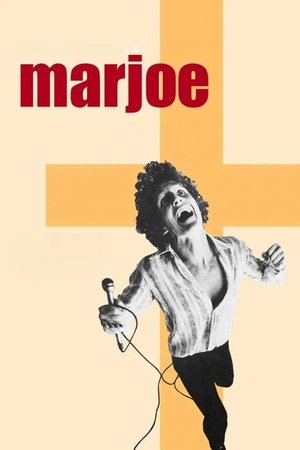
Part documentary, part expose, this film follows one-time child evangelist Marjoe Gortner on the "church tent" Revivalist circuit, commenting on the showmanship of Evangelism and "the religion business", prior to the start of "televangelism". Preserved by the Academy Film Archive in 2005.
Short film in support of the Red Cross showing civilian volunteers'work, radio and movie personalities at a fund-raising gala and encouraging recruitment. Deanna Durbin performs a song dedicated to the nurses. Preserved by the Academy Film Archive in 2012.
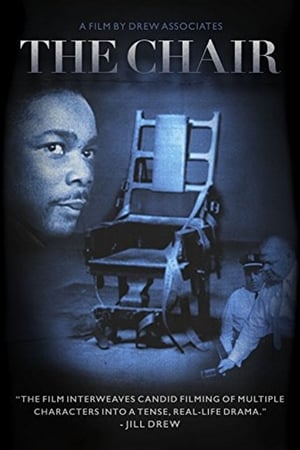
Follows a crusading lawyer as he embarks on a campaign to save an African-American man, Paul Crump, from the electric chair. Preserved by the Academy Film Archive in partnership with The Film Foundation in 2007.
The mechanized production of Duro-Test light bulbs is filmed as a dance to the tune of the Brandenburg, as choreographed filaments, glass, and metal combine in a dynamic finale. Preserved by the Academy Film Archive in 2013.
Experimental documentary using a train journey between New York City and Washington, D.C. as the framework for an exploration of American history. Preserved by the Academy Film Archive in 2015.
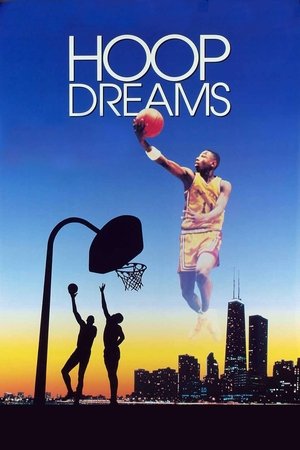
Every school day, African-American teenagers William Gates and Arthur Agee travel 90 minutes each way from inner-city Chicago to St. Joseph High School in Westchester, Illinois, a predominately white suburban school well-known for the excellence of its basketball program. Gates and Agee dream of NBA stardom, and with the support of their close-knit families, they battle the social and physical obstacles that stand in their way. This acclaimed documentary was shot over the course of five years.
A description and enactment of the discovery of gold by James Marshall, and the role played by John Sutter. Preserved by the Academy Film Archive.
A film's art director is in charge of the set, from conception to construction to furnishing. This short film walks the viewer through art directors' responsibilities and the demands on their talents. They read a script carefully and design a set to capture the time and place, the social strata, and the mood. They must be scholars of the history of architecture, furnishings, and fashion. They choose the colors on a set in anticipation of the lighting and the mood. Their work also sets styles, from Art Deco in the 20's to 30s modernism. Then it's on to the next project. Preserved by the Academy Film Archive in 2012.
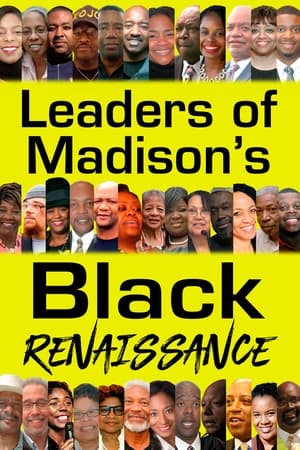
Despite Blacks making up only 7% of Madison WI's population, they are leading in so many important areas from education to politics, and are launching so many multi-million dollar projects that people describe this period as a "Black Renaissance."
One of Les Blank's industrial films, which follows a Holly Farms "broiler" chicken from factory incubation to the county fair barbecue pit. A hilarious, disturbing and surreal look at a large-scale chicken farm producing 156 million chickens a year! Film includes lots of chicken songs and music recorded live in the Blue Ridge Mountains of North Carolina. Preserved by the Academy Film Archive in 2013.
Possibly the most lucid, vivid, and awesome demonstration of the building up of still images to create moving ones, Pasadena Freeway Stills simply, gracefully and powerfully shows us the process by which we are fooled by the movies. By doing so, Gary Beydler mines a very rich vein of associations and metaphor, without the slightest ostentation. Constructed as a thrilling arc of realization and, in a quite moving way, disappointment, the film is a beautiful articulation of our emotional entanglement with moving images, while simultaneously creating a form in which the illusion of cinema is brought into incredible relief as the film we're watching gradually catches up to the film Gary is holding up to the camera with his hands, one frame at a time. (Mark Toscano) Preserved by the Academy Film Archive in 2008.
A historical film contrasting the two Germanies – the good and the evil – which struggled for power between the two world wars.
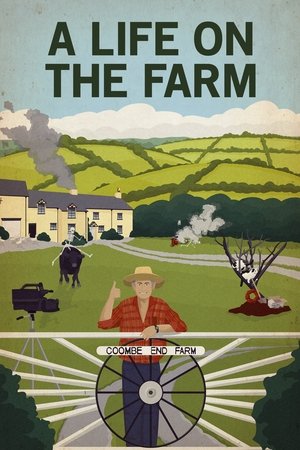
A strange story from Somerset, England about a filmmaking farmer and the inspiring legacy of his long-lost home movies.
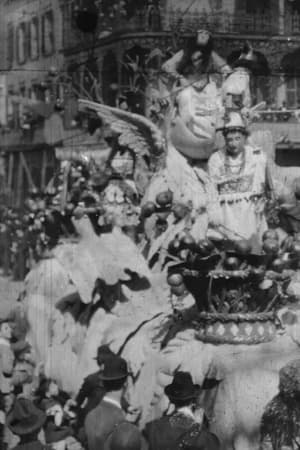
The film is part of Eye Filmmuseum’s Mutoscope and Biograph Collection. This collection consists of about 200 films preserved on their original 68 mm format. The digital file provided is scanned in 2022 at Eye Collection Center, from the 35 mm duplicate negative that was made in 1998. After the first analogue preservation round made 25 years ago, Eye is now undertaking the digital restoration of the Mutoscope & Biograph Collection. “Mardi Gras Carnival” became the focus of attention, thanks to its inclusion within ‘The Artistry of REX’ exhibition, that opened in the summer of 2022 at the Louisiana State Museum.
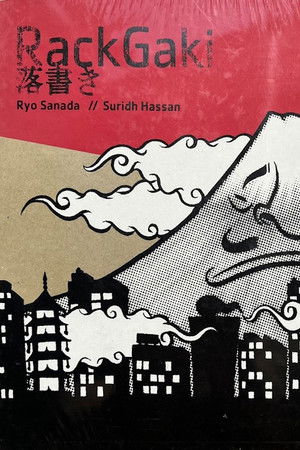
Dedicated to Japan's rackgaki (graffiti) scene, this DVD brings to life the imagery of the book and includes footage of graffiti being created. Set to a soundtrack by some of Japan's leading Trip-Hop artists, the viewer is fully immersed in the subculture that is Japanese graffiti.
NO NO NOOKY TV posits sexuality to be a social construct in a "sex-text" of satiric graphic representation of "dirty pictures." Made on an Amiga Computer and shot in 16mm film, NO NO NOOKY TV confronts the feminist controversy around sexuality with electronic language, pixels and interface. Even the monitor is eroticized in this film/video hybrid that points fun at romance, sexuality, and love in our post-industrial age. Preserved by the Academy Film Archive in 2017.
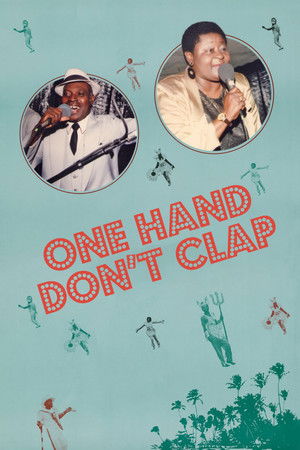
Kavery Kaul’s engaging documentary traces the history of calypso and soca music from their birth in the African-East Indian traditions of Trinidad and Tobago through its worldwide diaspora, including its popularization in the 1950s by Harry Belafonte and the new independent distribution networks that arose to serve the expatriate community in the 1980s.
A charismatic 22-year-old with multiple disabilities leaves his mother's home to share an apartment with the close-knit group of artists and musicians who are his caregivers.
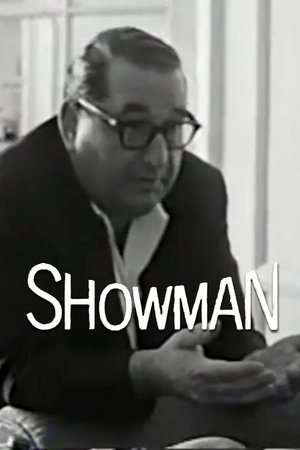
Albert and David Maysles (Gimme Shelter) directed this 53-minute documentary about movie tycoon Joseph E. Levine (1963).
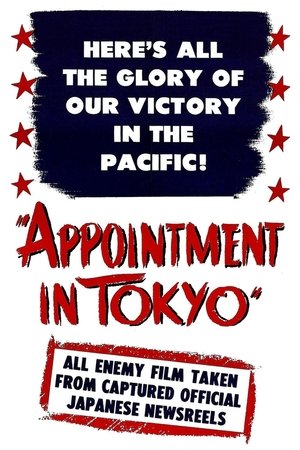
Produced by the Army Pictorial Service, Signal Corps, with the cooperation of the Army Air Forces and the United States Navy, and released by Warner Bros. for the War Activities Committee shortly after the surrender of Japan. Follow General Douglas MacArthur and his men from their exile from the Philippines in early 1942, through the signing of the instrument of surrender on the USS Missouri on September 1, 1945. Preserved by the Academy Film Archive in 2013.