A partly dramatised account of the lives of four Allied servicemen ahead of D-Day, the programme told their story through their final letters home before the assault.
Anne Frank's world famous diary came to an abrupt end shortly before she and her family were discovered hiding from the Nazis in a secret annex at the top of Otto Frank's office building, on August 4, 1944. While her diary tells the story of Anne's life, the story of her death reveals the atrocities encountered by millions of Jews during the Holocaust. In a solemn remembrance of the horrors that Anne Frank and these millions of others suffered during the dark days of World War II, National Geographic Channel (NGC) takes viewers inside the concentration camps in a two-hour special. In keeping with NGC's tradition of unparalleled storytelling, Anne Frank's Holocaust incorporates new findings and rarely seen photographs to reintroduce the story of the massacre of Jews in one of the most comprehensive documentaries on the subject to date.
Young Brad Craig enters the military school with a chip on his shoulder which upperclassmen quickly knock off. Once adjusted, Craig falls in love with a professor's beautiful daughter, only to find she is in love with his roommate.
Without lights and in a driving rain, a bus is lumbering along the muddy Assam Road en route from Chunking to the Indian border. Passengers include a European of unknown nationality, a missionary a French officer, and a White Russian. There is also an ancient Chinese lady on an important diplomatic mission to Indian and her traveling companion. The trip is halted when Japanese planes bomb the road and hit a munitions truck and kill many Chinese soldiers. The Chinese commander puts the wounded soldiers on the bus and directs it to a nearby secret airport where the officer in charge is an American attached to the Chinese Air Force.
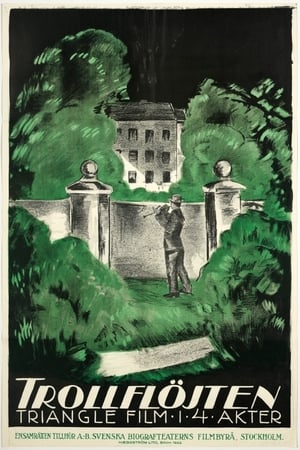
This story deals with a man, who causes his wife great jealousy on account of his relation to other women, yet who regards himself as a man of destiny in settling others unhappy marital relations. He is named co-respondent in a suit - leaves town - takes a house in a smaller village - picks up a little girl on the street in his car and drives into the country.
"Hurricane" Jack Foster is a smuggler who ignores his wife and child in order to pursue Marguerite Blair, the unhappy wife of the Chief Ranger of the North West Mounted Police. Foster lays plans for his final theft, after which he will elope with Marguerite, although Blair lays his own plans to thwart his rival. Dispirited over Blair's lack of attention, Marguerite nonetheless calls his office before running away with Foster in a last effort to reconcile with her husband. Marguerite cannot reach Blair but does receive a message that his remoteness has been due to his job rather than "another woman." When Foster then attempts to carry out his plan and knocks out Blair in the process, Marguerite does not hesitate to shoot Foster. With Foster and his gang rounded up, the Blairs reconcile.
Laurie Devon is a New York playwright who, having had one success, refuses to work on another play.
The Saudi family is following strict instructions from their grandfather to remain confined in the desert during the early 1990s. A series of events shakes the family's foundation and they find them in a struggle between life and death.
An eight-year-old boy is willing to do whatever it takes to end World War II so he can bring his father home. The story reveals the indescribable love a father has for his little boy and the love a son has for his father.
Edith Frome (Stevens) finds it impossible to live with her alcoholic husband Arthur (L ‘Estrange), and finally leaves him. After three years she returns but leaves each evening, returning late arousing the suspicion of her husband. Having her followed he soon learns that she visits a child. Suspecting the worst because of her friendship with Dr. David Brett (Phillips), he institutes divorce proceedings. Edith confesses the truth about the child and Arthur, realizing his folly, swears off liquor and they are reunited.
For fans of history, this glimpse of Munich society in the 1920s will be a much-treasured event. The story revolves around an art-gallery manager who puts on a show featuring the scandalous works of a woman artist who committed suicide. He is unjustly accused of having committed adultery with her, and for some reason the authorities decide to make an example of him. He is imprisoned at about the same time that Hitler and the nascent Nazi party attempt the infamous Beer Hall Putsch, and the gallery manager's girlfriend and a Swiss writer valiantly (and unsuccessfully) attempt to get better justice for him. Nobody in authority, it seems, has the courage to take up the challenge of righting this particular injustice.
In this remake the Bertolucci's 1900, Olmo Dalco and Alfredo Berlingheiri's complicated friendship and struggles with the constantly changing political scope are chronicled as well as the rise of fascism and the communist revolution.
Bertha Sloan loses her job as a sewing-machine girl and subsequently is employed as telephone girl with a lingerie manufacturing company. She soon falls in love with the assistant shipping clerk, Roy Davis, and is promoted to chief model for the firm, owing to the patronage of Morton, the wealthy and wicked manager. Bertha is about to take a position in Paris as designer when Morton lures her to his home.
Une vie avec Oradour
A folktale in Los Angeles.
Broad-minded rector Stephen Carey is ousted from his church by his vestrymen and befriends Claudia Bigelow, a young divorcée who defended his position in the church. Claudia's carelessness in leaving a cigarette burning causes Jimsy, the housekeeper's son, to go blind. Stephen's prayers restore the boy's sight, and a happy future is predicted for all.
When a US Naval captain shows signs of mental instability that jeopardize his ship, the first officer relieves him of command and faces court martial for mutiny.
A Blind Hero depicts Otto Weidt's story as told by award-winning journalist and author Inge Deutschkron, who tells the incredible tale of Weidt's efforts to save her and the rest of his employees from the Nazis, including Alice Licht, the love of Otto Weidt's life.
With the death of her mother, eight-year-old Anna ends her childhood: From now on, she has to look after the nine-member family. Deprivation-rich years, which also find no end when Anna marries: Her husband Albert must be a soldier in the Second World War, and the pregnant Anna has to work hard in the farm and care sick relatives. Lonely and exposed to the harassment of the tyrannical mother-in-law, she waits for Albert, with no certainty that he will ever return.
Three low-level amateur thieves, Ricky, Dom and Ralph, steal five-million dollars from a dangerous mob-boss, Tony Farkas, and his deadly hitmen. It's only once they are finally successful and return to their hideout safely, that everything spirals. Everyone wants it all for themselves.