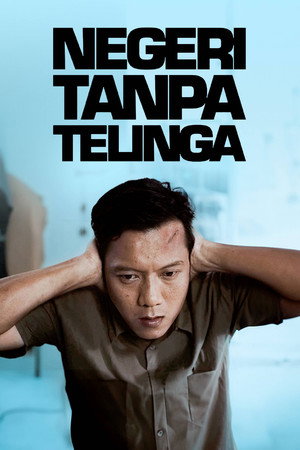
Naga, masseur, asks doctor Sangkakala to damage his eardrums so that he no longer hears painful voices. Meanwhile there is a big conspiracy conducted by Partai Amal Syurga (Heaven Charity Party). The party chairman, Ustad Etawa, in cooperation with the importer of sheep meat, tries to manipulate the state money to benefit his party. And Partai Martobat (Repentance Party) is the bearer of political legitimacy in the country. Piton’s great ambition is to be president. For that he is trying to get as much money by using his influence in parliament, assisted by Joki Ringkik, party colleague, who desperately convincing Python to advance to the next presidential election. Pythons also uses Tikis Queenta, lobbyist, who can get into all lines of parliament and party people.
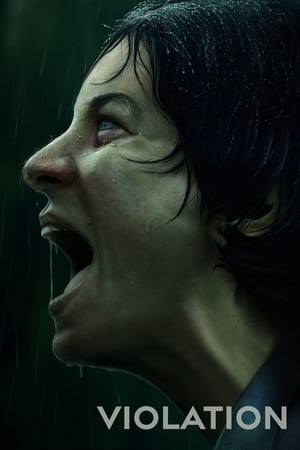
A troubled woman on the edge of divorce returns home to her younger sister after years apart. But when her sister and brother-in-law betray her trust, she embarks on a vicious crusade of revenge.
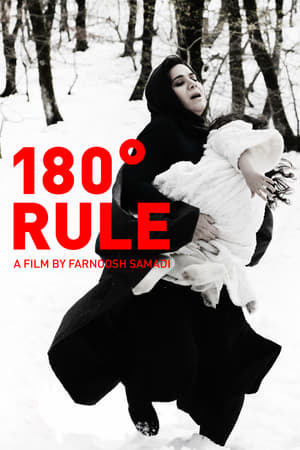
A school teacher from Tehran is preparing to attend a wedding in northern Iran. When her husband suddenly forbids her to go, she makes a choice that will place her on a painful path to atonement.
A white man goes on trial for having raped a black woman.
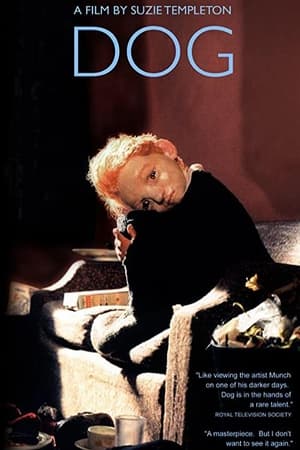
A young boy and his father live in a dull, lonely house with the shadow of mourning hanging over them both. The boy misses his mother but gets no comfort from his father's assertions that she went peacefully. This tragedy is added to by the family dog which is looking increasingly unhealthy.
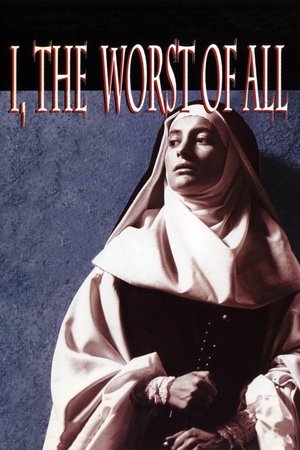
A 17th-century Mexican nun defies expectations by becoming a renowned intellectual and writer during the Spanish Inquisition.
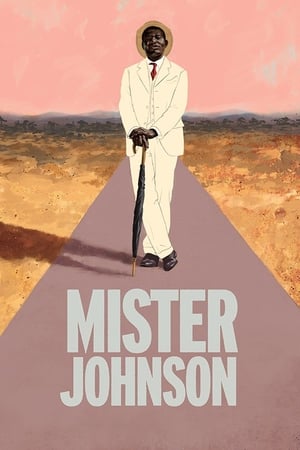
In 1923 British Colonial Nigeria, Mister Johnson is an oddity -- an educated black man who doesn't really fit in with the natives or the British. He works for the local British magistrate, and considers himself English, though he has never been to England. He is always scheming, trying to get ahead, which lands him in a lot of hot water.
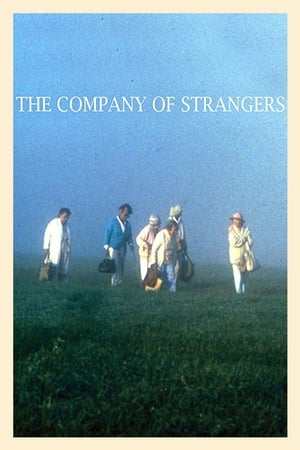
A busload of women become stranded in an isolated part of the Canadian countryside. As they await rescue, they reflect on their lives through a mostly ad-libbed script.
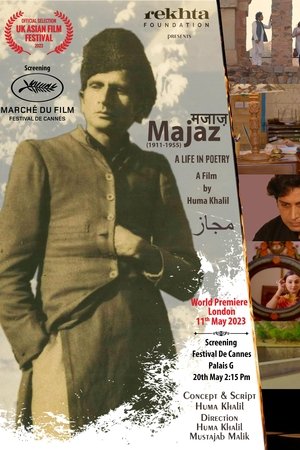
Majaz is a debut biopic feature film by Huma Khalil that depicts the life and poetry of the Urdu poet, Asrar Ul Haq Majaz, also known as a 'romantic revolutionary' in the Urdu world. The film's narrative is portrayed through the perspective of a current-day young research scholar, who, intrigued by the creative genius of this poet, explores the history and events that led to the creation of his poetic masterpieces as well as depression, self-destructive behaviour, and his early death.
As a woman anxiously awaits her overdue period, she performs African-based rituals of purification. She cleans house and body, and calls on the spirits (Orishas in the Yoruba tradition), receiving much needed inspiration and assurance in a dream. The film combines beautifully intimate still and moving images of the woman’s body and home space, along with playful stop-motion sequences. —Jacqueline Stewart, UCLA Film and Television Archive
Luke, an independent young man with Down's syndrome stumbles upon a wild and life changing friendship.
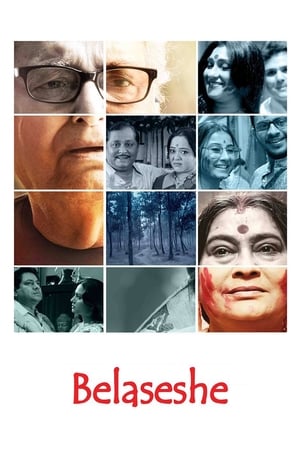
A story of relationships that explores the intricacies of the married life, of life-long companionship, of promises and expectations and love.
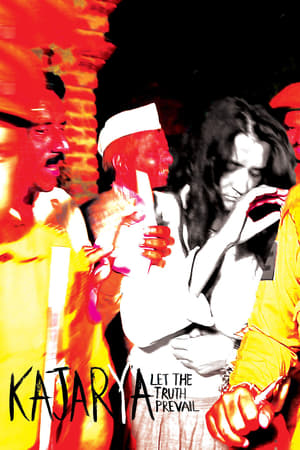
Set in the present times against two backdrops, New Delhi with its shining buildings and apparent cosmopolitan veneer thinly veils an underbelly of crimes against women and corruption at all levels. And a small village just 80 kilometers from New Delhi that is stuck in a time warp. Kajarya a woman in her early thirties has a strange but important place in the village social structure; she murders unwanted girl infants in the garb of religion. Meera is a rookie reporter.
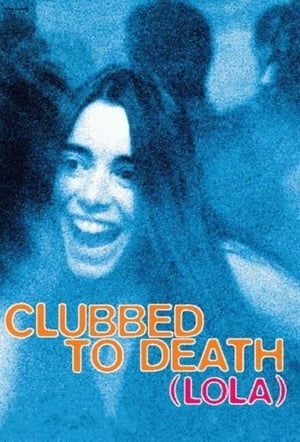
A young woman visiting Paris misses the last bus home and finds herself stranded on the outskirts of Paris. Entering a local club, she meets a troubled drug addict.
Fourteen year old Hannah awakes to a momentous day of gifts and attention. She soon realizes that this day of great celebration will turn out to have significant consequences on her future.
When famed photographer Christina Eames dies unexpectedly, she leaves her estranged daughter, Mae, hurt, angry and full of questions. When Mae finds a photograph tucked away in a safe-deposit box, she soon finds herself delving into her mother's early life -- an investigation that leads to an unexpected romance with a rising journalist.
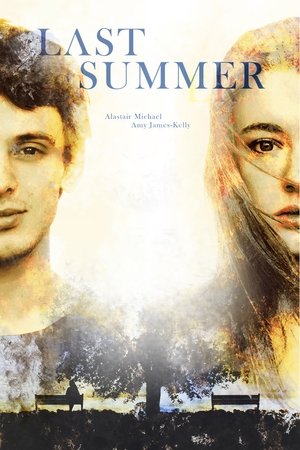
A park bench plays stage to the meeting between two people - Emma and Ben. Here we see them in present day and we learn that they once spent three years very much in love.
Xiaoma, a young woman who has recently moved to Beijing, finds an apartment in an old courtyard apartment complex owned by Grandma, an elderly woman. Xiaoma and Grandma’s relationship almost immediately becomes strained. After trying to tidy up the courtyard, Grandma insists that Xiaoma turn over her share of the profits. Tightfisted, the elderly landlady resists even allowing Xiaoma to install a telephone. At the same time the older woman becomes increasingly interested in Xiaoma’s personal (and romantic) life. Grandma, for example, tries to pass off her grandson to the younger woman. Annoyed, Xiaoma nevertheless is flattered at the older woman’s concern. Over the course of four seasons, Xiaoma begins to learn from her landlady of the old world that the modern city of Beijing has left behind, while Grandma begins to enjoy the youth and vitality of her tenant. The two women become closer and eventually develop a deep friendship.
Filmmaker-griot coming from the theater, it was with a camera, while the war in Vietnam occupied everyone's minds, that Sarah Maldoror gave visibility to the African wars of decolonization: Angola, Guinea Bissau, French Guinea, Cape Verde... Her short film Monangambée addresses the torture by the Portuguese army of a sympathizer of the Angolan resistance. At the end of editing, Sarah Maldoror approached the members of the Art Ensemble of Chicago during a Parisian concert and offered to add sound to her film. The next day they watched the film, were convinced and recorded their first soundtrack for free as evidence of African-American solidarity. Shot in Algiers, Monangambée is a film about torture and, more broadly, about the incomprehension between the colonized and the colonizers. It is based on a novel by the Angolan writer Luandino Vieira, then imprisoned by the Portuguese colonial power.
A 14-year-old motocross racer spends what seems like an average race weekend at the track with her father, Mad Mike. But as things unfold, she’s faced with her identity, her deafness, and what it means to be a girl. Based on the 2025 short film of the same name.