Para siempre
A Hollywood actor grows tired of making the same corporate movies, so he moves to Argentina to find more experimental and meaningful work.
As he sits on a present situation where his childhood's expiration date gives way to an uncertain adolescence, Agustín decides to create a small freedom spot far from his daily routine.
María is eighteen years old, she lives with her mother in an old house in Buenos Aires in 1978, subletting rooms and giving classes to poor illiterate adults. Suddenly she is abducted by a military squad and finds herself accused of subversion and submitted to torture in the hideous underground of the Garage Olimpo, while her mother desperately tries to find her.
Valentín, a political prisoner, shares a cell with Molina, a window dresser convicted of public indecency. The two form an unlikely bond as Molina recounts the plot of a Hollywood musical starring his favorite silver screen diva, Ingrid Luna.
In Argentina, one daughter of patriarch Madariaga is married to a Frenchman while the other is married to a German thus leading to a crisis when Nazi Germany occupies France and some Madariaga family members fight on opposite sides.
Santiago, a 20 year-old twink shaped by the anonymity of the virtual world, becomes frustrated with gay dating apps and starts obsessively looking for a real experience in the Buenos Aires nightlife.
A hostage situation gone bad. Jesús, an amateur thief, holds prisoner a group of clients. But nothing is what it seems. Behind the gates of the drugstore the story will unfold in two times. On one side, to the inevitable end: the police will shoot their way inn. And on the other side, to the past, unveiling how Jesús got caught in this situation, where the hostages are not the real victims, but something more sinister. Retracing step by step, reveling the truth, playing with the prejudices and beliefs of the audience on racial hate, social prejudices, and the intolerance. How far are we willing to go to survive?
The story—in which an American heiress on holiday in South America falls in love with an Argentine horse breeder against the wishes of their families—takes a backseat to the spectacular location shooting and parade of extravagant musical numbers, which include the larger-than-life Carmen Miranda singing the hit “South American Way” and a showstopping dance routine by the always amazing Nicholas Brothers.
Two coworkers decide to blackmail the corrupt demolition company they work for by setting up a fake accident.
Joaquín Góñez, a novelist in his sixties recalls his emotions, his wild years in Buenos Aires, the memories of old friends, the meaning of loyalty and the intimate relationship with his mother, Roma.
When El Mono dies, his three longtime friends try to recover from the loss and want to secure his little girl's future. But for Fernando, Mauricio and El Ruso this will not be easy. They decide to recover a big investment El Mono had made when he had bought a soccer player who was supposed to become a star.
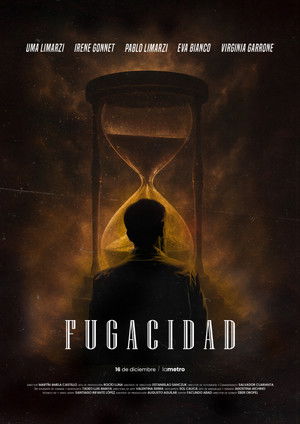
The app buzzes: a new urgent order. On his way, an unexpected encounter diverts the delivery man’s route and drags him into an increasingly disturbing dilemma, while the clock keeps ticking.
After her mother’s death, Magali returns to her native town in the argentine north. The threatening presence of a puma that eats animals and appears in dreams unsettles the town. Magali’s approaches her son, together they will fulfill the family duty on which depends their own prosperity
In the late 1980s, journalist José de Zer seeks proof of alien life in Argentina — even if he has to fake evidence — causing a surreal media circus.
Set in the years before and during World War I, this epic tale tells the story of a rich Argentine family, one of its two descending branches being half of French heritage, the other being half German. Following the death of the family patriarch, the man's two daughters and their families resettle to France and Germany, respectively. In time the Great War breaks out, putting members of the family on opposing sides.
The film does not describe, rather it observes, in a distant manner, the world of Martin, a seventeen year old who feels he doesn’t belong anywhere, not at home, school, nor with his friends or members of his rock band. In search of some happiness, Martin takes off to the coastal town of Mar de Plata, where his older brother lives. Unglamorous, yet enchantingly addictive and refreshingly genuine, Acuña paints a confused and uncomfortable world, and makes us want revisit it over and over again.
In a small town, a police officer goes to the house of a teacher friend to question him about the sudden disappearance of one of his students, who had been responsible for a car accident that claimed the lives of a family of four.
After the end of the military dictatorship in Argentina in 1983, Floreal is released from prison. Instead of returning to his wife, he wanders through the night of Buenos Aires. He meets some people from his past–most of which are only imaginary–and remembers the events of his imprisonment.
In a snowy and industrial city in the south of Argentina, Paula, a 23-year-old girl from Buenos Aires, starts an intense job hunt with the sole purpose of saving money. The lack of a job, a home and a stable emotional environment will end up turning that search into a personal and introspective journey.