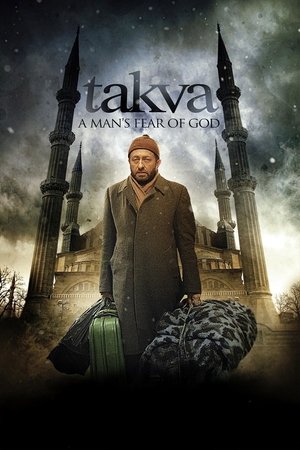
Humble and introvert Muharrem lives in a solitary and meager existence of a prayer and sexual abstinence adhering strictly to the most severe Islamic doctrines.His extraordinary devotion attracts the attention of the leader of a rich and powerful Istanbul religious group and he offers him an administrative post as a rent collector for their numerous properties. Muharrem's new job throws him into the modern outside world he has successfully avoided for so long. He soon witnesses conflict attitude toward alcohol consumption and goodwill.He notices that he himself has become proud, domineering and even dishonest.To make matters worse, Muharrem's inner peace is unnerved by the tormenting image of seductive woman who tempts him in his dreams,both night and day.With the balance of his devotion now upset,his fear of God begins to eat away at his senses.
Loosely based on the criminal career of Frank Lucas, a gangster from La Grange, North Carolina, who smuggled heroin into the United States on American service planes returning from the Vietnam War, before being detained by a task force led by Newark Detective Richie Roberts.
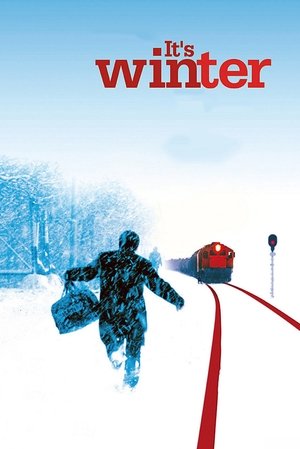
Unemotional, restrained cinematographic poem, situated in a wintry and poor suburb of Tehran. A man is dismissed and his lack of prospects for the future make him decide to seek his happiness abroad. He leaves his wife and child behind and for a long time nothing is heard of him. Then a stranger turns up, a car mechanic looking for a job. The attractive single mother can’t resist his attentions. Very subtly, a struggle ensues that reflects that of a whole generation of young doubting Iranians who may want to leave the country, but hardly know how to start.
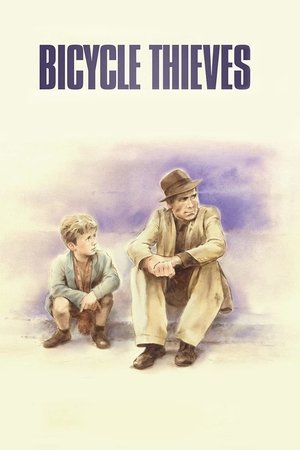
Unemployed Antonio is elated when he finally finds work hanging posters around war-torn Rome. However on his first day, his bicycle—essential to his work—gets stolen. His job is doomed unless he can find the thief. With the help of his son, Antonio combs the city, becoming desperate for justice.
A young man spurs romance and helps his friend and himself go through the struggles of their ordinary life in Denmark.
Living Things a film by Heinosuke Gosho
Social democracy propaganda film about future dreams for Denmark in 1960. Although Denmark is free again, the former opponent and worker, Svend, is disillusioned: "It is all something soft". The dream of the future is incarnated by a young woman, Karen, who shows Svend the visions of a better life in the 'youth's land'. There are homes and a nuclear-powered car for everyone.
Two women in their fifties. Everything sets them apart: their social standing, their life experiences, their backgrounds. Despite their differences, they will join forces for the same deeply personal and visceral goal: to gain custody of their grandson upon his return from a jihadist prison camp. Two women, one child. Three destinies inextricably linked.
Celestine has a new job as a chambermaid for the quirky M. Monteil, his wife and her father. When the father dies, Celestine decides to quit her job and leave, but when a young girl is raped and murdered, Celestine believes that the Monteils' groundskeeper, Joseph, is guilty, and stays on in order to prove it. She uses her sexuality and the promise of marriage to get Joseph to confess -- but things do not go as planned.
James Berkeley (who wants to get rich) and Allan Franklin (determined to be a great engineer) are rivals for the hand of Lois Miller. Berkeley marries her, and 15 years later, though he has not realized his ambition, he keeps his wife luxuriously attired as a "trademark" of his prosperity. Allan, who has obtained a large tract of oil land from the Mexican Government, visits the Berkeleys; and James, hoping to profit from his wealth, goes to Mexico with him, accompanied by Lois, who unwillingly agrees to help her husband. When Allan and Lois realize their love for each other, James, refusing to become angry, is denounced by his wife. A band of Mexican bandits attempt to capture Lois, and in the attack James is slain. Allan rescues Lois, and they escape across the border.
After a fateful encounter in the summer of 1966, the lifepaths of two brothers from a middle-class Roman family diverge, intersecting with some of the most significant events of postwar Italian history in the following decades.
In an epic tale of theater, gender, love and class, two Beijing opera actors navigate political turmoil as their friendship evolves over decades.
A cleaning woman decides to sue the state for illegal discharge.
A futuristic love story set in a world where emotions have been eradicated.
In County Durham, England, 1984, a talented young dancer, Billy Elliot, stumbles out of the boxing ring and onto the ballet floor. He faces many trials and triumphs as he strives to conquer his family’s set ways, inner conflict, and standing on his toes in a musical that questions masculinity, gender norms and conformity.
Coin is not about chasing wealth. It is about what happens when people are pushed so far down that they stop reaching altogether and only fight to keep what little remains. In a system where value circulates freely but dignity does not, innocence becomes the last uncontaminated force capable of interrupting the cycle.
Porcupine evokes the fragmented tale of a young man who breaks into an empty hospital to set up his online broadcast of poses and provocations; his audience includes real-life participants with anonymous tags like ‘bigballnz’ and ‘romeoazteca’.
Ten years ago, the paths of Abou, Laura, Cadiatou and Jacques have crossed Emmanuelle’s. She was their French teacher at a high school in Marseille. Together they took part in a film, Children of the Princess of Cleves, in which, while analyzing the classic text, they expressed their hopes, dreams, and fears. In En Nous, the director re-connects with the protagonists : memories blend with stories of their lives and the daily obstacles they must overcome whilst trying not to lose hope. Now, the sentence of the Princess of Cleves rings poignantly true: “I know nothing can be more difficult than what I undertake”.
A satirical low effort short film to portray the stupidity and ugly nature of racism, by Paris Sofianopoulos
The Lesson tells the story of Zane, a devoted teacher mentoring the senior class in a Latvian high school. She tries to live her life in the most meaningful way possible. She takes her mission as a teacher seriously, and works hard to help her students develop their talents. Even so, as a younger teacher it’s hard for Zane to keep her distance from the class – the students soon become a sort of family to her. When she realizes she’s falling in love with one of them, the others start to feel left out. She faces a stark choice between personal happiness and the pressures of society.