A few decades after the destruction of the Inca Empire, a Spanish expedition led by the infamous Aguirre leaves the mountains of Peru and goes down the Amazon River in search of the lost city of El Dorado. When great difficulties arise, Aguirre’s men start to wonder whether their quest will lead them to prosperity or certain death.
A hardened mercenary in the Foreign Legion begins to find his own humanity when confronted with atrocities during the fighting in Bosnia.
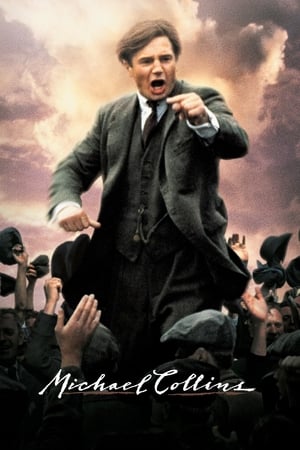
Michael Collins plays a crucial role in the establishment of the Irish Free State in the 1920s, but becomes vilified by those hoping to create a completely independent Irish republic.
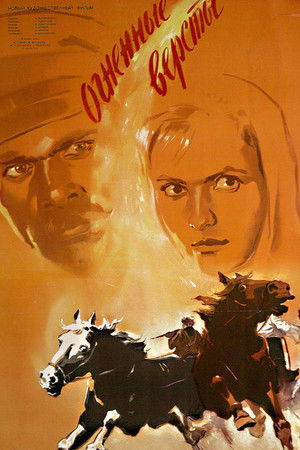
Civil War. Southern steppes of Russia. Circumstances bring together various people: the Chekist, professor, actor, nurse and White Guard officer posing as a vet. On two tachanka's they make their way into the city.
Miguel comes back to his country home with his wife after running away from the war, however, the memories of the conflict and his remorse for deserting and abandoning his friends haunts him persistently, avoiding him from distinguishing what is real and what not. While Miguel tries to ignore his trauma, his wife fights for bringing him back to reality.
When the revolution in Nicaragua won its victory nearly 40 years ago, the world began to dream. A young generation was taking the reins in a country of grand utopias. From West Germany alone, 15,000 “brigadists” travelled to help rebuild the war-torn country: liberals, greens, unionists, social democrats, leftists and church representatives harvested coffee and cotton, built schools, kindergartens and hospital wards. No movement has mobilised so many people. What became of the hopes and dreams of the revolutionaries and their supporters?
The story of the romance between the King of Siam (now Thailand) and the widowed British school teacher Anna Leonowens during the 1860s. Anna teaches the children and becomes romanced by the King. She convinces him that a man can be loved by just one woman.
Argentina, 1973. The return of democracy marks the beginning of a new countdown to the next coup d'état: on March 24, 1976, the worst dictatorship in Argentine history is installed, the bitter fruit of a plot carefully hatched for months.
Two westerners, a priest and a teacher find themselves in the middle of the Rwandan genocide and face a moral dilemna. Do they place themselves in danger and protect the refugees, or escape the country with their lives? Based on a true story.
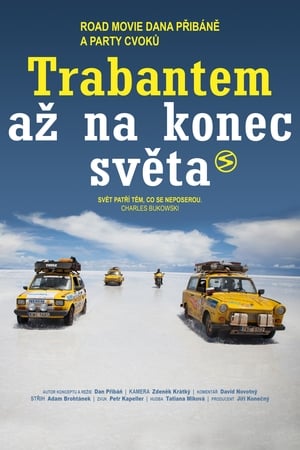
The third installment in Dan Přibáň's series of travel documentaries describes the author's journey with his friends across South America in vehicles that are often notorious but cult in their own way. The charming dynamics of the group on screen are further enhanced by the high-quality craftsmanship.
A cast of unknown performers are used in this drama about child soldiers fighting a war in an unnamed African country.
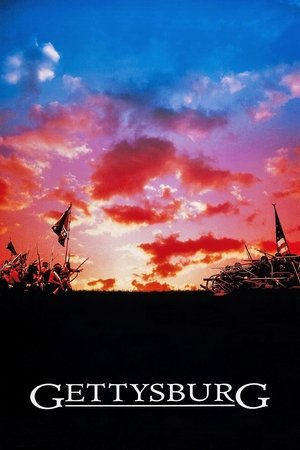
In the summer of 1863, General Robert E. Lee leads the Confederate Army of Northern Virginia into Gettysburg, Pennsylvania with the goal of marching through to Washington, D.C. The Union Army of the Potomac, under the command of General George G. Meade, forms a defensive position to confront the rebel forces in what will prove to be the decisive battle of the American Civil War.
It is El Salvador, 1989, three years before the end of a brutal civil war that took 75,000 lives. Maria Serrano, wife, mother, and guerrilla leader is on the front lines of the battle for her people and her country. With unprecedented access to FMLN guerrilla camps, the filmmakers dramatically chronicle Maria's daily life in the war.
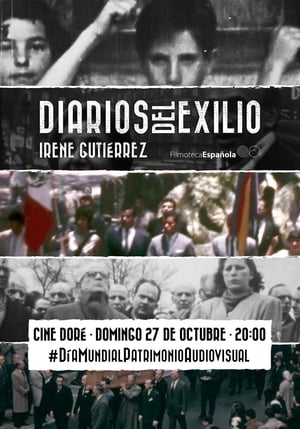
Four lucid grandmothers tell their story forgotten by history: the militancy and resistance of the young women of the leftist youth against the dictatorship of Marcos Pérez Jiménez.
How the Monuments Came Down is a timely and searing look at the history of white supremacy and Black resistance in Richmond. The feature-length film-brought to life by history-makers, descendants, scholars, and activists-reveals how monuments to Confederate leaders stood for more than a century, and why they fell.
"CIVIL WAR SURVEILLANCE POEMS (Part 1)" is the first installment in a five-part project of experimental and hybrid-form short films contemplating a second American civil war via lyrical nonfiction, mixing call-in radio, twenty years of verité footage from the filmmaker's archive, and robots. Conceptually speculating from sixteen years in the future (and a protracted civil war), the project is partly nostalgic political travelogue, partly a quest to mine the archive for what went wrong, and part prewar surveillance records, the project deconstructs and builds to a clashing ideology, culminating in an installation of sound sculpture, four-walled video and artifacts.
When the young republic of The Netherlands is attacked by England, France and Germany and faces its own civil war no less, only one man, Michael de Ruyter, can lead the county's strongest weapon, the Dutch fleet.
When a Spanish Jesuit goes into the South American wilderness to build a mission in the hope of converting the Indians of the region, a slave hunter is converted and joins his mission. When Spain sells the colony to Portugal, they are forced to defend all they have built against the Portuguese aggressors.
Avoir 16 ans et toutes ses Andes
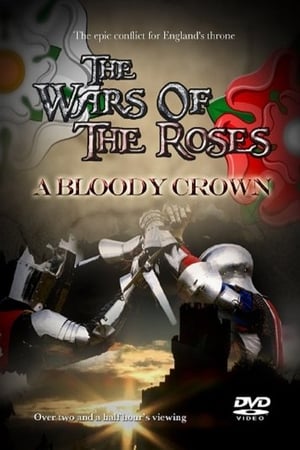
Using historically-accurate, battle-filled re-enactments and interviews with expert historians and noted authors, this two-part documentary series brings to vivid life the captivating true stories behind Britain's bloody civil wars.