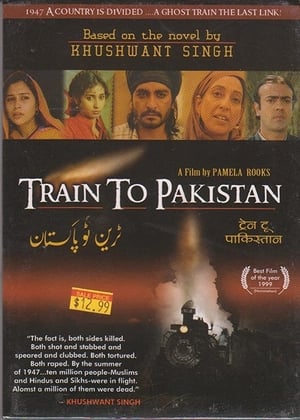
It's 1947 and the borderlines between India and Pakistan are being drawn. A young girl bears witnesses to tragedy as her ayah is caught between the love of two men and the rising tide of political and religious violence.
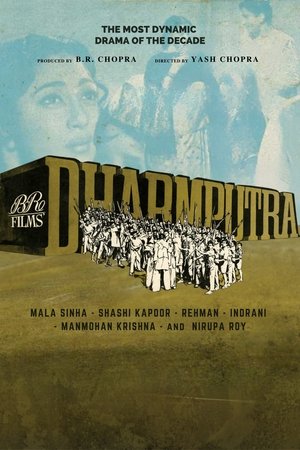
Set in the backdrop of riot-stricken Pakistan at the time of the partition of India in 1947, the film deals with the plight of emigrant Sikh and Hindu families to India as a consequence of the partition.
Zed, a young British rapper, is about to start his first world tour, when a crippling illness strikes him down, forcing him to move back in with his family. He tries to find himself between an international music career and Pakistani family traditions.
The story of two families — one Muslim and one Hindu — living together in India under British rule.
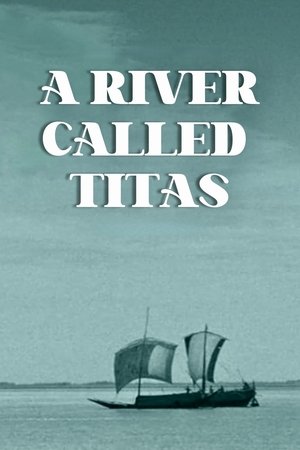
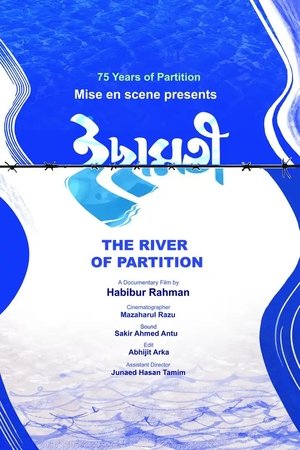
An in-depth look at the lives and struggles of a fishing community living by the River Titas in Bangladesh after the Partition of India in 1947.
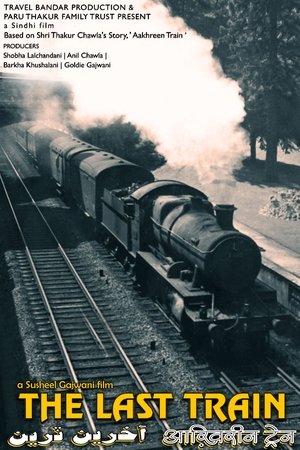
Tensions run high near the border of British India, which is about to be partitioned with a new country called Pakistan. Sikhs living in this border town have heard numerous stories of Muslims killing, raping, and looting other Sikhs, Hindus, and Christians, and many of whom are their friends and relatives. Enraged at the loss of law and order, they plan their own attack on a trainful of Muslims leaving British India. The train is overcrowded with tens and thousands of migrating passengers, who are even perched on the windows and seated on the roof of this train. The plot is to tear the bridge down when the train is on it, and no one will dare stop these men to carry out this horrific task
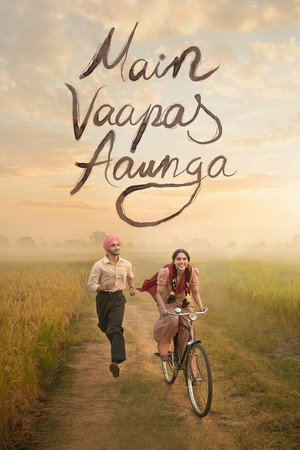
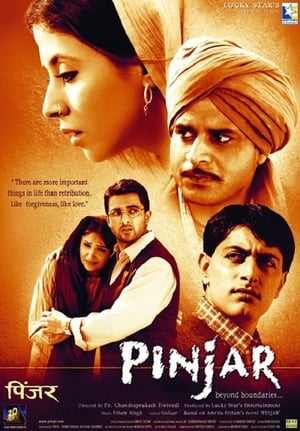
In the days leading up to Partition, a Hindu woman is abducted by a Muslim man. Soon, she finds herself not only forced into marriage, but living in a new country as the borders between India and Pakistan are drawn
Habibur Rahman’s The River of Partition (Ichamati, 2023) documents this riverine environment, the diverse communities that live around it, and the socio-historical role played by the river in the wake of the partition of India in 1947 and the creation of Bangladesh in 1971.
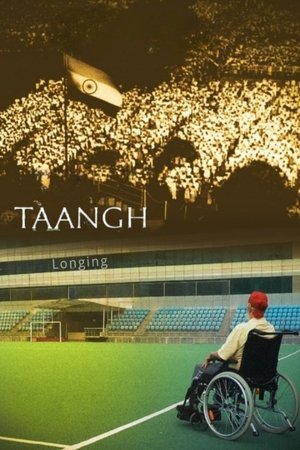
Against the backdrop of Partition, independent India’s first hockey team defeats England, their erstwhile coloniser, to win the Gold at the 1948 London Olympics. Six decades later, when Nandy Singh, a member of this iconic team suffers a stroke, his tenacious struggle to recover, inspires his daughter to retrace his journey. Using archival footage and interviews with teammates, she reveals lives shaped by the Gold, and by Partition that made them refugees. Revealed also is a friend in Pakistan never spoken of before. Her journey in search of him morphs into a quest for the lost ‘watan’ (homeland).
Millions of Muslims flee to Lahore in the newly created state of Pakistan, prompted by the partition of British India.
A rich brother and sister's relationship grows dangerously strained as they marry into a poor family
Jin, a young man, is unexpectedly drawn into the world of sacred amulets. He soon learns that this trade is fast-paced, deals strictly in cash, and, most notably, has no fixed pricing. Under the guidance of a legendary amulet master named Moo, Jin begins to understand the business. But he sees an opportunity beyond the usual buying and selling — he discovers that by creating his own amulets and manipulating their perceived value, he can make much more profit. By using just the words “merit” and “faith,” things start to unfold rapidly. Greed eventually drives Jin to a point where there may be no turning back.
Alex, a first-generation latino artist, and Frankie, a professional dancer, navigate the soulless casual hookup culture of Los Angeles. Dating apps and casual sex reign, as they both deny their feelings and continue seeing other people while they fall in love. A series of misunderstandings leaves these two star-crossed lovers oscillating between confusion (ghosting and ignoring) and obsession (sex and pasta). But what happens when they finally meet someone different? Do they even know how to love anymore?
Unafraid of war and unwilling to stop until she finds that one answer. She carries no doubts. Only the ache of an answer she's searched her whole life.
A butcher whose meat is most tender, surrounded successively by ephemeral and delightful cashiers.
Hajime asks his friend Yoshi to set him up with his classmate Ann. Yoshi tries to do this for Hajime, but this just upsets Ann. Yoshi's relationship with Ann is now awkward. Yoshi doesn't know exactly why, but Ann becomes absent from school frequently. One day, during their summer vacation, Yoshi hears that Ann has dropped out of school.
Chieko Sanda has operated a dry goods store in Kyoto for the past 20 years. Her family has owned the store for generations. Chieko is conflicted on whether her daughter Mai will take over her position with the changing of times. Mai is a college student and has not decided whether to take another job or take over the dry goods store. Meanwhile, Mitsuko Nakata runs a forestry in the outskirts of Kyoto. Mitsuko is Chieko Sanda’s twin sister, but they were separated at an early age. Mitsuko is in serious financial difficulties. Mituko's daughter, Yui, has talent in art and she goes to France. There, Yui feels a sense of powerlessness. Mitsuko notices and goes to Paris to see her daughter. Mai travels to Paris to take part in an event to show Japanese culture.
Ein Sommer auf Lanzarote
Corinna Safranski wants to become a police officer in Hamburg. She gets off to a great start and even saves the life of a colleague. But then comes routine at work and stress at home. And when Corinna defends herself against the pushy precinct manager, he begins to harass her. Her colleagues watch - or applaud...
The action takes place in the 1920s. It is about the everyday work of criminal investigation staff in a provincial town, who are engaged in an unyielding battle against a well-organized gang of murderers and robbers.