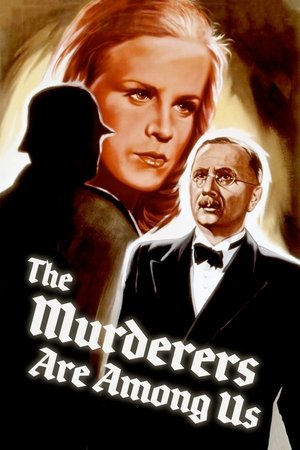
An American journalist arrives in Berlin just after the end of World War Two. He becomes involved in a murder mystery surrounding a dead GI who washes up at a lakeside mansion during the Potsdam negotiations between the Allied powers. Soon his investigation connects with his search for his married pre-war German lover.
The story of a German singer named Willie, who while working in Switzerland, falls in love with a Jewish composer named Robert, whose family is helping people to flee from the Nazis. Robert’s family is skeptical of Willie, thinking she could be a Nazi as she becomes famous for singing the song “Lili Marleen”.
As Tobias, a young director, supposes that his girl-friend Ellen had an affair with his brother Markus, front man of "Hansen", one year ago, he decides to shoot a documentary about the band's next tour. When Ellen joins the project, everybody's emotions boil over, although they are observed all the time.
18-year-old school boy Helmut falls in love with fellow pupil Britta. He starts working for a Peace movement to get to know Britta. Britta, however, suddenly moves to San Francisco to live with her father and whilst there, finds a new boyfriend. Helmut studies, literature and politics in his home town and have a relationship with another girl from his former school, now studying medicine at the same university but they break up after having an affair with her roommate. Helmut begins a lot of short affairs with different women but still searches for his first girl.
Ina, just released from prison, returns to the place of her childhood in search of life and meets the occasional desperado Domühl in her mother's house, which has been empty for thirty years. Hagen, a mentally handicapped resident, also ends up in this unusual landscape somewhere in the middle of nowhere south of Berlin in search of his uncle.
The two twelve-year-old girls Charlotte Palfy and Louise Kröger meet on a language trip to Scotland and discover that they are twins who were separated shortly after birth. Charlotte, the daughter of a music hall composer, is cool, self-confident and cheeky, dresses accordingly and listens to techno music. Louise, who grew up with her mother, an advertising executive, wears more "old-fashioned" clothes, is shy and reserved, but conscientious and orderly. Determined to play fate, the two swap roles - at the end of the journey, Louise travels as Charlie to her father, who works as a composer in Berlin-Kreuzberg, while Charlie travels as Louise to her mother in Hamburg, where she works in an advertising agency. The girls realize that getting their parents back together is not as easy as they thought.
Leroy is an Afro-German boy who is struggling with notorious bad luck and a national identity crisis. Leroy is cultured and well-mannered and, in a positive sense, more German than many Germans. His girlfriend Eva's brothers are skinheads and befriend him. Together with his best friend Dimmi, a Greek, he strolls through crowded and dirty Berlin to the sound of 70s soul grooves and ponders all the sore points of being German. And then he comes up with the idea of how to defeat fascism....
A gently humorous look at otherness and xenophobia in modern day German with this tale of a black Berlin teen named Leroy who rediscovers his roots after falling for a pretty white girl and meeting her racist family.
David, a recently fired scrapyard worker and Marie, a prostitute, both about 20 years old, meet on New Year's Eve in Berlin and decide to run away together. As David's arm is plastered from an accident Marie continues to prostitute herself to finance their restless journey through the Ruhr area. Their love and their will to survive guide them though all problems.
Christmas 1945. In a train from Stockholm to Berlin are a motley collection. It is the failure of the author Gunnar who wants to leave his old life and make a contribution in Berlin; physician Henry who plan to marry Marie and likewise Henry's current wife Karin, who he plans to kill during the journey, the middle-aged gay couple Pompe and Sixten, a soldier going to Uppsala but is on the wrong train: the cheerful and cynical old Margaret, and a dressed elf and a surly conductor. With the train are also a number of Baltic refugees accompanied by two nuns to be sent to Germany.
Frustrated, because he is forced to produce bad TV-shows, a manager of a TV-station, enters the station and manipulates the ratings, to initiate a TV-revolution.
Anna is persuaded by her boyfriend Paul to move from Berlin to his home town of Imma. What the notorious soccer hater doesn't know, however, is that joining his best friend Steffen's law firm is just a pretext. In reality, Paul and his buddies are there to save the soccer club he co-founded, Eintracht Imma 95, from relegation. Anna soon realizes that the players' wives have nothing to say to their soccer junkies: Artificial turf in the bedroom, Effenberg bedding and weekends on the soccer pitch. When she finds out the real reason for the move, she mobilizes her fellow sufferers to counter-attack after a fierce bout of frustration and challenges Paul and his friends to the ultimate duel on the soccer pitch. The bet is on: women against men. If the women win, soccer is over - and Paul has to go back to Berlin with Anna. Forever. If the men win, there will be no more complaining.
Der Stolz der Firma, meaning The Pride of the Business, is a classic German silent film from 1914. The film tells the story of a shrewd apprentice and is filmed in the comical style of director Lubitsch. This is one of the few Lubitsch films from World War I that wasn’t lost.
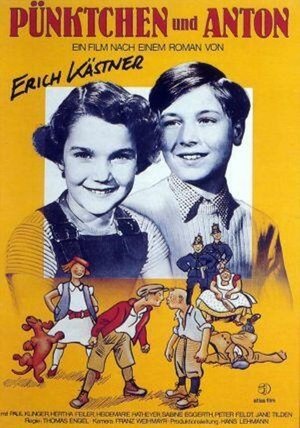
Despite their social differences Luise, called Pünktchen, a girl from rich parentage befriends Anton, a boy who has to earn his own money in order to afford life for his sick mother and himself. Together they undergo different adventures, even preventing a theft in Pünktchens home
The attractive Oberleutnant Paul Wendlandt is stationed in North Africa as a fighter pilot. While in Berlin to deliver a report he is given a day's leave, and on the stage of the cabaret theatre "Skala" sees the popular Danish singer Hanna Holberg. For Paul it is love at first sight. When Hanna visits friends after the end of the performance, he follows her, and speaks to her in the U-Bahn. After the party in her friends' flat, he accompanies her home and chance throws them further together when an air raid warning forces them to take cover in the air raid shelter. Hanna reciprocates Paul's feelings, but after a night spent together Paul has to return immediately to the front. There now follows a whole series of misunderstandings, and one missed opportunity after another. While Hanna waits in vain for some sign of life from Paul, he is flying on missions in North Africa. When he tries to visit her in her Berlin flat, she is giving a Christmas concert in Paris.
After returning from a concentration camp, Susanne finds a traumatized ex-soldier living in her apartment in bombed out Berlin. Together the two try to move past their experiences during WWII.
Danger and Kaspar are graffiti artists who have each been ejected from their respective crews. They decide to work on a project in honor of one of their deceased brethren.
Ben is a young editor for a famous german music magazine in the mid 90's. His life is falling apart after his girlfriend breaks up with him. From now on he decides to go solo...
Berlin Alexanderplatz; within 24 hours, various stories rotate between the heights and depths of the square, between the television tower and the subway shafts, between larger and smaller fates, that slowly but surely become entangled.
When Scott learns that his longtime cyber-buddy from Berlin is a gorgeous young woman, he and his friends embark on a trip across Europe.