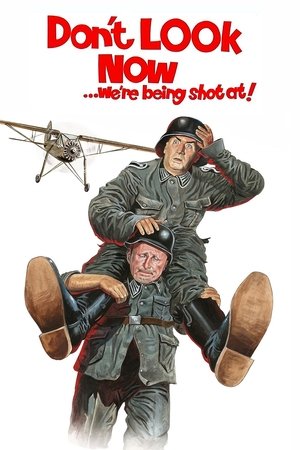
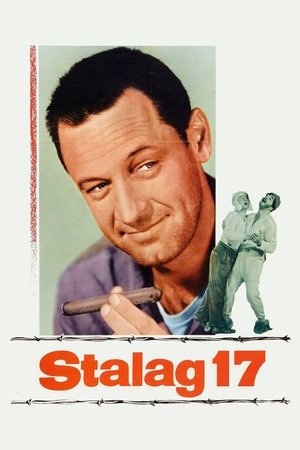
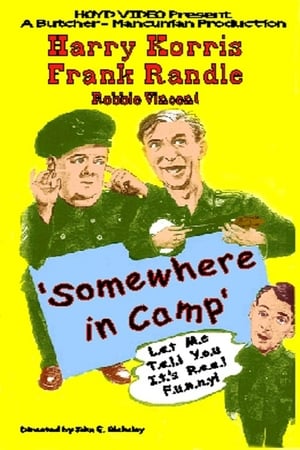
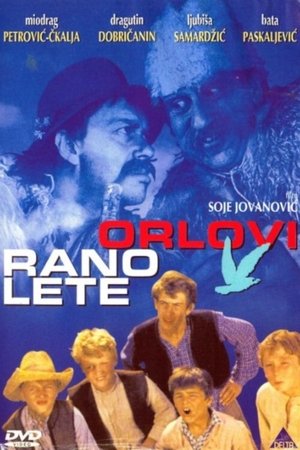
The Tóth family resides in Northern Hungary. The couple has a daughter and a son, the latter a member of the armed forces. When his weary major is ordered to take a vacation, the son talks him into a visit to his family home. Hilarity ensues when the Tóths go overboard trying to make things pleasant for the visiting major in hopes of an easier life for their son, the soldier.
A WWII military pilot makes a valiant effort to be certified insane in order to be excused from flying missions. But there's a catch.
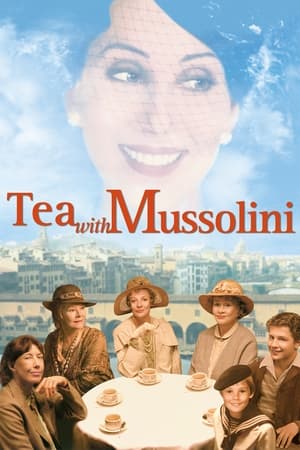
In 1930s fascist Italy, adolescent Luca just lost his mother. His father, a callous businessman, sends him to be taken care of by British expatriate Mary Wallace. Mary and her cultured friends - including artist Arabella, young widow Elsa, and archaeologist Georgie - keep a watchful eye over the boy. But the women's cultivated lives take a dramatic turn when Allied forces declare war on Mussolini.
Black marketeers Marko and Blacky manufacture and sell weapons to the Communist resistance in WWII Belgrade, living the good life along the way. Marko's surreal duplicity propels him up the ranks of the Communist Party, and he eventually abandons Blacky and steals his girlfriend. After a lengthy stay in a below-ground shelter, the couple reemerges during the Yugoslav Civil War of the 1990s as Marko sees the opportunity to exploit the situation.
After World War II, Antonia and her daughter, Danielle, go back to their Dutch hometown, where Antonia's late mother has bestowed a small farm upon her. There, Antonia settles down and joins a tightly-knit but unusual community. Those around her include quirky friend Crooked Finger, would-be suitor Bas and, eventually for Antonia, a granddaughter and great-granddaughter who help create a strong family of empowered women.
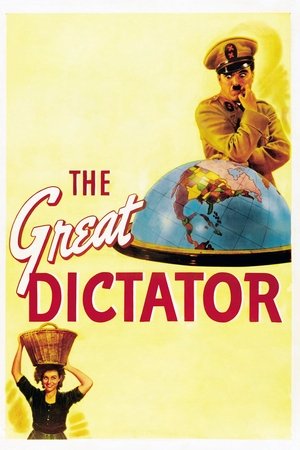
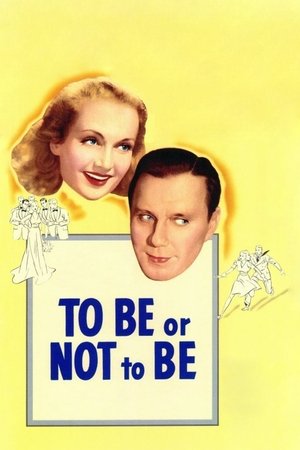
Dictator Adenoid Hynkel tries to expand his empire while a poor Jewish barber tries to avoid persecution from Hynkel's regime.
As America's stock of athletic young men is depleted during World War II, a professional all-female baseball league springs up in the Midwest, funded by publicity-hungry candy maker Walter Harvey. Competitive sisters Dottie Hinson and Kit Keller spar with each other, scout Ernie Capadino and grumpy has-been coach Jimmy Dugan on their way to fame.
A misfit group of World War II American soldiers goes AWOL to rob a bank behind German lines.
In the days after the attack on Pearl Harbor, panic grips California, where a military officer leads a mob chasing a Japanese sub.
On Saturday, 5 April 1941, one day before the Invasion of Yugoslavia of the Kingdom of Yugoslavia, a colourful group of random passengers on a country road deep in the heart of Serbia board a dilapidated bus, headed for the capital Belgrade. The group includes two gypsy musicians, a World War I veteran, a Germanophile, a budding singer, a sickly looking man, and a hunter with a shotgun. The bus is owned by Krstic senior, and driven by his impressionable and dim-witted son Misko.
A story set in a Slovenian village during Italian occupation. Stefuc, a man who has been widowed twice and has four daughters, wants to get married for the third time with Zana, who's already engaged and pregnant with Ludvik. Stefuc tries to separate them away, but realizes that he'll have to marry Hedvika, a nice looking girl who has just returned from Milan. In the meantime, Italian fascist authorities decide to eradicate five Slovenian songs with the help of local traitors.
The first Greek animated film was shot by the cartoonist Stamatis Polenakis (1908-1997) with the title "The Duce tells...". The seven-minute "Mickey-Mouse-style" film, as its creator mentions in the credits, satirizes the Italian invasion of Greece on October 28, 1940, and especially Mussolini, who recounts his exploits, but reality constantly contradicts him. Stamatis Polenakis, one of the leading Greek cartoonists of the 20th century and a pioneer of animation in our country, began drawing the sketches for the film in 1942 in his hometown, Sifnos, where he had taken refuge during the Occupation. He worked under the boot of the Italian conqueror, risking arrest. The film was lost during the Civil War and it was not until 1980 that a negative was found and restored.
During the World War II, the prisoners of a German camp in a Greek island are trying to escape. They not only want their freedom, but also seek an ineffable treasure hidden in a monastery at the summit of the island's mountain.
Relaxing with a carrot at a U.S. Army air field, Bugs is reading "Victory Through Hare Power" and scoffs at the notion of mentioned gremlins, little creatures who wreak havoc on planes with their diabolical sabotage.
An inept British WWII commander leads his troops to a series of misadventures in North Africa and Europe.
Whisky Galore! is a 1949 British comedy film produced by Ealing Studios, starring Basil Radford, Bruce Seton, Joan Greenwood and Gordon Jackson. It was the directorial debut of Alexander Mackendrick; the screenplay was by Compton Mackenzie, an adaptation of his 1947 novel Whisky Galore, and Angus MacPhail. The story—based on a true event, the running aground of the SS Politician—concerns a shipwreck off a fictional Scottish island, the inhabitants of which have run out of whisky because of wartime rationing. The islanders find out the ship is carrying 50,000 cases of whisky, some of which they salvage, against the opposition of the local Customs and Excise men.
The youngest protagonist of the documentary is Wartburg, an automobile over 50 years of age. The car is still on the road, driven by Bogdan, a 70-year-old who is taking his mother to visit the German factory where she was forced to work during WWII. In this road movie which takes place between Majdanpek and Germany, the trip becomes a journey into the past, retracing memories from the war and revealing a unique relationship between an old son and his elderly mother.
Prague, Czechoslovakia, during the inter-war period. Jan Dítě, a young and clever waiter who wants to become a millionaire, comes to the conclusion that to achieve his ambitious goal he must be diligent, listen and observe as much as he can, be always discreet and use what he learns to his own advantage; but the turbulent tides of history will continually stand in his way.
General Candy, who's overseeing an English squad in 1943, is a veteran leader who doesn't have the respect of the men he's training and is considered out-of-touch with what's needed to win the war. But it wasn't always this way. Flashing back to his early career in the Boer War and World War I, we see a dashing young officer whose life has been shaped by three different women, and by a lasting friendship with a German soldier.
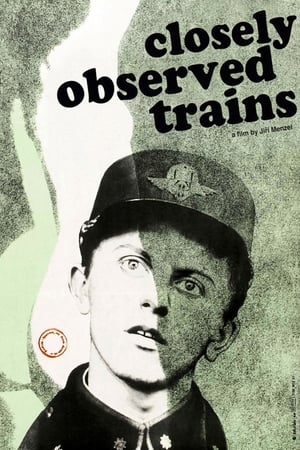
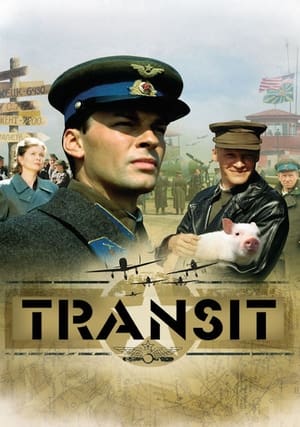
It is April 1945, spring begins and ends the war. German transport heading away from Bohemia.