Thomas Alexandre Davy de la Pailleterie Dumas was born a Caribbean slave in 1762 and beat the odds by rising through the ranks to become a revolutionary French general. The son of a nobleman, Marquis Alexandre Antoine Davy de la Pailleterie, and an African slave, Marie-Cessette Dumas, he became the first and highest-ranking Black leader in the French military and served under Napoleon Bonaparte. But despite his many exploits, which earned him the nickname of “Black Devil,” his role in the French Revolution was underplayed and he was even denied a full pension and legion of honor by Bonaparte.
In 1794, French revolutionary Maximilien Robespierre produced the world's first defense of "state terror" - claiming that the road to virtue lay through political violence. This film combines drama, archive and documentary interviews to examine Robespierre's year in charge of the Committee Of Public Safety - the powerful state machine at the heart of Revolutionary France. Contesting Robespierre's legacy is Slavoj Zizek, who argues that terror in the cause of virtue is justifiable, and Simon Schama, who believes the road from Robespierre ran straight to the gulag and the 20th-century concentration camp. The drama, based on original sources, follows the life-and-death politics of the Committee during "Year Two" of the new Republic.
“In a world that often demands certainty, Dialogues des Carmélites invites us to sit with profound questions that have no easy answers: What makes a life worthy? How can we be truly prepared for our inevitable end? What does security mean when everything familiar is threatened? What sustains us when our institutions crumble? … Rather than imposing answers, the opera creates room for reflection on how faith manifests not as abstract doctrine, but as lived experience under extraordinary pressure.” — Louisa Muller, Director’s Note. Juilliard Opera directed by Louisa Muller. Matthew Aucoin conducts the Juilliard Orchestra. Performed and recorded on April 26, 2025 at the Peter Jay Sharp Theater. Dialogues des Carmélites, an opera by Francis Poulenc. Libretto adapted by the composer.
Stéphane Bern tells the story of King Louis XVI, deposed by the revolution and guillotined on January 21st, 1793. He was a cultured man, passionate about the technical advances of his time, but powerless against the huge deficit in the country. He actively supported the birth of the USA. Louis XVI was the last king to live in the palace of Versailles, where he organized the first flight of a balloon, launched the legendary expedition of Jean-Francois de La Perouse and offered his wife Marie Antoinette, the beautiful setting of the Petit Trianon, as million visitors around the world continue to admire.
Montage of still photos with lighting effects.
Twenty Four year-old Corsican refugee Napoleon Bonaparte is a lowly artillery captain in the French army at the siege of Toulon. Destitute and relying on his success in the new and dangerous revolutionary society, his mother and siblings become embroiled in Napoleon's struggle. The opponents are the English but the enemy are the revolutionaries authorities who seek to keep him in his place. Using his astonishing tactical mind, his sheer audacity and extraordinary military bravery, Napoleon emerges victorious and sets out on a path that would one day lead him to the throne of France.
Virtually unseen since its Soviet television broadcast in 1971, the film, Peter Rollberg writes, is “devoted to the anniversary of the Paris commune, mixing historical footage with images of present-day Paris.”
Madame Sans-Gène
This early film made by Georges Hatot for the Lumière Company is a brief single shot-scene of the assassination of the French revolutionary writer, Jean-Paul Marat--who has the notorious distinction of having influenced the Reign of Terror.
The story of revolutionary woman Manon Roland.
Catherine Hubscher, who washes the shirts of young Napoleon and other soldiers fighting the Revolution, falls in love with Sergeant Lefebvre. Circumstances bring Lefebvre a noble title and even more -- Napoleon decides to make him the local ruler over a large territorial fiefdom. But trouble brews when Madame Sans-Gene, now elevated to the nobility along with her man -- cannot keep her frank observations under control.
The TARDIS materialises not far from Paris in 1794 — one of the bloodiest years following the French Revolution of 1789. The travellers become involved with an escape chain rescuing prisoners from the guillotine and get caught up in the machinations of an English undercover spy, James Stirling — alias Lemaitre, governor of the Conciergerie prison.
Oscar François de Jarjayes was born female, but her father insisted she be raised as a boy as he had no sons. She becomes the captain of the guards at Versailles under King Louis XVI and Marie Antonette. Her privileged, noble life comes under fire as she discovers the hard life of the poor people of France. She is caught up in the French Revolution, and must choose between her loyalty and love.
The French Revolution, 1794. The Marquis de Lafayette asks Charles D'Aubigny to infiltrate the Jacobin Party to overthrow Maximilian Robespierre, who, after gaining supreme power and establishing a reign of terror ruled by death, now intends to become the dictator of France.
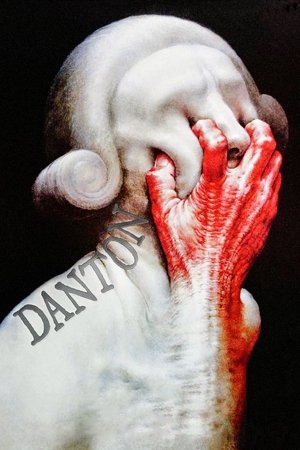
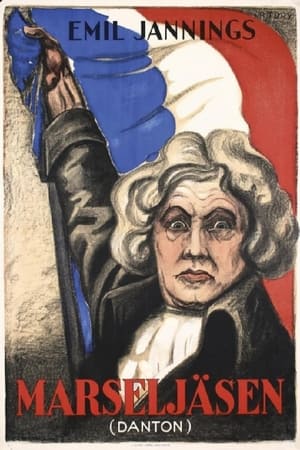
Danton and Robespierre were close friends and fought together in the French Revolution, but by 1793 Robespierre was France's ruler, determined to wipe out opposition with a series of mass executions that became known as the Reign of Terror. Danton, well known as a spokesman of the people, had been living in relative solitude in the French countryside, but he returned to Paris to challenge Robespierre's violent rule and call for the people to demand their rights. Robespierre, however, could not accept such a challenge, even from a friend and colleague, and he blocked out a plan for the capture and execution of Danton and his allies.
At the height of Reign of Terror Maximilien Robespierre orchestrates the trial and execution of several of his fellow leading French revolutionaries including Georges Danton.
A history of the French Revolution beginning from the decision of the king to convene the Etats-Generaux in 1789 in order to deal with France's debt problem. Part one spans the event until August 10, 1792 (when the King Louis XVI lost all authority and was imprisoned). Part two carries the story through the end of the terror in 1794.
Nicolas Philibert goes to America after killing a French aristocrat. On his return he tries to divorce his wife, Charlotte, but when he sees others trying to woo her his own interest is rekindled.
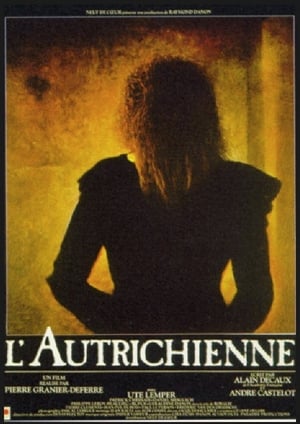
A woman is detained at La Conciergerie. She's 37 but her hair are already white. She's suffering from terrible haemorraghe. Her name is Marie-Antoinette of Lorraine, from Austria, and she's living her last four days.
Set against the conditions leading up to the French Revolution and the Reign of Terror, French doctor Alexandre Manette serves an 18-year imprisonment in the Bastille in Paris, followed by his release to live in London with the daughter he has never met.