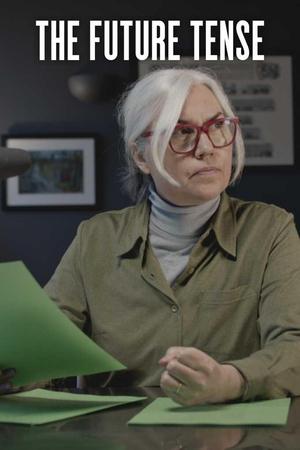
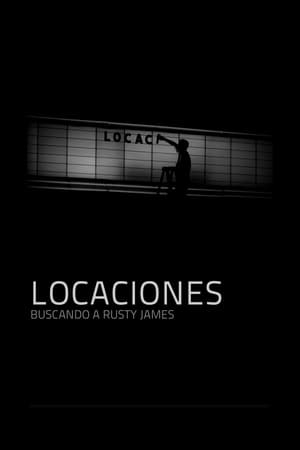
Four filmmakers working in the region of Galicia (in the northwest of Spain) follow and portray on the screen Galician artists working in disciplines of different nature. The result is four pieces around the creative process of these artists. Lois Patiño film their parents working on their paintings in their studio in Vigo, Jaione Camborda films dancer Janet Novás rehearsing for one of her pieces, Xisela Franco follows film director Margarita Ledo revisiting the location of her latest film Nation and Alfonso Zarauza reflects on the relationship between actress-director by putting together the work of Melania Cruz in two of their collaborations.
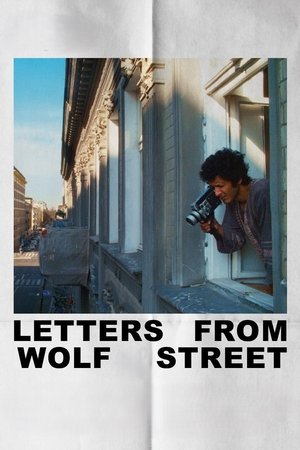
A youngster writes a letter to his grandmother about his last trip to Donosti (Spain). This city inspires him to ponder about the language of cinema, time, cities, and sharing memories with our loved ones.
Twenty-five films from twenty-five European countries by twenty-five European directors.
Every image in The Fall of Communism as Seen in Gay Pornography comes from gay erotic videos produced in Eastern Europe since the introduction of capitalism. The video provides a glimpse of young men responding to the pressures of an unfamiliar world, one in which money, power and sex are now connected.
Im Reich Des Squatters
An experimental portrait of Fernando Fernán Gómez, one of the most renowned Spanish artists of all time.
In 1829 the naturalist Alexander von Humboldt attempted a russian-siberian expedition. Humboldt travelled to obtain a clear view of nature, people and life in this immense country. 2019 naturalists and humanists attempted a transdisciplinary expedition on the trails of Humboldt. To capture the events various cameras were taken along. A non-chronological narration.
A provocative and poetic exploration of how the British people have seen their own land through more than a century of cinema. A hallucinated journey of immense beauty and brutality. A kaleidoscopic essay on how magic and madness have linked human beings to nature since the beginning of time.
Weeping Rocks follows Art, an entomologist nearing the end of his life, who has spent over five decades walking the same ten trails, meticulously counting every butterfly he sees and witnessing the slow erosion of the world. His eccentric, patient research has uncovered patterns of decline that went unnoticed for years, revealing the deep environmental impact of detrimental human activities. As time reshapes the landscape and species fade, Art’s journey becomes a meditation on mortality, change, and the beauty of what remains.
Photography trip to Bolivia filmed with a rostrum camera and edited with original sounds from the country.
If cinema is the art of time, Linklater is one of its most thoughtful and engaged directors. Unlike other filmmakers identified as auteurs, Linklater’s distinction is not found on the surface of his films, in a visual style or signature shot, but rather in their DNA, as ongoing conversations with cinema, which is to say, with time itself. A visual essay produced by Sight and Sound.
It has been a lifelong dream of Kyrgyz director Melis Ubukeyev to create an elaborate film version of the Kyrgyz national epic 'Manas'. He spent years working with the National Academy of Sciences of Kyrgyzstan to gather material for this film project, which would ultimately remain a dream. However, the director's efforts were not in vain: Not only did he make films in 1962 and 1988 about Manasçı – the revered oral storytellers who have preserved the epic for generations through melodic recitation –, but in 1995, to mark the 1,000th anniversary of 'Manas', he also created a beguiling essay film that not only recounts the epic’s sweeping narrative through a mix of breathtaking imagery and opulent costumes, but also weaves it into a semi-documentary exploration of Kyrgyz history and identity. Once almost impossible to find, the film has recently been restored by the film studio Kyrgyzfilm and uploaded to YouTube in 4K.
The Weight of Sight is a playful and very personal essay where director Truls Krane Meby, through a massive archive of his own material - anything from DV-tapes to 35mm - explores the last 20 years of digital development - how it’s influenced the images we make, and our bodies. What kind of images do we get of the world now that everyone is a photographer, and what does it do with how we unfold our identities? How has the internet both captured and freed us? And will Truls even dare to show this film?
In 1978, just after Le fond de l'Air Est Rouge, which mercilessly analyzed the previous ten years of the revolutionary left's momentum until its collapse, Chris Marker made this complementary piece entitled Quand le Siècle a Pris Forme (Guerre et Révolution).
Artists Nathalie Gabrielsson and Peter Sköld uncover a massive disinformation campaign against the Swedish welfare model that started in the 1970s. The campaign is unique in the world in its strategic structure and extensive scope. All the problems we see today with a growing distrust of the political and democratic system, and scientific facts, can therefore be seen as a predictable consequence of this campaign and paradigm shift. It also gives us an idea of the background to when politics began to become meaningless, and more about creating mock debates and rhetorical plays in the media where, for example, scientific facts are no longer an obvious starting point. The Swedish Troll Factory makes visible the strategies and power interests behind this unique disinformation campaign and how it manipulates the democratic system.
The film is an insight into a teacher's soul and a contemplation upon his teaching fate. This portrait of a unique, experimental filmmaker and teacher Martin Čihák takes a look at his teaching methods, his meetings with his students at FAMU and at a park where they work with film, or in his studio.
A witty, forthright dive into the wonderful world of boobs by singer and filmmaker Elizabeth Sankey – from enhanced boobs to 'free the nipple', bras, Baywatch, and the stars of reality TV.
A "cinematic object" by Mariano Llinás, divided into 9 chapters, based on the poetry of Henri Michaux.
40,000 years in the making: Kogonada's video essay created for The Connected Series.
A peculiar portrait of the Argentinean writer Jorge Luis Borges (1899-1986) drawn by the extravagant and original look of the Spanish writer Fernando Arrabal, who establishes a bold parallelism between Borges' work and opinions and his own creations, both literary and cinematographic.