This pioneering documentary film depicts the lives of the indigenous Inuit people of Canada's northern Quebec region. Although the production contains some fictional elements, it vividly shows how its resourceful subjects survive in such a harsh climate, revealing how they construct their igloo homes and find food by hunting and fishing. The film also captures the beautiful, if unforgiving, frozen landscape of the Great White North, far removed from conventional civilization.
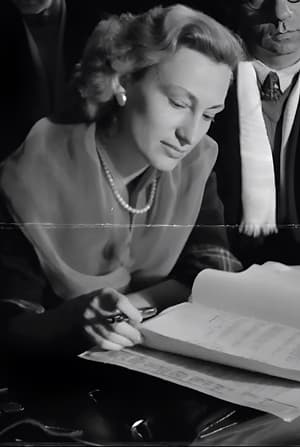
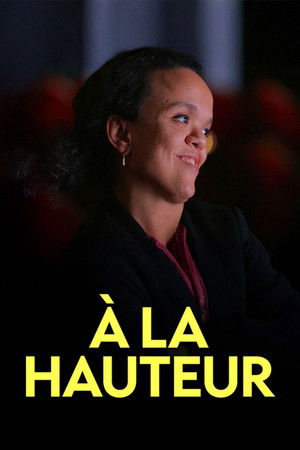
Feisty, fiercely independent and firmly rooted in place, 90 year-old Mabel Robinson broke barriers back in the 40s when she became the first woman in Hubbards, Nova Scotia, to launch her own business—a hairdressing salon where she still provides shampoo-n-sets over 70 years later. Weaving animation and archival imagery with intimate and laugh out loud moments in the salon, the film celebrates the power of friendship, doing what you love and staying active. With no desire to retire anytime soon, Mabel gives voice to a generation who are not front and center of cinema or the pop hairstyles of the day, and subtly shifts the lens on our perception of beauty and the elderly.
The TNO (Unorganized Territory) Lac-Boisbouscache is a 150 square kilometer public forest located in the Lower St. Lawrence region of Quebec, Canada. Through the eyes of the forest's residents and users, the film paints a portrait of a territory that has long been coveted by private groups with diverse interests. Boisbouscache is a story of dispossession based on current commercial uses combined with the absence of any political will.
Matt Walsh's controversial doc challenges radical gender ideology through provocative interviews and humor.
This documentary focuses on the goose hunt, a ritual of central importance to the Cree people of the James Bay coastal areas. Not only a source of food, the hunt is also used to transfer Cree culture, skills, and ethics to future generations. Filmmaker Paul M. Rickard invites us along with his own family on a fall goose hunt, so that we can share in the experience.
A tender exploration of friendship, identity, and transformation, this film follows Brahel and Andoeni, who met as children and grew up together in Guadalajara. Though their romantic relationship eventually ended, their deep friendship endured. Years later, after Brahel’s gender transition, the two reconnect and rediscover their bond. Through a rich tapestry of archival footage, music, intimate moments, and unspoken emotions, the narrative unfolds as a heartfelt journey of reconnection, vulnerability, and lasting affection.
In Bettina Büttner’s exquisitely lucid documentary Kinder (Kids), childhood dysfunction, loneliness, and pent-up emotion run wild at an all-boys group home in southern Germany. The children interned here include ten-year-olds Marvin and Tommy. Marvin, fiddling with a mini plastic Lego sword, explains matter-of-factly to the camera, “This is a knife. You use it to cut stomachs open.” Dennis, who is even younger, is seen in a hysteric fit, mimicking some pornographic scene. Boys will be boys, but innocence is disproportionately spare here. Choosing not to dwell on the harsh specifics, Büttner reveals the disconcerting manner in which traumatic episodes can manifest themselves in the mundane — a game of Lego, Hide and Seek, or Truth or Dare. Filmed in lapidary black-and-white, Büttner’s fascinating film sheds light on childhood from the boys’ characteristically disadvantaged perspective — one not yet fully cognizant — leaving much ethically to ponder over.
From the shadows of a Guatemalan neighbourhood scared into silence, two sisters lead a luminous rebellion—unleashing joy, art, and radical truth in a fight for survival.
As her adolescence gives way to the obligations of motherhood, troubled Gemma matures in Motherwell, her Scottish hometown, heavily dependent on the steel industry. Unfortunately for her, her hedonistic way of understanding the world does not fit in with the philosophy of the rest of the villagers, so trouble soon follows.
After being diagnosed with borderline personality disorder, a young mother writes a letter to her daughter about their family’s collective journey to acceptance.
A true animated film about invented islands. About an imaginary, linguistic, political territory. About a real or dreamed country, or something in between. Archipelago is a film of drawings and speeches, that tells and dreams a place and its inhabitants, to tell and dream a little of our world and times.
Nine fictitious documentaries and films reflect the mood of late 1970s Germany, particularly the two-month period in 1977 when a businessman was kidnapped by the RAF (Red Army Faction). The kidnap had been made to orchestrate the release of the original leaders of the RAF, aka the Baader-Meinhof.
This short documentary is the portrait of an 88-year-old woman who lives alone in a log cabin without running water or electricity in the Williams Lake area of British Columbia. The daughter of a Shuswap chief, Augusta lost her Indian status as the result of a marriage to a white man. She recalls past times, but lives very much in the present. Self-sufficient, dedicated to her people, she spreads warmth wherever she moves, with her songs and her harmonica.
Mujeres en la isla: las otras hijas del mestre
In a cluttered news landscape dominated by men, emerges India’s only newspaper run by Dalit women. Armed with smartphones, Chief Reporter Meera and her journalists break traditions on the frontlines of India’s biggest issues and within the confines of their own homes, redefining what it means to be powerful.
In this modern, coming of age documentary, Naomi, Jojo and Arham grapple with economic divides, gender roles, and family dynamics while competing in the fastest growing high school sport in the country: girl’s wrestling.
Delves into the storied life and career of Shirley Muldowney, the pioneering “First Lady of Drag Racing.” This documentary showcases the extraordinary journey of a woman who not only broke barriers but also set new benchmarks in the world of drag racing.
A riveting expose about the personalities of murderers and their motives. This 72 minute film covers the McDonalds' restaurant massacre, President Reagan's assassination attempt, serial murderer Henry Lee Lucas and others.
Don Letts examines the history of this notorious subculture in a fascinating documentary, which features interviews with members of different skinhead scenes through the decades. Beginning in the late 1960s, Don fondly recalls a time of multiracial harmony as youngsters bonded over a love of ska, reggae and smart clothes as white working-class kids were attracted to Jamaican culture and adopted its music and fashions. But when far-right politics targeted skinheads in the 1970s and 1980s, an ugly intolerance emerged, and Don reveals how the once-harmonious subgroup has since struggled to shake this stigma.
The residents of Bucha, Ukraine, are rebuilding their city from the rubble after surviving the horrors of Russian occupation. A newly married couple, a schoolgirl, a city official, and an elderly housewife have all endured the painful experiences of war, yet they manage to hold onto hope and solidarity. But how do you rebuild in the wake of growing trauma, especially with war still raging in your country? As time hopes for a peaceful life fade, they must grapple with mounting tensions within their communities. Shot over a three-year period, the film is a follow-up to When Spring Came To Bucha, as five protagonists navigate the complex terrain of inner conflicts, trauma, and a longing for justice, posing questions about the future of a society at war.