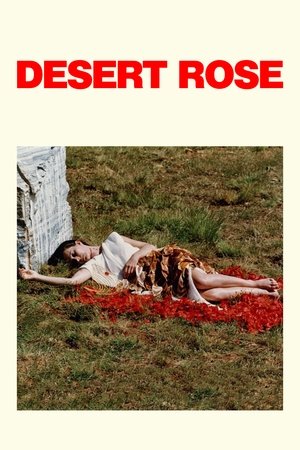
A nurse's aid, Cathy lives alone. Too alone. When her sister, with whom she's had a falling-out, calls her for her birthday and invites her to the beach, Cathy is exhilarated. But the day gradually slips away from her.
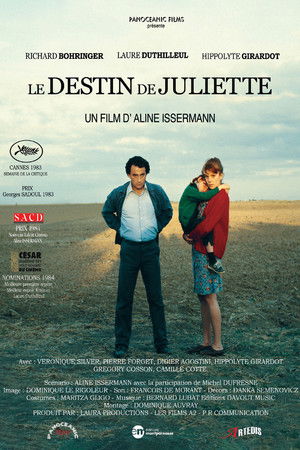
Juliette is a young woman who has grown up on a farm that is now under economic siege. In order to save her farm and her family, Juliette is forced into a marriage of convenience with Marcel , a morose and laconic railway worker whom she does not even know. Now that her own life is permanently changed, her sacrifice does not ultimately help her family and with that sorrow added to her lonely existence, she is trapped into remaining married because of social pressures and soon enough, the birth of a child. There must surely be a way out for her at some point, but when and how that will happen seems completely up to fate alone.
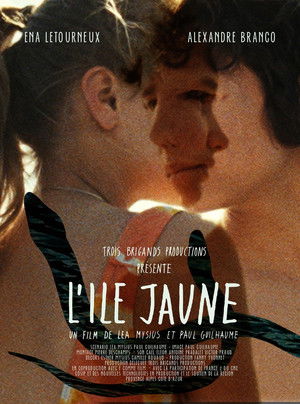
11-year-old Ena meets a young fisherman in a port. He gives her an eel and they arrange to meet the following Sunday on the other side of the lake. She has to be there.
Fifteen-year-old Sarah has returned to Colmar, where she has taken up high-performance figure skating and competition. The rivalry between the girls and the trainer's harsh words put her body to the test on the ice, while her adolescent desires distract her from her athletic ambitions.
An ad agency copywriter, ordered to push a new brand of beer to black ghetto kids, resigns from her job and goes searching for her racial identity.
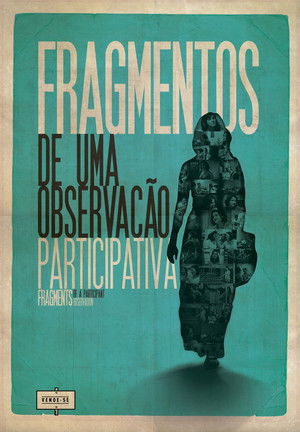
While observing others, Paula is also, herself, observed. ' Know the difference between an old maid and a spinster? The old maid does not have a choice. '
Bela, a first-generation Filipina immigrant, must face her parents' prejudice regarding her sexual orientation.
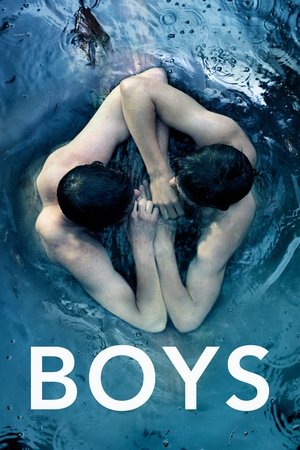
Two teen track stars discover first love as they train for the biggest relay race of their young lives.
It is New Zealand 1959. Teen swimmer Alex Archer has to battle set backs, intense rivalry and personal tragedy in her bid to win selection for the 1960 Olympic Games in Rome.
A woman director is making a film about Billie Holiday. She wants to learn from her how to "feel" again, how to love again.
In 1976 the British Government put an end to the special category status of prisoners from the Provisional Irish Republican Army, no longer treating them as prisoners of war, but as common criminals. Mairéad Farrell – on whose life much of the film seems to be loosely based – was the first woman Republican to be refused political status in 1976. By 1980, when the film is set, Margaret Thatcher was Prime Minister and doggedly resolute: “There can be no question of political status for someone who is serving a sentence for crime. Crime is crime is crime.” Silent Grace seeks to capture the struggle for the restoration of political status that was at the heart of prison protests in Northern Ireland – not just by the more celebrated male prisoners – but by a smaller number of women prisoners, led by Farrell, at the Armagh Women’s Prison.
An unexpected discovery forces an undocumented motel employee to make a life changing decision.
At the end of the 1960s, in the midst of political and social turbulence between revolt and reaction, journalist and filmmaker Oswalt Kolle fights for his ideas of liberal sex education with great commitment and sometimes missionary zeal. But Kolle has to fight against fierce resistance: The German Film Industry's Voluntary Self-Regulation Body (FSK) wants to put his latest film "The Miracle of Love" on the index. In a tough and at times unintentionally comical battle, Kolle has to go through three instances before he wins full approval for the film with the help of his agile producer Lenz Schäfer and the resourceful lawyer Dr. Fritz Ascher.
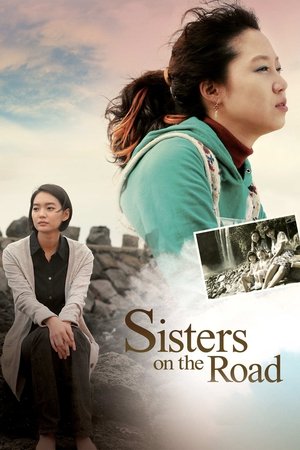
Myeong-eun's quest to find her father when her mother dies took her on the road trip with her eccentric elder sister.
The couple Thomas and Kathrine are both writers, but she is in a violent relationship with a psychopath. During a weekend at a remote island they have a fight, which leads to Thomas having amnesia after hitting his head. Kathrine sees this as an opportunity to get out of the forced relationship, and hides anything that can help him understand who he is. Or could they have a new start? Or will Thomas gradually find out what's the case?
A group of children, fleeing the war, is taken to Luanda accompanied by a nun. When they reach the aeroplane, 12-year-old N'Dala decides to leave the group and to reconnoitre the city. The nun then starts her unceasing quest for the missing boy. N'Dala, only carrying a textile bag and a doll made of wire, walks through the busy streets filled with people and traffic. Later he finds the tranquility of the island off the coast, where he meets the old fisherman Antonio, with whom he becomes friends. Not much later, he meets the lively, whimsical Zé, who is a little older than he is. N'Dala starts to experience the city and its inhabitants as increasingly forbidding and he would most like to return to the countryside from whence he came. Then he meets Joka, a fringe figure who persuades him to help with a robbery in exchange for money. With this film, Maria Joao Ganga wanted to provide a realistic sketch of the bitter political situation in Angola. One of her most important motivations ...
A grieving single mother and her child fall into a deep well of paranoia when an eerie children's book manifests in their home.
Drawing on a wide mosaic of texts from figures like Montaigne and Kafka, literary and philosophical fragments are used to illustrate and reflect on the human condition. It is a tribute to the landscape and the people who inhabit the Trás-os-Montes region of Portugal, portraying the region not just as a physical space, but as a place where imagination and reality intertwine.
The perfect English arcadia gives way to varying kinds of misfortune, disruption and violence. With more than a passing reference to the 'narrative' paintings by masters such as Bruegel, this single-take 9-minute short is about a lazy Sunday afternoon that goes horribly wrong.
An assistant prosecutor zealously pursues a conviction in the case of a pediatric nurse accused of murdering her patients, but doubt arises when her evidence shows that the infants may have died of natural causes.