On November 13, 2015, the attacks in Paris and Saint-Denis, carried out by three Islamist commandos and claimed by ISIS, were the deadliest in France since the end of World War II. In the months that followed, the November 13 Program was launched by the CNRS and Inserm to study the construction of individual and collective memory around an event that profoundly marked French society. Today, the testimonies of 27 volunteers—among some 1,000 people—who participated in the study form a mosaic of experiences that shows how trauma extends beyond the immediate circle to permeate the national collective memory.
Over three nights in April 1922, 13 men were murdered in west Cork, because, according the late Canadian historian Peter Hart, they were Protestants. This documentary goes to the root of the bitter dispute his controversial views have created.
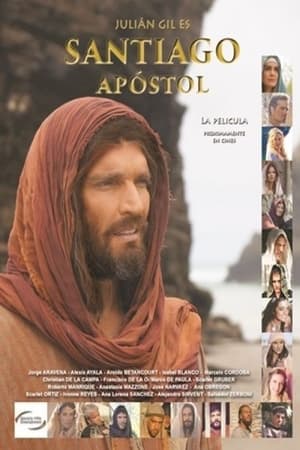
Santiago Apostol
On November 25, 1973, the first of four car-free Sundays transformed West Germany's deserted highways into spaces for walking, cycling, and horse-drawn carriages, while towns and cities took on a festive atmosphere. Introduced during the oil crisis to conserve fuel after the Arab oil embargo and production cuts following the Yom Kippur War, the measure became an unforgettable collective experience. Beyond the immediate energy shortage, the crisis marked a turning point, ending the postwar economic boom and encouraging greater awareness of energy use, consumerism, and environmental issues.
This darkly satirical musical reframes American history through the eyes of those who attempted – successfully or not – to kill US presidents. Structured as a surreal carnival sideshow, the piece weaponises American musical traditions – vaudeville, folk ballads, barbershop quartets, patriotic Sousa-style marches and Bacharach pop – to undercut the myth of the “American Dream,” exposing how frustration, alienation and entitlement can curdle into violence.
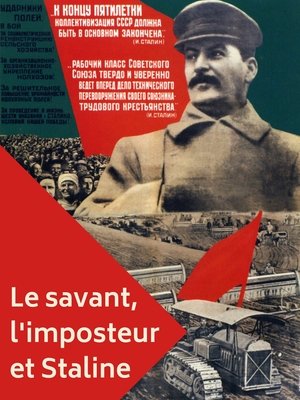
The documentary tells two very different human fates in the 1920s Soviet Union. Nikolai Vavilov was a botanical genius, Trofim Lyssenko was an agronomist who made great promises and fake inventions. Each of them tried to solve the country's nutritional problem, but only one succeeded.
Based on true events in 1990s Denver, a young couple uncovers a disturbing anomaly inside a sushi restaurant.
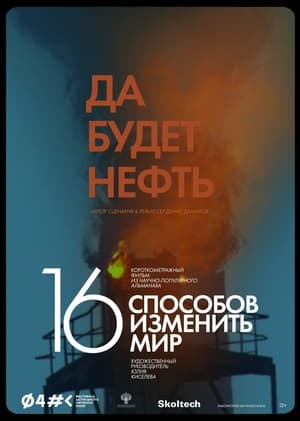
Oil is a primary energy source in the world. Global oil consumption reached approximately 95 million barrels per day but oil fields' quality is constantly declining. A team of Russian scientists came up with more accurate, cheaper, and faster technology that can increase the oil production rate. After all, modern civilization is built in the way that 'to live well' means 'consume more oil'
Ho Chi Minh in Siam
Badinter contre la peine de mort, le procès Patrick Henry
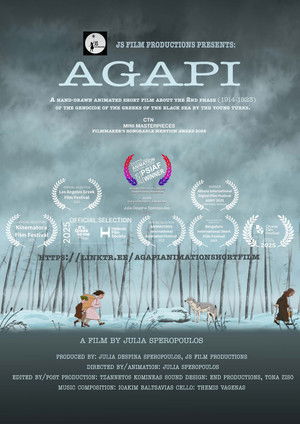
Two young brothers are abandoned by their mother during summer of 1948, they run into the forest and survive there for seven years.
Planet tells the story of a man who dreams of building an artificial planet from the ground up, asking the question, "Is the sacrifice required to create something truly great worth it in the end?" Set in the year 2730 IA, Dr. Evren Kon dares to think beyond a United Council request to build an orbital supercomputer and proposes an idea far bolder: a plan to build an artificial planet. The film takes place during the final century of the project.
The film, using the years 1919-1927 and 1951 as its timeline, presents Li Dazhao's tireless efforts to save the nation and its people from multiple dimensions and in greater depth. With extraordinary courage to be a pioneer and shoulder moral responsibility, he actively spread Marxism, igniting the flame of hope for the Chinese proletarian revolution and becoming one of the important founders of the Communist Party of China. Furthermore, the film, based on the pioneering thought led by Li Dazhao, resonates with the values of contemporary youth, achieving a dialogue of faith that transcends a century.
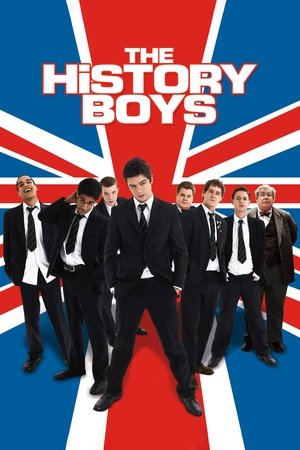
The story of an unruly class of bright, funny history students at a Yorkshire grammar school in pursuit of an undergraduate place at Oxford or Cambridge. Bounced between their maverick English master, a young and shrewd teacher hired to up their test scores, a grossly out-numbered history teacher, and a headmaster obsessed with results, the boys attempt to pass.
La Lumière du Monde
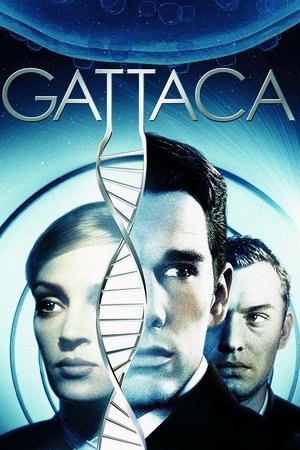
Vincent is an all-too-human man who dares to defy a system obsessed with genetic perfection. He is an "In-Valid" who assumes the identity of a member of the genetic elite to pursue his goal of traveling into space with the Gattaca Aerospace Corporation.
No profession, no say, no freedom of expression. Life as a prince consort is not exactly pleasure taxing. No constitution ascribes any function to the husband of a queen. Nowhere does it say what he must or must not do. A life in the shadow of the crown. Can that go well?
A young scientist studies the mechanics of time travel by having a conversation with a group of her future selves.
A chronicle of alleged ghosts, haunted landmarks and the otherworldly doings of Tinseltown, including a cursed script and haunted homes of the stars. A range of celebrities and parapsychologists provide interviews related to the history of Hollywood hauntings and their own experiences hosted by William Shatner.
An Original Documentary Film that explores 4 unique haunted hot spots including a Gothic Haunted House, America's Oldest Lighthouse, Ryholite Ghost Town, Nevada and a haunted Train Museum. With Mark Hall-Patton from "Pawn Stars"