"Frank Gehry: An Architecture of Joy" illustrates the unique intertwining of art and architecture throughout Gehry's spectacularly eclectic career. In this portrait, Gehry explores his work of the 1990's including The Guggenheim Museum in Bilbao and the Frederick R. Weisman Museum in Minneapolis, as well as his first European commission, the EMR Communication and Technology Center in Bad Oeynhausen, Germany. Seeing himself as an artist first, Gehry discusses his early relationships in the art world and how sculpture, painting and small scale work has influenced his architectural style. Like Rauschenberg, Johns, and Warhol, he has introduced "bad taste" into his concepts, while keeping himself outside of the contemporary dialogue between modernism and post-modernism. He has translated the vocabulary of contemporary art into an architectural language of his own, disobeying the rules of his profession and questioning its historic conventions.
Explores the life both on and off the track of one of NASCAR racing's greatest and most beloved icons. The fast-paced documentary creates an in-depth look behind the man by spending one 24-hr-period with Jeff Gordon, as well as a documentary-style retrospective of his career and lifestyle. Get to know Jeff the driver, the family man, the adventurer, the entrepreneur, and the philanthropist.
The New Modernists: Folds, Blobs and Boxes, Architecture in the Digital Era approaches the topic of artistic technological advances, and the modern architects who were educated with this new influx of electronic techniques. In this detailed portrait we visit the exhibition entitled Folds, Blobs + Boxes at the Carnegie Museum of Art where ten architect/designers discuss their approaches to digital architecture with curator of the exhibition, Joseph Rosa. By abandoning the traditional notions of aesthetic beauty, scale and proportion, a new freedom has formed amongst these contemporary creators.
This film documents the efforts of a group of Canadians and Americans to save the whooping crane from extinction. They display great determination in their dealings with this independent, pre-Ice Age creature. The issues of wild animals imprinting on people and the preservation of wild animals in captivity are examined in this film. Produced in cooperation with the Canadian Wildlife Service and the United States Fish and Wildlife Service.
Produced in 1967, this black and white film is an inmate's view of Daytop, a drug treatment centre on Staten Island, New York, where addicts learn to get along without drugs. Uncompromising, often brutal group therapy sessions are designed to shake loose the excuses a victim makes for himself. The people and situations shown are authentic; only one actor was employed. The results obtained at Daytop are regarded by some psychiatrists as a breakthrough.
A celebrity-filled look at the opening festivities for Walt Disney World in Florida.
Four nights in Caracas. A documentary essay about chaos and civilization.
This powerful film documents the hardships, tragedy and loss suffered by the prolific Southern writer and novelist Harry Crews. Interviewed by artist and filmmaker Tyler Turkle, Crews’ state of mind is revealed in a rapid-fire and startling narrative of emotional and physical pain and suffering. From his home in Gainesville, Florida, Crews provides details of his near fatal childhood coupled with stark tales of his adult alcoholism and drug abuse and the tragic, accidental drowning of his first born son. Throughout, Crews remains as tough as nails in his delivery of personal experiences and exploits which he sums up by quoting Mark Twain: “I have reached the age of seventy by strictly following a regimen that would have killed anybody else.”
A tribute to the late, great French director Francois Truffaut, this documentary was undoubtedly named after his last movie, Vivement Dimanche!, released in 1983. Included in this overview of Truffaut's contribution to filmmaking are clips from 14 of his movies arranged according to the themes he favored. These include childhood, literature, the cinema itself, romance, marriage, and death.
Le Club: Claude Jade
This short begins at Boulder Dam (now Hoover Dam). The electricity generated here by the Colorado River is sent to Hollywood, where movie studios need it to make movies. After a tour of the MGM studios' power plants, we see short advertisements for upcoming MGM releases.
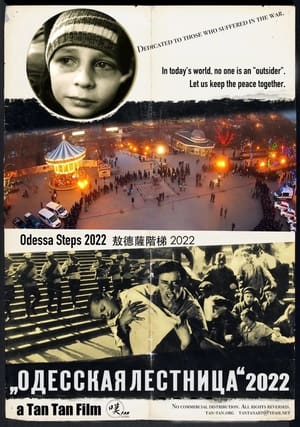
This film features two Russian communist politicians. Being committed Leninists; both of them have served several terms as city council members. Their horizons are broad, but what concerns them the most is the future of global communism. At one point, by decree of fate, their booming activities begin to expand far beyond the boundaries of their native St. Petersburg and the Russian Federation. However, the future of global communism remains unclear. What remains clear is the fact that in the modern world the tail still wags the dog. A documentary comedy.
The Palace is a documentary that follows the everyday life of seventeen women who live together, sharing a large house for emotional and financial reasons. They help each other to train for various jobs. Most become nannies, domestic workers and private nurses for elderly patients.
THE GOSPEL ACCORDING TO JOHN read by Luis Miguel Cintra, one of the most prominent Portuguese actors. A glimpse at a personal experience of Jesus, filmed outdoors, from dawn to sunset, and materialized in the grain of the voice, the expression, control, rhythm and breath of the actor himself.
This Pete Smith Specialty short showcases former heavyweight boxing champion Max Baer with various sparring partners in the ring. Slow motion is used to illustrate how Baer uses his skills.
Six blind Tibetan teenagers climb the Lhakpa-Ri peak of Mount Everest, led by seven-summit blind mountain-climber Erik Weihenmayer.
Hommage à Noir is a 1996 film/ visual poem set to music filmed to honor and highlight the culture of Africa. Director Ralf Schmerberg shot this film entirely in black and white, which is set to a soundtrack of African rhythms mixed with electronica.
Ex flower child goes looking for revolutionary hero and finds a brilliant no-quitter with a good appetite.
On Valentine's Day, 1993, Caveh Zahedi decided to ingest 5 grams (a very large dose) of hallucinogenic mushrooms. For the first time in his mushroom-taking history, he had an experience of "divine possession," in which he felt that a divine being took possession of his body and spoke through him, in a voice that was not his, and with knowledge that he himself did not possess. He later tried several times to repeat the experience. I WAS POSSESSED BY GOD is the documentary record of one such attempt.
Jerry Wald has to write about radio, visiting Sid Gary gives him the tip it might be more easy for him to write this article at the radio station than at his newspaper office. At the studio they listen to the Boswell Sister's rehearsal, which is interupted by some not so friendly remarks by orchestra leader Abe Lyman, they listen at the door, where a Colonel Stoopnagel broadcast is prepared, as well as to the rehearsal of a new song for an broadcast by Kate Smith.