In memory of the Japanese earthquake on 3.11, each director presents a 3 minute and 11 second short film in tribute to those who were lost that day.
Carmen accompanies a group of women who must travel from the island of Vieques to San Juan, capital of Puerto Rico, in order to perform breast biopsies. The long journey is by water and road. Amid many fears and vicissitudes, Carmen confirms once again the need for appropriate medical services for both women and for the rest of the Vieques population.
FrackNation is a feature documentary that aims to address what the filmmakers say is misinformation about the process of hydraulic fracturing, commonly called fracking.
Explores the marriage of a young couple with Down syndrome, and the family who strives to support their needs.
The courtship rituals of animals and plants are compared to those of contemporary society, with educational and frequently humorous results.
The first talkie was directed by Alice Guy, the first color film was produced by Lois Weber, who directed more than 300 films over 10 years. Frances Marion wrote screenplays for the Hollywood Star Mary Pickford and won two Oscars, Dorothy Arzner was the most powerful film director in Hollywood. And what do all of them have in common? They are all women and they have all been forgotten. Incredibly, it also took until 2010 for the first woman, Kathryn Bigelow, to win the Oscar for Best Director. Even if underrepresented women have always played a big part in Hollywood and it is this part of the film history left untold that this documentary sets out to uncover.
This documentary seeks to open your eyes to the the costly consequences of the Information Age, when we are addicted to constantly replacing our electronic devices with newer and better versions.
From the Sea to the Land Beyond is a film about the British coast made from 100 years of our film heritage stored in the British Film Institute collection, edited by Penny Woolcock with a soundtrack by British Sea Power.
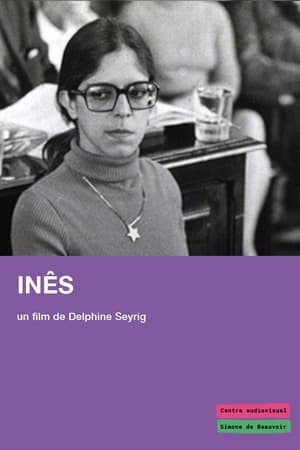
Inês Etienne Romeu was an opponent to the Brazilian's dictatorship. She was kidnapped, tortured and raped in jail, where she stayed for almost 100 days. She was later sentenced to life imprisonment. She stayed ten years in prison, from 1971 to 1979. Delphine Seyrig directed this film in 1974, when Inês was still in prison, protesting against this imprisonment and in support to Inês.
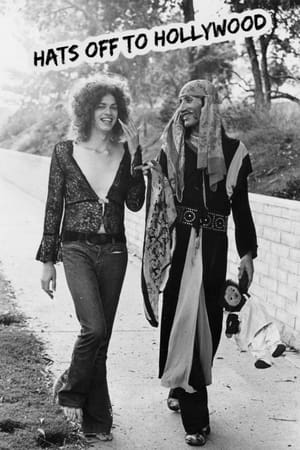
Picking up the story first presented in I Don’t Know (1970), Hats Off to Hollywood (1972) brazenly and brilliantly mixes documentary reality with fully staged recreations/reimaginings of episodes in the lives of Jennifer and Dana, a loving, bickering couple who challenge the notion of homonormativity. Drugs, poverty, disease, bigotry and prostitution all figure into this disarmingly candid and often hilarious film, a remarkable work that is the apotheosis of director Spheeris’ early work, and a luminous signpost leading directly to The Decline of Western Civilization (1979-1997). Preserved by the Academy Film Archive in 2012.
With four strikes against her (black, female, poor and a lesbian), our trailblazer, Jewel Thais-Williams, helped changed laws, save lives and influence communities across Los Angeles, California as she opened her legendary nightclub's door for 42 years.
Reveals the courageous lives of pioneer camerawomen from Hollywood to Bollywood, from war zones to children’s laughter, in a way that has never been seen before. Based on a book by Alexis Krasilovsky, the film tells the stories of camerawomen surviving the odds in Afghanistan, Australia, Canada, China, France, Germany, India, Iran, Mexico, the U.S. and other countries, as well as exploring their individual visions.
A family is observed watching television. The viewer becomes the object of the family's gaze, as much as the family is the object of the viewer's gaze.
Since 2013 more than 30,000 fighters from all over the world have joined the troops of the self-proclaimed Islamic State (Daesh) in Syria. Fighting against them as part of the YPO (Popular Protection Command) in Rojava—in the north of Syria and prevalently Kurdish—are some hundreds of Westerners. This is the story of three of them: a former American marine, an Italian anti capitalist activist, and a Swedish bodyguard.
Explores the trajectory of the young nationalist from the time of his incarceration, at 23 years of age, as a result of the attack on the United States Congress.
Romania. Seven years in the life of a family of believers, struck by the illness of a little girl suffering from spina bifida pass before the camera, with a polluted town scarred by unemployment serving as a background.
Who We Were
A Documentary feature film directed by Lian Lunson celebrating the late Kate McGarrigle.
The sacrifice of self, the acclaim, the adoring crowds — classical pianist Marika Bournaki fits the role. But the title of Bobbi Jo Hart's award-winning biographical documentary, I am Not a Rock Star, speaks to the contradictions of Bournaki's life. Shot over a span of eight years - following the pianist from 12 to 20 years of age - Hart's film amounts to a front row seat in the unfolding of a life and the forming of a personality. Shot in verité style in concert halls, hotels and airports around the world and featuring stunning piano performances, the film turns Bournaki's life into a visual narrative, revealing both the rewards and costs of a life dedicated to music
This documentary is a three-part tribute to director Guru Dutt, who died in 1964 at the age of 39. The work traces Guru Dutt's personal story through many interviews with his family members and colleagues and observes his work through the use of extensive film excerpts. The documentary was produced by the British television network Channel 4 producer Nasreen Munni Kabir.