A boy is left alone in a Jewish neighborhood in the year of 1970, where both world cup and dictatorship happen in Brazil.
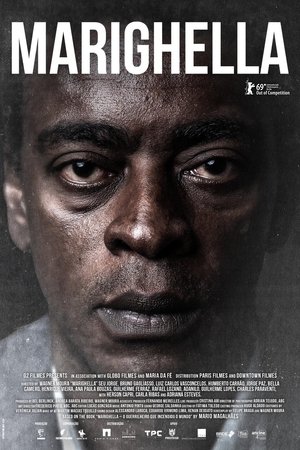
Afro-Brazilian poet and politician, the legendary Carlos Marighella. Driven to fight against the erosion of civil and human rights following the CIA-backed military coup of 1964 and the brutal, racist right-wing dictatorship that followed, the revolutionary leaves behind his wife and son to take up arms, becoming a notorious enemy to the power structure.
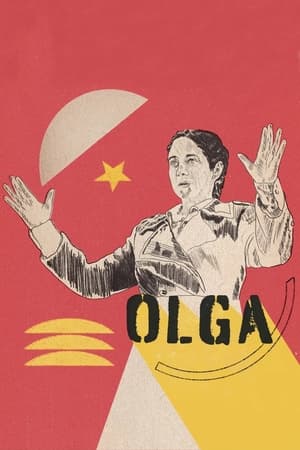
Based upon the true story of Olga Benário, the German-born wife of Brazilian communist leader Luís Carlos Prestes. During the dictatorship of Getúlio Vargas (1930-1945) she was arrested and sent to Nazi Germany, where she was put to death in a concentration camp. After World War II began, Vargas decided to uphold the Allies.
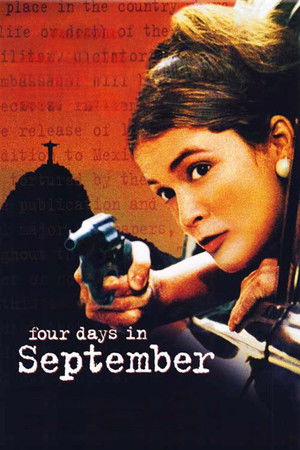
Fernando, a journalist, and his friend César join terrorist group MR8 in order to fight Brazilian dictatorial regime during the late sixties. César, however, is wounded and captured during a bank hold up. Fernando then decides to kidnap the American ambassador in Brazil and ask for the release of fifteen political prisoners in exchange for his life.
Eduardo Coutinho was filming a movie with the same name in the Northeast of Brazil, in 1964, when there came the military coup. He had to interrupt the project, and came back to it in 1981, looking for the same places and people, showing what had ocurred since then, and trying to gather a family whose patriarch, a political leader fighting for rights of country people, had been murdered.
Paulete, the star of a daring theater group, is visited by his military brother-in-law, the young Fininha. A torrid relationship arises between the two, and now the soldier must deal with the prevailing repression during the Brazilian military dictatorship.
Arrested five times for his activism, student leader Honestino Guimarães was kidnapped in 1973 at the age of 26 and is one of the hundreds of people who disappeared during the Brazilian military dictatorship.
A woman married to a former politician during the 1971 military dictatorship in Brazil is forced to reinvent herself and chart a new course for her family after a violent and arbitrary act.
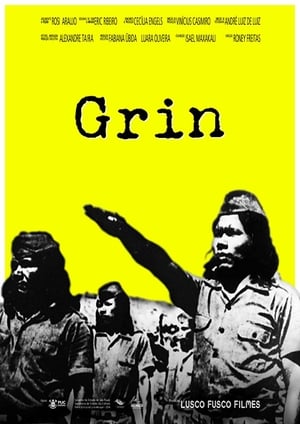
A Maxakali filmmaker brings out memories about the formation of the Indigenous Rural Guard (Grin) during the military dictatorship in Brazil, with reports of violence suffered by their relatives.
Through the testimony of the victims of the Brazilian dictatorship, and the re-creation of the practices to which they were subjected, the torture suffered by the Brazilian political detainees in their country is denounced. Restored version.
Serebrjakov, Uncle Vanya's brother-in-law, is widowed and has remarried Helena. He wants to sell the country estate where the family lives: this unpopular decision sparks one of Chekhov's most famous dramas.
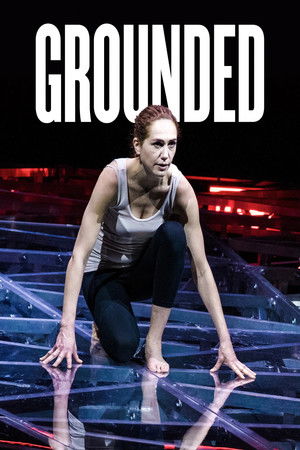
After giving birth, a Top Gun pilot is assigned by the US Air Force to fly drones. At a hidden base in the American desert, she discovers another war, another way of flying and destroying, of controlling and punishing. By George Brant, translated by Monica Capuani.
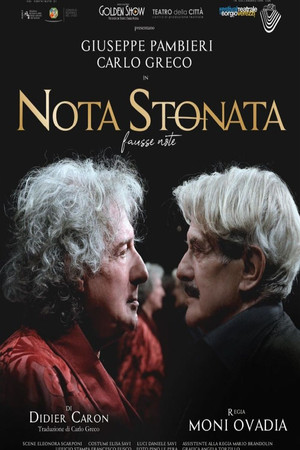
The director of the Geneva Philharmonic Orchestra, Hans Peter Miller, returns home after a concert and is accosted by an intrusive spectator, Léon Dinkel, who introduces himself as a great admirer who has come from Belgium. The longer the conversation between the two continues, the stranger the visitor's behavior becomes.
Lamija (15) moves between the piano keys and the kickboxing ring, breaking down gender stereotypes and showing that strength, grace, and passion can coexist — an inspiring story of female empowerment through sport and art.
The goddess of love, Aphrodite, opens the tragedy and the goddess of hunting, Artemis, concludes it, but at the center of Euripides' “Hippolytus, Bearer of the Crown” (428 BC) are not the gods, but rather Phaedra's absolute, consuming human passion for her stepson, Hippolytus. Phaedra hides her love and wastes away.
Eva, a seventeen year old girl, tries to face the consequences of a rash decision.
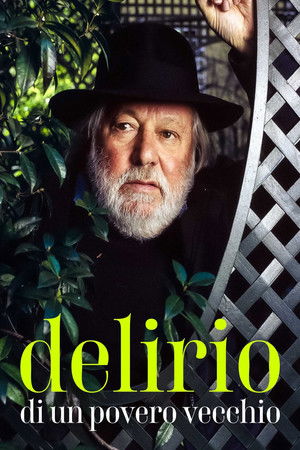
Paolo Villaggio, tender and gruff at the same time, recalls his entire life in a long autobiographical stream of consciousness.
Euripides' Heracles, a passionate tragedy of intense pathos, performed by an all-female cast and directed by Emma Dante at the Greek Theater in Syracuse.
At an elite, old-fashioned boarding school in New England, a passionate English teacher inspires his students to rebel against convention and seize the potential of every day, courting the disdain of the stern headmaster.
When Martin, a former GDR citizen, is released from jail, he lately becomes confronted with the consequences of the German re-unification.