“This is a film about the end of a friendship. It wasn’t meant to be. Fifteen years ago, they painted my portrait.” (Mariano Llinás)
In 2009, art detective Dr Bendor Grosvenor caused a national scandal by proving that the Scottish National Portrait Gallery's iconic portrait of Bonnie Prince Charlie, the rebel Stuart who almost seized power in 1745, was not in fact him. Keen to make amends, and suspecting that a long-lost portrait of the prince by one of Scotland's greatest artists, Allan Ramsay, might still survive, Bendor decides to retrace Charles's journey in the hope of unravelling one of the greatest mysteries in British art.
When two of artist Barbora Kysilkova’s most valuable paintings are stolen from a gallery at Frogner in Oslo, the police are able to find the thief after a few days, but the paintings are nowhere to be found. Barbora goes to the trial in hopes of finding clues, but instead she ends up asking the thief if she can paint a portrait of him. This will be the start of a very unusual friendship. Over three years, the cinematic documentary follows the incredible story of the artist looking for her stolen paintings, while at the same time turning the thief into art.
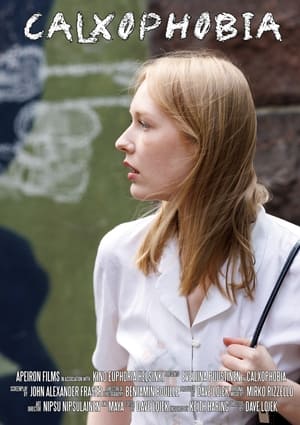
A woman goes from dreams deeply to sunken worlds.
In 1967, Visconti came to Algiers for the filming of The Stranger with Mastroianni and Anna Karina. Camus, during his lifetime, had always refused to allow one of his novels to be brought to the screen. His family made another decision. The filming of the film was experienced in Algiers, like a posthumous return of the writer to Algiers. During filming, a young filmmaker specializing in documentaries Gérard Patris attempts a report on the impact of the filming of The Stranger on the Algerians. Interspersed with sequences from the shooting of Visconti's film, he films Poncet, Maisonseul, Bénisti and Sénac, friends of Camus, in full discussions to situate Camus and his work in a sociological and historical context. “The idea is for us to show people, others, ourselves as if they could all be Meursault, or at least the witnesses concerned to his drama.”
Carne Ross was a government highflyer. A career diplomat who believed Western Democracy could save us all. But working inside the system he came to see its failures, deceits and ulterior motives. He felt at first hand the corruption of power. After the Iraq war Carne became disillusioned, quit his job and started searching for answers.
Rok stalinské epochy
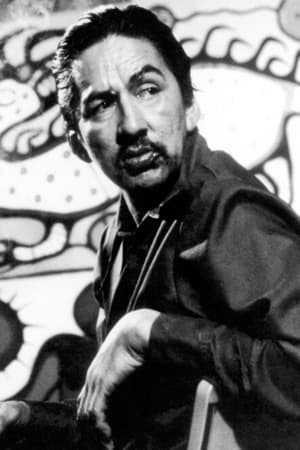
Ludvík Kuba
Diving deep into the true causes of the Great Recession, the financial crisis of the 2010s, renowned economists, investors and business leaders explain what America is facing if we don't learn from our past mistakes. Is the economy really improving or are we just blowing up another Bubble?
Jim Carrey exhibits his talent as a painter and reflects on the value and power of art.
Michael Moore's view on how the Bush administration allegedly used the tragic events on 9/11 to push forward its agenda for unjust wars in Afghanistan and Iraq.
A documentary on Al Gore's campaign to make the issue of global warming a recognized problem worldwide.
After the World War I, Mussolini's perspective on life is severely altered; once a willful socialist reformer, now obsessed with the idea of power, he founds the National Fascist Party in 1921 and assumes political power in 1922, becoming the Duce, dictator of Italy. His success encourages Hitler to take power in Germany in 1933, opening the dark road to World War II. (Originally released as a two-part miniseries. Includes colorized archival footage.)
"Meat Joy is an erotic rite — excessive, indulgent, a celebration of flesh as material: raw fish, chicken, sausages, wet paint, transparent plastic, ropes, brushes, paper scrap. Its propulsion is towards the ecstatic — shifting and turning among tenderness, wildness, precision, abandon; qualities that could at any moment be sensual, comic, joyous, repellent. Physical equivalences are enacted as a psychic imagistic stream, in which the layered elements mesh and gain intensity by the energy complement of the audience. The original performances became notorious and introduced a vision of the 'sacred erotic.' This video was converted from original film footage of three 1964 performances of Meat Joy at its first staged performance at the Festival de la Libre Expression, Paris, Dennison Hall, London, and Judson Church, New York City."
At the peak of Perestroika, in 1987, in the village of Gorki, where Lenin spent his last years, after a long construction, the last and most grandiose museum of the Leader was opened. Soon after the opening, the ideology changed, and the flow of pilgrims gradually dried up. Despite this, the museum still works and the management is looking for ways to attract visitors. Faithful to the Lenin keepers of the museum as they can resist the onset of commercialization. The film tells about the modern life of this amazing museum-reserve and its employees.
Jim Moir (aka Vic Reeves) explores Video Art, revealing how different generations ‘hacked’ the tools of television to pioneer new ways of creating art that can be beautiful, bewildering and wildly experimental.
Justice
#MladiPitajuPoliticare
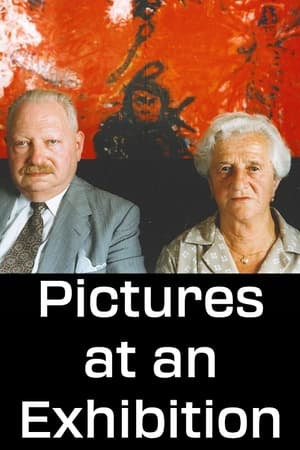
A documentary film directed by seven famous directors, and narrated by several famous Hollywood actors. The film attempts to give the general filmgoing public a taste of art history and art appreciation.
Since the late 18th century American legal decision that the business corporation organizational model is legally a person, it has become a dominant economic, political and social force around the globe. This film takes an in-depth psychological examination of the organization model through various case studies. What the study illustrates is that in the its behaviour, this type of "person" typically acts like a dangerously destructive psychopath without conscience. Furthermore, we see the profound threat this psychopath has for our world and our future, but also how the people with courage, intelligence and determination can do to stop it.