Set in the years before and during World War I, this epic tale tells the story of a rich Argentine family, one of its two descending branches being half of French heritage, the other being half German. Following the death of the family patriarch, the man's two daughters and their families resettle to France and Germany, respectively. In time the Great War breaks out, putting members of the family on opposing sides.
Jose is an elderly rebel who, after being refused a withdrawal at a bank, returns with a gun and threatens to shoot himself if he doesn't get his cash. Pedro, a young teller, is disillusioned with his life and sees Jose's stunt as a way out when he pretends to be taken hostage, leaving the bank with the old man and a hefty amount of money. The unlikely duo become friends, picking up tough-girl Ana along the way, while avoiding the police.
Two coworkers decide to blackmail the corrupt demolition company they work for by setting up a fake accident.
Joaquín Góñez, a novelist in his sixties recalls his emotions, his wild years in Buenos Aires, the memories of old friends, the meaning of loyalty and the intimate relationship with his mother, Roma.
The film does not describe, rather it observes, in a distant manner, the world of Martin, a seventeen year old who feels he doesn’t belong anywhere, not at home, school, nor with his friends or members of his rock band. In search of some happiness, Martin takes off to the coastal town of Mar de Plata, where his older brother lives. Unglamorous, yet enchantingly addictive and refreshingly genuine, Acuña paints a confused and uncomfortable world, and makes us want revisit it over and over again.
César and Luis, two tango authors, visit Polaco Goyeneche at his house, to give him a song in his honor. Based on the song "Ciudadano de Saavedra" by César Rossi and Julio Pane.
In Argentina, one daughter of patriarch Madariaga is married to a Frenchman while the other is married to a German thus leading to a crisis when Nazi Germany occupies France and some Madariaga family members fight on opposite sides.
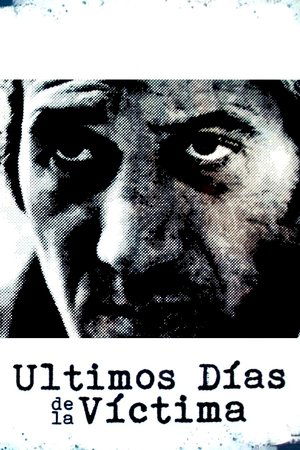
The closed community of a private neighborhood of high-priced houses, is moved by the discovery of three corpses that appear floating in a pool and rushes to frame it as an accident.
After her mother’s death, Magali returns to her native town in the argentine north. The threatening presence of a puma that eats animals and appears in dreams unsettles the town. Magali’s approaches her son, together they will fulfill the family duty on which depends their own prosperity
María is eighteen years old, she lives with her mother in an old house in Buenos Aires in 1978, subletting rooms and giving classes to poor illiterate adults. Suddenly she is abducted by a military squad and finds herself accused of subversion and submitted to torture in the hideous underground of the Garage Olimpo, while her mother desperately tries to find her.
In the late 1980s, journalist José de Zer seeks proof of alien life in Argentina — even if he has to fake evidence — causing a surreal media circus.
Patagonia, Argentina. A mechanic who dreams of a different life begins to think big after his adopted puppy Bombón wins first prize at a local dog show.
They Returned is a beautifully touching and unnerving story about the unexplained disappearance of three children, two boys and one girl, and their reappearance three days later in a semi-autistic state. Not even the children themselves are able to help anyone understand what happened.
Reveals an alternate history of the post-war world. This is a version of history where, in contrast to what we are all told, fascist ideology prevailed. The story of Klaus Barbie, Nazi torturer, American spy, tool of repressive right-wing regimes, is symbolic of the real relationship that the "Western" governments had with fascism and makes us see the world as it is today - and the politicians that inhabit it - in a different way.
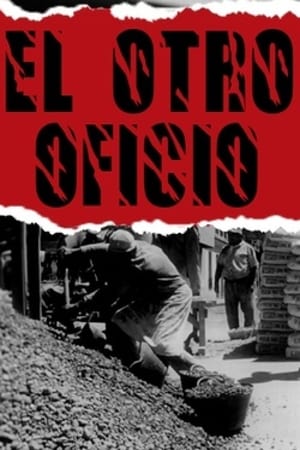
In their search for work, a group of workers face familiar frustrations. Cedrón raises his own conflicts and tries to understand their cause. As in all his other films, the director sets his sight on aspects of reality that are not well observed.
A hostage situation gone bad. Jesús, an amateur thief, holds prisoner a group of clients. But nothing is what it seems. Behind the gates of the drugstore the story will unfold in two times. On one side, to the inevitable end: the police will shoot their way inn. And on the other side, to the past, unveiling how Jesús got caught in this situation, where the hostages are not the real victims, but something more sinister. Retracing step by step, reveling the truth, playing with the prejudices and beliefs of the audience on racial hate, social prejudices, and the intolerance. How far are we willing to go to survive?
After the theft of his motorcycle, Lucio bums aimlessly around Buenos Aires drifting from one arcade and record store to the next, indulging in short chats with friends and, more often, setting out onto the streets alone.
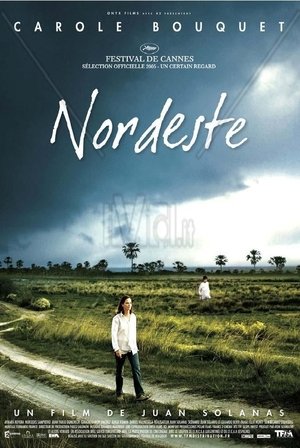
Amid the sweltering summer heat in northern Argentina, two middle-class families retreat to a crumbling country estate and a modest townhouse, where strained relationships, simmering tensions, and the presence of children and servants quietly expose the fractures of family life. Between idle days, gossip, and unspoken desires, the boundaries of class, tradition, and faith are reflected in their everyday interactions.
The life and the lovers of a few young women in a provincial town.
When El Mono dies, his three longtime friends try to recover from the loss and want to secure his little girl's future. But for Fernando, Mauricio and El Ruso this will not be easy. They decide to recover a big investment El Mono had made when he had bought a soccer player who was supposed to become a star.