Documentary about an African-American girl who grows up to help NASA put astronauts into space and bring them home safely. She was one of the main characters in the movie, "Hidden Figures." Includes interview with Johnson.
It contains 99.9 percent of all the matter in our solar system and sheds hot plasma at nearly a million miles an hour. The temperature at its core is a staggering 27 million degrees Fahrenheit. It convulses, it blazes, it sings. You know it as the sun. Scientists know it as one of the most amazing physics laboratories in the universe.
New Horizons is the first mission to Pluto and the Kuiper Belt of rocky, icy objects beyond. Principal Investigator Alan Stern leads a mission team that includes the Johns Hopkins University Applied Physics Laboratory, Southwest Research Institute, Ball Aerospace Corporation, the Boeing Company, NASA Goddard Space Flight Center, NASA Jet Propulsion Laboratory, Stanford University, KinetX, Inc., Lockheed Martin Corporation, University of Colorado, the U.S. Department of Energy, and a number of other firms, NASA centers and university partners.
Planet Mars
From 1957 —the year in which the Soviets put the Sputnik 1 satellite into orbit— to 1969 —when American astronaut Neil Armstrong walked on the surface of the moon—, the beginnings of the space conquest were depicted in popular culture: cinema, television, comics and literature of the time contain numerous references to an imagined future.
NASA must devise a strategy to return Apollo 13 to Earth safely after the spacecraft undergoes massive internal damage putting the lives of the three astronauts on board in jeopardy.
Apollo 11 : Retour vers la lune
When Kennedy announced in 1961 that he wanted to take humans to the moon within a decade, Charles M. Duke was skeptical. Almost 11 years later, however, Charles M. Duke was standing on the moon himself. He gave Neil Armstrong the go-ahead for the landing on Apollo 11. Because he contracted rubella, the Apollo 13 crew had to be changed. In 1972, he landed with Apollo 16 and looked down on Earth from the moon himself.
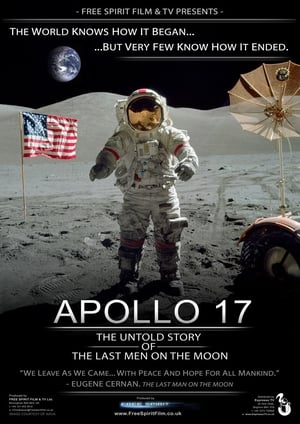
The 1960s was an extraordinary time for the United States. Unburdened by post-war reparations, Americans were preoccupied with other developments like NASA, the game-changing space programme that put Neil Armstrong on the moon. Yet it was astronauts like Eugene Cernan who paved the uneven, perilous path to lunar exploration. A test pilot who lived to court danger, he was recruited along with 14 other men in a secretive process that saw them become the closest of friends and adversaries. In this intensely competitive environment, Cernan was one of only three men who was sent twice to the moon, with his second trip also being NASA’s final lunar mission. As he looks back at what he loved and lost during the eight years in Houston, an incomparably eventful life emerges into view. Director Mark Craig crafts a quietly epic biography that combines the rare insight of the surviving former astronauts with archival footage and otherworldly moonscapes.
This extraordinary film features NASA film footage enhanced by AI-based software and other image processing. The clarity of the images gives viewers a whole new perspective on what it was like to step onto lunar soil and ramble about the alien landscapes. The film shows how teams of astronauts collected evidence that has revolutionized our understanding of the origin of both Earth and the moon.
Twelve men who belong to one of the world's most exclusive fraternities -- people who've walked on the surface of the moon -- are paid homage in this documentary. Using newsreel footage, rare NASA photographs, and digitally animated re-creations, Magnificent Desolation: Walking on the Moon examines the Apollo missions between 1969 and 1972 which put astronauts on the moon.
Apollo 11 - Les fichiers oubliés
In Diretta Da Marte - Missione Perseverance Alla Ricerca Della Vita
Join the Mars rovers Spirit and Opportunity for an awe-inspiring journey to the surface of the mysterious red planet.
Never-before-heard audio tapes recorded with Neil Armstrong during the final years of his life reveal an intimate portrait of this iconic - and famously private - man. Illustrated through previously unseen personal photographs and archival footage, this documentary special takes viewers on an emotional journey into the thoughts and experiences of the first man on the Moon.
On July 16, 1969, hundreds of thousands of spectators and an army of reporters gathered at Cape Kennedy to witness one of the great spectacles of the century: the launch of Apollo 11. Over the next few days, the world watched on with wonder and rapture as humankind prepared for its "one giant leap" onto the moon--and into history. Witness this incredible day, presented through stunning, remastered footage and interviews that takes you behind-the-scenes and inside the spacecraft, Mission Control, and the homes of the astronaut's families.
National Geographic's riveting effort recounts all 12 crewed missions using only archival footage, photos and audio.
A testament to NASA's Apollo program of the 1960s and '70s. Composed of actual NASA footage of the missions and astronaut interviews, the documentary offers the viewpoint of the individuals who braved the remarkable journey to the moon and back.
Follow the extraordinary, inside story of NASA engineers as they race to build and launch the world's biggest rocket, Artemis I.
NASA launches its most ambitious hunt for traces of life on Mars, landing a car-sized rover in a rocky, ancient river delta. The rover will stow samples for possible return to Earth and test technology that may pave the way for human travel to Mars.