When Kennedy announced in 1961 that he wanted to take humans to the moon within a decade, Charles M. Duke was skeptical. Almost 11 years later, however, Charles M. Duke was standing on the moon himself. He gave Neil Armstrong the go-ahead for the landing on Apollo 11. Because he contracted rubella, the Apollo 13 crew had to be changed. In 1972, he landed with Apollo 16 and looked down on Earth from the moon himself.
A testament to NASA's Apollo program of the 1960s and '70s. Composed of actual NASA footage of the missions and astronaut interviews, the documentary offers the viewpoint of the individuals who braved the remarkable journey to the moon and back.
Top Gear presenter James May presents this informative program that examines the historic moon missions. Traveling to America, May meets three of the men who walked on the surface of the moon, learning how it felt and how the now antiquated technology was used to achieve such an historic feat.
Archival material from the original NASA film footage – much of it seen for the first time – plus interviews with the surviving astronauts, including Jim Lovell, Dave Scott, John Young, Gene Cernan, Mike Collins, Buzz Aldrin, Alan Bean, Edgar Mitchell, Charlie Duke and Harrison Schmitt.
Commemorating the space agency's 50th anniversary, follow John Glenn's Mercury mission to orbit the earth, Neil Armstrong's first historic steps on the moon, unprecedented spacewalks to repair the Hubble stories, and more!
Recently discovered footage reveals the secret history of NASA's first landing on the moon, and using this brand-new evidence, former astronauts and experts challenge everything known about the Apollo missions.
A French documentary or, one might say more accurately, a mockumentary, by director William Karel which originally aired on Arte in 2002 with the title Opération Lune. The basic premise for the film is the theory that the television footage from the Apollo 11 Moon landing was faked and actually recorded in a studio by the CIA with help from director Stanley Kubrick.
Man's landing on the moon was our greatest technological achievement. The Apollo 11 mission was truly the stuff of dreams. For the first time, our species walked on another celestial body. Even more remarkable was their ability to make it back. This is the story of the July 20, 1969, Apollo 11 moon landing. Drama with digitally remastered original footage.
The inside story of the Artemis II mission - filmed over three and a half years at NASA. How did four astronauts travel to the moon, going deeper into space than ever before?
Has man really been to the moon? It’s been 50 years, and the debate rages on. For the firs time, a film compiles in a single piece of work, all the best evidence in favor of the moon landings and the evidence contrary to them. For the first time we can also analyze the Apollo pictures in detail, with the aid of some among the top photographers in the world. What was the Apollo project really? The biggest achievement in the history of mankind, or the biggest fakery of all times, watched on live television by more than half a billion people?
July 1969. Astronauts Neil Armstrong and Buzz Aldrin are 240,000 miles from earth facing the most hazardous venture in the history of space flight; the first human landing on another world. They'll succeed, abort, or die in the attempt.
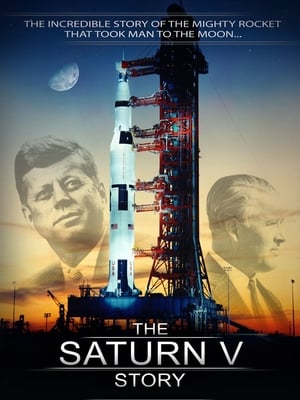
In 1961, no one believed President Kennedy’s pledge to put a man on the moon by the end of the decade. To win the race to space, the USA needed to create a multi-billion dollar space program. Using stunning NASA footage, this inspirational film tells the story of the colossal challenges NASA faced to fulfill Kennedy's pledge. With the accolade of flying 24 men safely to the moon, Saturn V is considered one of mankind's greatest technological achievements. This is the story of the most powerful machine ever built, and the men and women who believed it could fly.
Nearly forty years after the moon landing the men on the mission reveal what really happened. On how close the mission came to disaster.
De l'autre coté de la lune
An immersive documentary focusing on the story of the Apollo space program
Apollo 11 - Les fichiers oubliés
On December 7, 1972, NASA launched Apollo 17, a lunar mission crewed by Eugene Cernan, Ronald Evans and Harrison Schmitt. It would be the last time humans traveled beyond low Earth orbit, the last time man landed on another celestial body, and the last time man went to the moon. The Last Steps uses rare, heart-pounding footage and audio to retrace the record-setting mission.
An philosophical film assembled from archival NASA footage exploring humanity’s search for meaning in the silence of space.
A look at the Apollo 11 mission to land on the moon led by commander Neil Armstrong and pilot Buzz Aldrin.
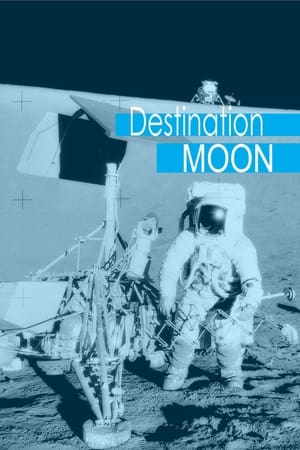
"Destination Moon" is the third in the trio of documentaries about the beginnings of the space age. It documents JPL's ambitious plan to beat the Soviet Union in robotic space exploration by reaching not only for the moon, but also the inner planets. But as the hour-long episode documents, JPL would be humbled by a series of failures in attempting to merely hit the moon, let alone visit the other planets. "We didn't know what we were doing," one veteran JPL engineer confides, "and there was no one around to tell us." This film shows how JPL did learn to go to the moon and to the planet Venus, giving the United States its first "First in Space."