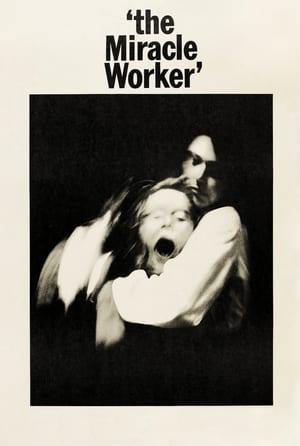
A semi-documentary biography film about the life and work of Soviet film actor Pyotr Aleynikov. Includes newsreels from the 1930s, footage from films featuring Aleynikov and interviews with his closest friends and colleagues.
The story of the eventful life of George W. Bush—his struggles and triumphs, how he found both his wife and his faith—and the critical days leading up to his decision to invade Iraq.
A look at President Richard M. Nixon—a man carrying the fate of the world on his shoulders while battling the self-destructive demands from within—spanning his troubled boyhood in California to the shocking Watergate scandal that would end his Presidency.
F-E-D-A
New York in the 1920s. Max Perkins, a literary editor is the first to sign such subsequent literary greats as Ernest Hemingway and F. Scott Fitzgerald. When a sprawling, chaotic 1,000-page manuscript by an unknown writer falls into his hands, Perkins is convinced he has discovered a literary genius.
Clara Immerwahr and her husband to be Fritz Haber are both young and gifted chemists. Their struggle for acknowledgment in nationalistic Germany during World War I lead to the development and use of the first chemical weapons.
The life and career of Italian opera singer Farinelli, considered one of the greatest castrato singers of all time.
The romanticized gallant adventures of Pauline Bonaparte, Napoleon's sister. First "engaged" to the Conventionnel Fréron, then separated from him by her brother for political reasons, Pauline joined Napoleon in the Italian army, where she fell in love with the comté de Canouville. But the First Consul married her to his friend, General Leclerc, whom she followed on the expedition to Saint-Domingue. Unconcerned about fidelity, she began to love her husband just as he was about to die of yellow fever. Back in France, she was soon consoled by other gallants. Napoleon, now emperor, hastened to marry her off to Prince Borghese, but he was unable to make her love him. She soon returned to Paris to lead the life of a gallant woman, incognito, and again met Canouville, whom the emperor tried in vain to separate from her. But soon the Russian campaign begins, and her lover is killed. All that remains for Pauline, this time disconsolate, is to reconcile with her brother on the road to exile.
Twenty Four year-old Corsican refugee Napoleon Bonaparte is a lowly artillery captain in the French army at the siege of Toulon. Destitute and relying on his success in the new and dangerous revolutionary society, his mother and siblings become embroiled in Napoleon's struggle. The opponents are the English but the enemy are the revolutionaries authorities who seek to keep him in his place. Using his astonishing tactical mind, his sheer audacity and extraordinary military bravery, Napoleon emerges victorious and sets out on a path that would one day lead him to the throne of France.
The story of how Norma Jeane Mortenson became Marilyn Monroe (1926-62), a lucid path of self-discovery, from anonymity to stardom: the painful birth of a myth.
In 19th-century Italy, Giacomo Leopardi channels his debilitating illness and isolation into poetry.
We are with Pasolini during the last hours of his life, as he talks with his beloved family and friends, writes, gives a brutally honest interview, shares a meal with Ninetto Davoli, and cruises for the roughest rough trade in his gun-metal gray Alfa Romeo. Over the course of the action, Pasolini’s life and his art are constantly refracted and intermingled to the point where they become one.
From war-torn Syria to the 2016 Rio Olympics, two young sisters embark on a risky voyage, putting their hearts and their swimming skills to heroic use.
Assigned to oversee the development of the atomic bomb, Gen. Leslie Groves is a stern military man determined to have the project go according to plan. He selects J. Robert Oppenheimer as the key scientist on the top-secret operation, but the two men clash fiercely on a number of issues. Despite their frequent conflicts, Groves and Oppenheimer ultimately push ahead with two bomb designs — the bigger "Fat Man" and the more streamlined "Little Boy."
Mustafa Kemal Atatürk (1881-1938) was a Turkish field marshal, revolutionary statesman, author, and the founding father of the Republic of Turkey, serving as its first president from 1923 until his death in 1938.
The Spanish journalist Manuel Chaves Nogales (1897-1944) was always there where the news broke out: in the fratricidal Spain of 1936, in Bolshevik Russia, in Fascist Italy, in Nazi Germany, in occupied Paris or in the bombed London of World War II; because his job was to walk, see and tell stories, and thus fight against tyrants, at a time when it was necessary to take sides in order not to be left alone; but he, a man of integrity to the bitter end, never did so.
This biopic explores Muslim scholar Buya Hamka's life and hardships alongside his loving wife, Siti Raham, after Indonesia gained independence.
In late nineteenth century Alfred Dreyfus, a French army officer of Jewish heritage, is falsely accused of espionage. Found guilty of treason he is drummed out of the army and sent to prison on Devil's Island.
Oscar Wilde is a married playwright who has occasionally indulged his weakness for male suitors. After much toil, Wilde debuts 'The Importance of Being Earnest' in London, and a chat at the theatre with Lord Alfred 'Bosie' Douglas leads to a full-fledged romance. However, this affair leads to a legal dispute with Lord Alfred's oppressive father, the Marquess of Queensberry, and, given the local anti-gay laws, Wilde is jailed. Wilde's vast intellect helps him survive until he regains his freedom.
The Hitler Gang adopts the style of a gangster film as it charts Adolf Hitler’s rise from small-time politico to dictator of Germany.