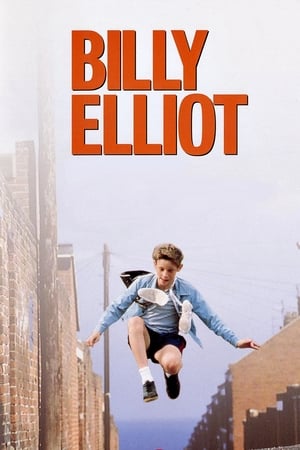
County Durham, England, 1984. The miners' strike has started and the police have started coming up from Bethnal Green, starting a class war with the lower classes suffering. Caught in the middle of the conflict is 11-year old Billy Elliot, who, after leaving his boxing club for the day, stumbles upon a ballet class and finds out that he's naturally talented. He practices with his teacher Mrs. Wilkinson for an upcoming audition in Newcastle-upon Tyne for the royal Ballet school in London.
A group of 12 teenagers from various backgrounds enroll at the American Ballet Academy in New York to make it as ballet dancers and each one deals with the problems and stress of training and getting ahead in the world of dance.
When rebellious street dancer Andie West lands at the elite Maryland School of the Arts, she finds herself fighting to fit in while also trying to hold onto her old life. When she joins forces with the school's hottest dancer, Chase Collins, to form a crew of fellow outcasts to compete in Baltimore's underground dance battle The Streets.
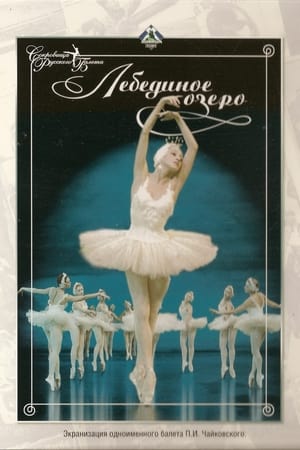
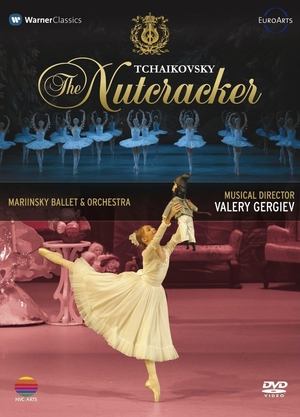
The classic Mariinsky (Kirov) production of the greatest of all ballets. Filmed in the imperial splendor of the Mariinsky Theatre, St Petersburg. Starring Ulyana Lopatkina, Danila Korsuntsev and the breathtaking Mariinsky corps de ballet. Conducted by the great Russian maestro Valery Gergiev.
The film recording of the ballet performance of the State Theatre in Brno was expensively realized in a theatrically stylized set built in the Barrandov studios. The original ballet music by Václav Trojan, based on Shakespeare's fairy tale comedy, was preceded by incidental music for theatre and radio, and in particular the soundtrack to Jiří Trnka's feature-length puppet film A Midsummer Night's Dream.
Two playwrights and a former burlesque queen travel to Louisiana to research a musical they're planning on a local Southern hero.
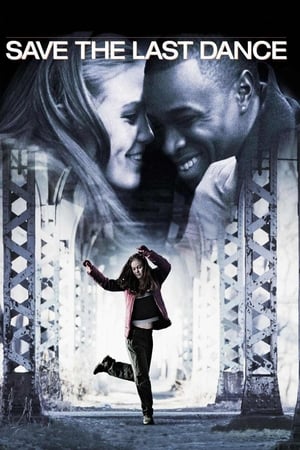
After the death of her mother, Sara moves to the South Side of Chicago to live with her father and gets transferred to a majority-black school. Her life takes a turn for the better when befriends Chenille and her brother Derek, who helps her with her dancing skills.
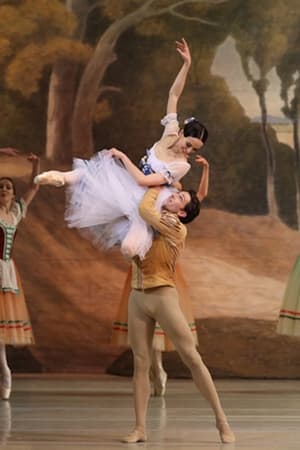
The peasant girl Giselle discovers the true identity of her lover Albrecht – and that he is promised to another. This is one of The Royal Ballet’s most loved and admired productions, faithful to the spirit of the 1841 original yet always fresh at each revival. This performance features former Bolshoi star and now Royal Ballet Principal Natalia Osipova in a breath-taking interpretation of the title role.
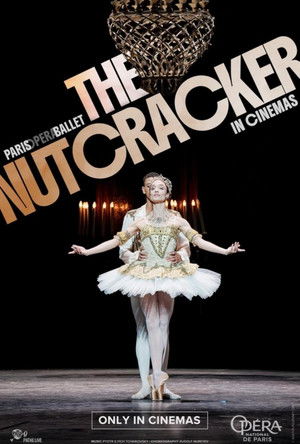
The Nutcracker is Mikhail Baryshnikov's breathtaking and critically acclaimed Emmy-nominated production. This spectacular performance is danced by the magnificent team of Baryshnikov, one of the greatest classical dancers of the century, and Gelsey Kirkland, both showcased at the peak of their careers, with members of the American Ballet Theatre.
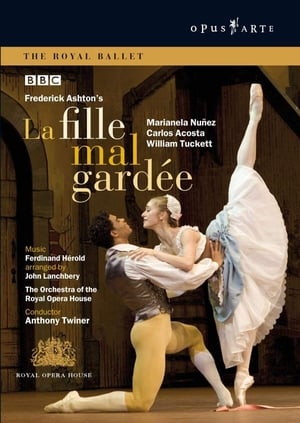
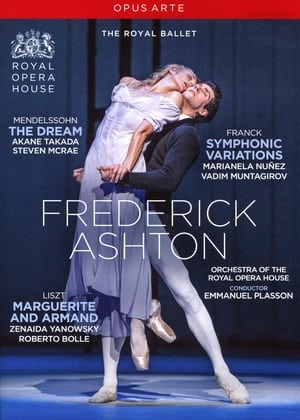
Frederick Ashton's La Fille mal gardée (The Wayward Daughter) is one of the choreographer's most joyous and colourful creations. Inspired by his love for the Suffolk countryside, the ballet is set on a farm and tells a story of love between Lise, the daughter of Widow Simone, and Colas, a young farmer. It contains some of Ashton's most stunning choreography, most strikingly in the series of energetic pas de deux that express the youthful passion of the young lovers, performed here by Natalia Osipova and Steven McRae. The ballet is laced with exuberant good humour, and elements of national folk dance, from dancing chickens and a maypole dance to a Lancashire clog dance for Widow Simone, performed by Philip Mosley.
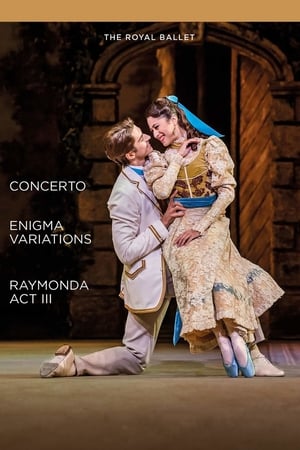
Ballet performance by The Royal Ballet, recorded at Covent Garden, London, United Kingdom, July 1984.
Franz Schubert's "Winterreise" is considered the pinnacle of German art song. Hans Zender (1936 - 2019) arranged the cycle in 1993, and his version for tenor and small orchestra brings to light emotions that pulsate beneath the surface in Schubert. Similar to Hans Zender, the choreographer Christian Spuck is also concerned with a journey into the interior of the human being.
A small-town shoemaker with a knack for spinning yarns, Hans encounters happiness and heartbreak on his road to becoming a full-fledged writer.
The wicked fairy Carabosse is furious she wasn’t invited to Princess Aurora’s christening. She gives the baby a spindle, saying that one day the Princess will prick her finger on it and die. The Lilac Fairy makes her own christening gift a softening of Carabosse’s curse: Aurora will not die, but will fall into a deep sleep, which only a prince’s kiss will break. The masterful 19th-century choreography of Marius Petipa is combined with sections created for The Royal Ballet by Frederick Ashton, Anthony Dowell and Christopher Wheeldon. Recorded live as part of the Royal Opera House Live Cinema Season 2019/20 with encore screenings broadcast online during the #OurHousetoYourHouse programme.
The Royal Ballet presents the world premiere of Cathy Marston's first work for the Company on the Main Stage alongside a revival of Jerome Robbins’s timeless classic of pure dance. The Cellist is a one-act ballet about British cellist Jacqueline du Pré, from her discovery of the cello through her celebrity as one of the most extraordinary players of the instrument to her frustration and struggle with multiple sclerosis. Jerome Robbins's Dances at a Gathering is a fluid exercise in pure dance for five couples, set to piano music by Fryderyk Chopin.
The film traces Sam McKinlay’s early days as a punk skateboarder through his academic development as a conceptual artist into a highly esteemed noise practitioner whose work bridges the gap between the gallery world and the sleaze of exploitation film imagery. It documents the physical processes of his work and the distillation of visuals into sound, most notably addressing the appeal of abstraction—from the cheap effects of old monster movie makeup to the ‘masks’ created by the heavy cosmetic makeup of 1920s flapper culture and actresses like Pamela Stanford in Jess Franco’s Lorna the Exorcist (The Rita has albums or EPs named after several eurotrash actresses, including The Nylons of Laura Antonelli (2009) and Monica Swinn/Pamela Stanford (2016)).
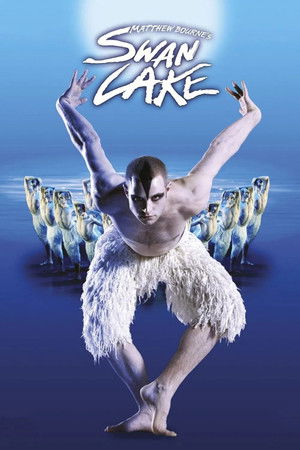
This thrilling, audacious, and witty production is perhaps still best known for replacing the female corps-de-ballet with a menacing male ensemble, which shattered convention, turned tradition upside down and took the dance world by storm. Filmed Live at Sadler's Wells.
Live broadcast of an acrobatic light show by a Czech contemporary circus troupe from the end of the Letní Letná festival... The Czech troupe Losers Cirque Company is definitely on par with many foreign troupes in the field of contemporary circus. This is evidenced by the highly successful premiere of the performance Kolaps (Collapse), which took place at the end of the Letní Letná festival on August 31, 2017. The great strength of Kolaps lies not only in its physical and acrobatic perfection, but also in its subtle humor, play with light, and live music. That is why this amusing performance, which depicts human life from birth to death, is returning to Letní Letná this year. Czech Television is delighted to be involved, not least because it will be the first complete performance by a Czech company in this genre to be shown on our screens.
Swanhilda notices her fiancee Franz is infatuated with the beautiful Coppélia who sits reading on her balcony each day. Nearly breaking up the two sweethearts, Coppélia is not what she seems and Swanhilda decides to teach Franz a lesson… The Bolshoi’s unique version of Coppélia exhibits a fascinating reconstruction of the original 19th century choreography of this ebullient comedy involving a feisty heroine, a boyish fiancee with a wandering eye, and an old dollmaker. The company’s stunning corps de ballet shines in the divertissements and famous “dance of the hours,” and its principals abound in youthful energy and irresistible humor in this effervescent production.
Matthew Bourne choreographs this version of Tchaikovsky's ballet performed at Sadler's Wells Theatre. Bourne sets the first part of the story in 1890, the year in which Tchaikovsky completed his version of Charles Perrault's classic fairy tale, with Beauty pricking herself on the poisoned rose in 1911 and awakening 100 years later in the contemporary world.