Based on the life of Sam Manekshaw, who was the Chief of the Army Staff of the Indian Army during the Indo-Pakistani War of 1971, and the first Indian Army officer to be promoted to the rank of Field Marshal.
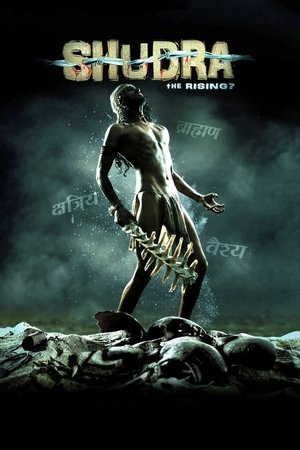
Shudra: The Rising is a Hindi language film with a storyline based on the caste system in ancient India, and more specifically the Hindu Varna system. It is directed by Sanjiv Jaiswal and dedicated to Bhim Rao Ambedkar. The film depicts the four basic units of the caste system - the Brahmins, Kshatriyas, Vaishyas and the Shudras. The film shows various rules imposed on the Shudras such as waking with a bell around their ankles and a long leaf behind their back,and a pot hanging around their neck.
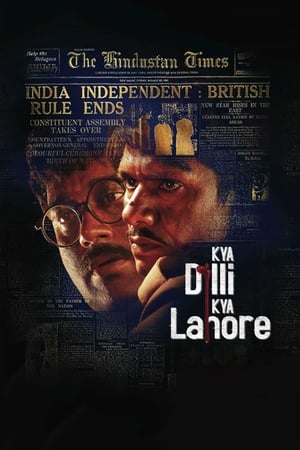
In 1948, a cross-fire erupts at an isolated stretch of Indo-Pak border, leaving only two soldiers alive. One is an Indian soldier of Pakistani origin while the other happens to be a Pakistani soldier of Indian origin. An ironic story of pride and survival begins when - in an attempt to evade danger, they bump into each other. And amidst continuous exchange of bullets, altercations and murkier situations, it evolves into a journey of human connection with an unforeseeable end.
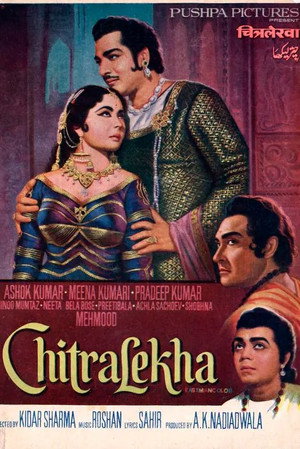
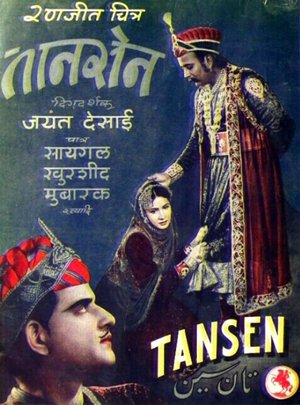
Renowned, talent singer Tansen is settled in a small village. He has a lover whom he loves madly namely Tani. His singing talent pampers everyone in his village namely the animals, the Maharaja's and other living organisms.
Shivaji's death sparks the Maratha-Mughal conflict. His son Sambhaji leads resistance against Aurangzeb's forces. Amid battles and intrigue, both sides face challenges in a struggle for power.
Children of War is a movie based on the true events of the 1971 Genocide. Can we, in search of power, become animals? A genocide; neglected! The first use of rape as a weapon of war; undocumented! The lives of millions; unaccounted! The culprits; unpunished!
The film chronicles the ascent of Shivaji, the great Maratha warrior who fought for liberty from the erstwhile Muslim rulers in order to establish a secular Hindu kingdom.
During the Japanese invasion of China, a young Indian doctor joins the Chinese resistance, meets and courts a Chinese girl, cures a virulent plague, and is captured by a Japanese platoon...
The year is 1893 and India is under British occupation. In a small village, the tyrannical Captain Russell has imposed an unprecedented land tax on its citizens. Outraged, Bhuvan, a rebellious farmer, rallies the villagers to publicly oppose the tax. Russell offers a novel way to settle the dispute: he challenges Bhuvan and his men to a game of cricket, a sport completely foreign to India. If Bhuvan and his men can defeat Russell's team, the tax will be repealed.
Unable to live in his father's gigantic shadow, Mahatma Gandhi's eldest son, Harilal, gets distraught and resorts to alcoholism.
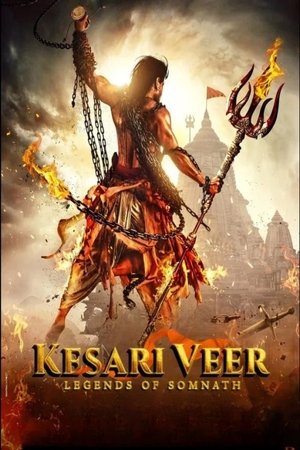
The movie narrates the tale of Hamirji Gohil, a brave warrior who fought against the Tughlaq Empire to protect the Somnath Temple and the Hindu faith.
The story of two families — one Muslim and one Hindu — living together in India under British rule.
In 1897, an army of 21 Sikhs battles 10,000 Afghans to prevent the Saragarhi Fort from being taken down.
Bhagat Singh, a freedom fighter, is arrested for killing the British official responsible for the death of his mentor Lala Lajpatrai. He is ultimately hanged for his misdeed.
In 1895, Shivkar Bapuji Talpade constructs and flies India's first unmanned plane, despite having the odds stacked against him.
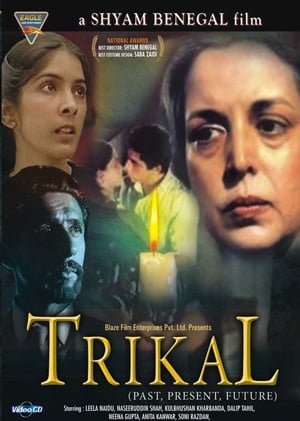
The story is based in Banaras and is about a Hindu Priest Chaturvedi who follows the scriptures to practice Hindu religion. When a child is abandon by a woman and brought in his house by his daughter - after initial hesitation but due to requests from his wife - the family adapts the child; only to know after 4 years that the child is a Muslim. The family gives away the child and Chaturvedi engulfs himself in the purification process to cleanse his body, mind and soul due to contact with a Muslim soul. By the time, Chaturvedi thinks he is fully purified – the child reappears – seeking refuge, due to Hindu- Muslim riots. This is the time Chaturvedi finally realizes that the true religion is - religion where humans help humans – humanity.
The ancient Indian temples of Khajuraho are known worldwide for their erotic depictions and fantastical statues. The famous Indian treatise on love, the Kama Sutra, was significantly inspired by these forms. This film captures the charm of this place and tells a uniquely exotic and wonderfully romantic love story, set around the site of the heavenly temple of Khajuraho, between the tradition-conscious Mukta and Naveen, who lives in Europe. Despite the obstacles, will Mukta ultimately return Naveen's love and love him wholeheartedly...?
A student whose parents died in the Gujarat pogrom receives an assignment on the same topic at his university. During his research, he meets everyone associated with the commission and tries to uncover various other aspects.
After giving birth to Bhagwan Shri Kartiyeke, Devi Maa Parvati forms a child-human image from clay, adopts him, and asks him to guard the house and not let anyone in while she bathes. The child refuses to let anyone in, including Bhagwan Shivji himself, who beheads him. When a tearful Parvatiji pleads, Shivji brings the child back to life with the head of an elephant, and names him Gajanand, and assures him that no one will make fun of him.
The video depicts the war of ideologies between Mahatma Gandhi and Nathuram Godse, increasing the curiosity level amongst the viewers to watch the film.