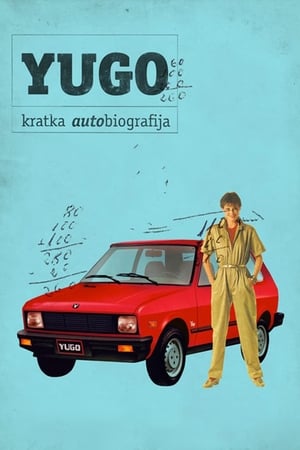
Bosnian Croat writer Miljenko Jergović and Serbian writer Marko Vidojković replace one another by the steering wheel of Yugo, a symbol of their common past while driving on the Brotherhood and Unity Highway that stretched across five of six republics of Yugoslavia.
A documentary about Goran Ivandic 'Ipe', the drummer of most popular Yugoslav rock band of all time, Sarajevo-based "Bijelo dugme" (White Button). Ivandic's fatal jump from the balcony of hotel Metropol in Belgrade in 1994 sparked much controversy around his fate.
A documentary focused on right wing populist Geert Wilders, called The Dutch Donald Trump, as he runs for Prime Minister of the Netherlands.
The First Year tells the inside story of Jamie Driscoll’s first 12 months as the new North of Tyne Mayor.
For years, there has been an effort to discover the exact origin of the most popular American grape variety and wine, Zinfandel. Thanks to modern technology, forensics, and DNA analysis, the collaboration between American and Croatian laboratories has born fruit: Zinfandel is the Croatian Crljenak Kaštelanski.
Kytice díků
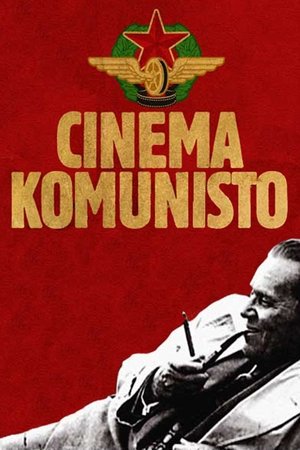
For Serbian filmmaker Mila Turajlic, a locked door in her mother's apartment in Belgrade provides the gateway to both her remarkable family history and her country's tumultuous political inheritance.
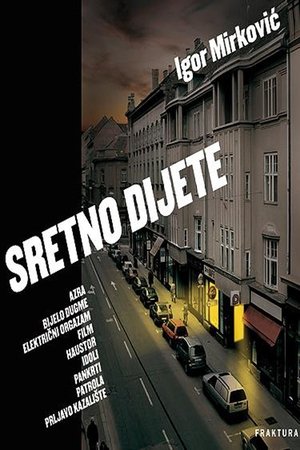
Petar Peca Popović is one of the greatest, most famous, most authoritative and for sure, the best, connoisseur of Rock and Roll in the former Yugoslavia. He promoted Rock and Roll in those heroic times. We are going on a peculiar kind of trip with him, along an "emotional homeland", of ex-Yu, "searching for the lost times" and dear friends, the most significant representatives of this culture - rock'n'roll legends.
In 2004 X1 Sports took a band of intrepid climbers to Croatia . Their mission was to find some of the best and unknown rock in the Europe ; the reason, well to see if they could Deep Water Solo off it of course. With some of the best climbers in the world, Chris Sharma, Steve McClure, Leo Holding, Depth Charge charts their progress and antics as they look to challenge their limits each and every day. Depth Charge is an on the wall documentary of their every move and allows the viewer to see exactly what makes a climber tick.
Documentary about the independence and history of Latin America.
One of Norway's most promising politicians is close to becoming the next prime minister, until scandalous stories of his past surface in the wake of the #MeToo movement. Director Håvard Bustnes sets out to make a film about him, but over time, he himself gets more and more drawn into Giske's publicity campaign.
From falsehood to mystification to manipulation and false impartiality, the whole logic of disinformation and brutality is brought to light. When the king of the media and his politico-journalistic buffoons are sifted by a radical counter-audiovisual power, the discredit of the "elites" sanctioned by the referendum of May 29, 2005 is better understood. With this film, Zalea TV's team had decided to laugh about it and make them laugh, even if at bottom these discoveries were rather disturbing. By staging a series of very simple techniques of "self-defense", this film is an invitation to self-disengage permanently. The use of the TV-B Gone, an instrument whose sole function is to turn off the television, appears here as the ultimate resort to media criticism.
A portrait of environmental folk hero & gay icon Bob Brown, who took green politics to the center of power. His story is interwoven with the life cycle of the ancient trees he's fighting for.
The film is a controversy on democracy. Is our society really democratic? Can everyone be part of it? Or is the act of being part in democracy dependent to the access on technology, progression or any resources of information, as philosophers like Paul Virilio or Jean Baudrillard already claimed?
Les présidents et le sport
The band Fugazi is documented over a period of more than ten years (1987-1998) through performance footage and interviews with the band and their fans. Director Jem Cohen's relationship with band member Ian MacKaye extends back to the 1970s when the two met in high school in Washington, D.C.. The film takes its title from the Fugazi song of the same name, from their 1993 album, In on the Kill Taker. Editing of the film was done by both Cohen and the members of the band over the course of five years. It was shot from 1987 through 1998 on super 8, 16mm and video and is composed mainly of footage of concerts, interviews with the band members, practices, tours and time spent in the studio recording their 1995 album, Red Medicine. The film also includes portraits of fans as well as interviews with them at various Fugazi shows around the United States throughout the years.
"Africa Light" - as white local citizens call Namibia. The name suggests romance, the beauty of nature and promises a life without any problems in a country where the difference between rich and poor could hardly be greater. Namibia does not give that impression of it. If you look at its surface it seems like Africa in its most innocent and civilized form. It is a country that is so inviting to dream by its spectacular landscape, stunning scenery and fascinating wildlife. It has a very strong tourism structure and the government gets a lot of money with its magical attraction. But despite its grandiose splendor it is an endless gray zone as well. It oscillates between tradition and modernity, between the cattle in the country and the slums in the city. It shuttles from colonial times, land property reform to minimum wage for everyone. It fluctuates between socialism and cold calculated market economy.
Harvey Milk was an outspoken human rights activist and one of the first openly gay U.S. politicians elected to public office; even after his assassination in 1978, he continues to inspire disenfranchised people around the world.
The story of the Yugoslavian football team who became youth world champions in Chile, 1987.
An anti-war documentary featuring original on-the-ground footage and interviews from the 1999 NATO war against the Federal Republic of Yugoslavia. Watch the 78 days of untold destruction, bombing bridges, hospitals, schools, and dropping up to 11 tons of depleted uranium across the country that NATO considers a successful “humanitarian intervention” in Yugoslavia. Filmmaker Gloria La Riva lifts the veil of imperialist propaganda to reveal the humanitarian crisis caused by the war.