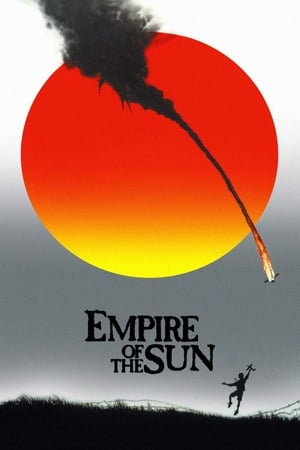
A dying man in his forties recalls his childhood, his mother, the war and personal moments that tell of and juxtapose pivotal moments in Soviet history with daily life.
Inspired by true events from the spring of 1944 when the Nazis organized a football match between a team of camp inmates and an elite Nazi team on Adolf Hitler's birthday. A match the prisoners are determined to win, no matter what happens.
After World War II, Antonia and her daughter, Danielle, go back to their Dutch hometown, where Antonia's late mother has bestowed a small farm upon her. There, Antonia settles down and joins a tightly-knit but unusual community. Those around her include quirky friend Crooked Finger, would-be suitor Bas and, eventually for Antonia, a granddaughter and great-granddaughter who help create a strong family of empowered women.
Dictator Adenoid Hynkel tries to expand his empire while a poor Jewish barber tries to avoid persecution from Hynkel's regime.
Austrian mountaineer Heinrich Harrer journeys to the Himalayas without his family to head an expedition in 1939. But when World War II breaks out, the arrogant Harrer falls into Allied forces' hands as a prisoner of war. He escapes with a fellow detainee and makes his way to Lhasa, Tibet, where he meets the 14-year-old Dalai Lama, whose friendship ultimately transforms his outlook on life.
In the early years of the 20th century, Mohandas K. Gandhi, a British-trained lawyer, forsakes all worldly possessions to take up the cause of Indian independence. Faced with armed resistance from the British government, Gandhi adopts a policy of 'passive resistance', endeavouring to win freedom for his people without resorting to bloodshed.
Filmmaker Alain Resnais documents the atrocities behind the walls of Hitler's concentration camps.
The classic story of English POWs in Burma forced to build a bridge to aid the war effort of their Japanese captors. British and American intelligence officers conspire to blow up the structure, but Col. Nicholson, the commander who supervised the bridge's construction, has acquired a sense of pride in his creation and tries to foil their plans.
A Russian and a German sniper play a game of cat-and-mouse during the Battle of Stalingrad in WWII.
Gustave Folcher, a French farmer, wrote in his 1939 diary that the summer had been long and hot. He was not alone. Many other anonymous French men and women wrote of the beauty and warmth of those summer months and how threats of war were far from their minds. Through home movies, diaries and letters, One Last Summer describes the final weeks of peace in France and the mix of blindness, denial and prophetic clear-sightedness of those facing the war that was about to unfold.
In 1947, four German judges who served on the bench during the Nazi regime face a military tribunal to answer charges of crimes against humanity. Chief Justice Haywood hears evidence and testimony not only from lead defendant Ernst Janning and his defense attorney Hans Rolfe, but also from the widow of a Nazi general, an idealistic U.S. Army captain and reluctant witness Irene Wallner.
As U.S. troops storm the beaches of Normandy, three brothers lie dead on the battlefield, with a fourth trapped behind enemy lines. Ranger captain John Miller and seven men are tasked with penetrating German-held territory and bringing the boy home.
At a village railway station in occupied Czechoslovakia, a bumbling dispatcher’s apprentice longs to liberate himself from his virginity. Oblivious to the war and the resistance that surrounds him, this young man embarks on a journey of sexual awakening and self-discovery, encountering a universe of frustration, eroticism, and adventure within his sleepy backwater depot.
The untold story of a Royal "propagandist in pearls" whose wartime friendship with President Roosevelt became a vital catalyst to win back freedom for her tiny occupied country.
Shortly after the end of the Second World War, Josef Mengele, the Nazi doctor who had practiced in the Auschwitz extermination camp, managed to escape from Germany. With the help of SS soldiers and the support of wealthy South American families, he went into hiding in Argentina. From Buenos Aires to Paraguay, with stops in the Brazilian jungle, the so-called Angel of Death organized his methodical disappearance and escaped any form of trial.
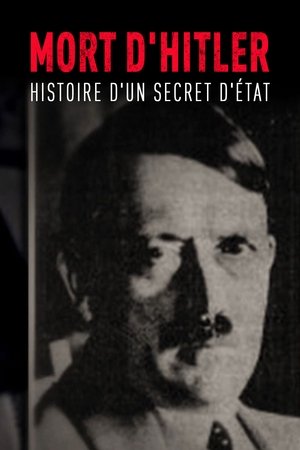
On April 30, 1945, while the Russian Army surrounded Berlin, Hitler committed suicide in his bunker. His body was discovered a few days later by the Soviets. He would be positively identified after a top secret inquest in which Hitler's personal dentist would play a central role. And yet, at the same time, Stalin publicly declared that his army was unable to find the Führer's body, choosing to let the wildest rumors develop and going so far as to accuse some of his Allies of having aided the monster's probable escape. What secrets were hidden behind this dissimulation? What happened then to the two ladies involved in the identification of Hitler’s body?
The Polish city of Łódź was under Nazi occupation for nearly the entirety of WWII. The segregation of the Jewish population into the ghetto, and the subsequent horrors are vividly chronicled via newsreels and photographs. The narration is taken almost entirely from journals and diaries of those who lived–and died–through the course of the occupation, with the number of different narrators diminishing as the film progresses, symbolic of the death of each narrator.
De Gaulle, l'homme à abattre
A film that relates the trial in Bordeaux in January 1953 of some of the participants in the Oradour-sur-Glane massacre of June 10, 1944.
While Nazi ideology dominated Europe, Adolf Hitler used all dogmas to his advantage and fed the cult of his personality. How did the Führer manage to transform the Bible, the Church and the symbols of Christianity into instruments of power, winning the support of the Germans? This documentary traces the rise of a little-known theological organization: the “German Christians”, which became the most powerful propaganda tool of the Third Reich.