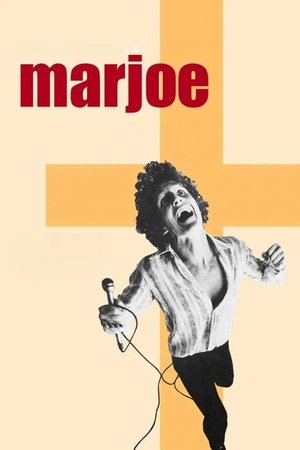
A chaotic film featuring the Grateful Dead. The songs that are included are Sitting on Top of the World, Good Morning Little Schoolgirl, Cold Rain and Snow, and something that might be Viola Lee Blues. Preserved by the Academy Film Archive in 2007.
Impoverished priest Harihar Ray, dreaming of a better life for himself and his family, leaves his rural Bengal village in search of work. Alone, his wife, Sarbojaya, looks after her rebellious daughter, Durga, and her young son, Apu, as well as Harihar's elderly aunt Indir. The children enjoy the small pleasures of their difficult life, while their parents suffer the daily indignities heaped upon them.
Les Blank's poetic documentation of 1967's Los Angeles Easter Sunday Love-In. Preserved by the Academy Film Archive in 2002.
The Town was a short propaganda film produced by the Office of War Information in 1945. It presents an idealized vision of American life, shown in microcosm by Madison, Indiana. It was created primarily for exhibition abroad, to provide international audiences a more well-rounded view of America, and was therefore produced in more than 20 translations. Preserved by the Academy Film Archive in 2012.
African-American Philadelphia police detective Virgil Tibbs is arrested on suspicion of murder by Bill Gillespie, the racist police chief of tiny Sparta, Mississippi. After Tibbs proves not only his own innocence but that of another man, he joins forces with Gillespie to track down the real killer. Their investigation takes them through every social level of the town, with Tibbs making enemies as well as unlikely friends as he hunts for the truth.
An uptight English writer traveling to Crete on a matter of business finds his life changed forever when he meets the gregarious Alexis Zorba.
Primary is a documentary film about the primary elections between John F. Kennedy and Hubert Humphrey in 1960. Primary is the first documentary to use light equipment in order to follow their subjects in a more intimate filmmaking style. This unconventional way of filming created a new look for documentary films where the camera’s lens was right in the middle of what ever drama was occurring. Preserved by the Academy Film Archive in partnership with The Film Foundation in 1998.
As the railroad builders advance unstoppably through the Arizona desert on their way to the sea, Jill arrives in the small town of Flagstone with the intention of starting a new life.
Wallace rents out Gromit's former bedroom to a penguin, who takes up an interest in the techno trousers created by Wallace. However, Gromit later learns that the penguin is a wanted criminal.
Wallace's whirlwind romance with the proprietor of the local wool shop puts his head in a spin, and Gromit is framed for sheep-rustling in a fiendish criminal plot.
After being discredited as a coward, a 19th century seaman lives for only one purpose: to redeem himself. Preserved by the Academy Film Archive in partnership with Sony Pictures Entertainment in 2000.
‘A beautiful, mysterious yet satisfying optical illusion…celebrates the early passing of a steam on the Thames. Using freeze-frame techniques, elaborate dissolves, and most of the resources on the optical table, this picture is, amongst other things, a Turner come to life. Rimmer’s concern with the surface nature of the film is most evident in this work which, in spite of its filmic complexity, is incredibly simple.’ — Donald Richie. Preserved by the Academy Film Archive in partnership with Pacific Cinematheque in 2013.
A lyrical recreation of Lightnin’ Hopkins’ decision at age eight to stop chopping cotton and start singing for a living. Preserved by the Academy Film Archive in 2013.
"Patton" tells the tale of General George S. Patton, famous tank commander of World War II. The film begins with Patton's career in North Africa and progresses through the invasion of Germany and the fall of the Third Reich. Side plots also speak of Patton's numerous faults such his temper and habit towards insubordination.
While filing for a divorce, beautiful ex-stripper Roslyn Taber ends up meeting aging cowboy-turned-gambler Gay Langland and former World War II aviator Guido Racanelli. The two men instantly become infatuated with Roslyn and, on a whim, the three decide to move into Guido's half-finished desert home together. When grizzled ex-rodeo rider Perce Howland arrives, the unlikely foursome strike up a business capturing wild horses.
Kris Kringle, seemingly the embodiment of Santa Claus, is asked to portray the jolly old fellow at Macy's following his performance in the Thanksgiving Day parade. His portrayal is so complete that many begin to question if he truly is Santa Claus, while others question his sanity.
Using clips from several unidentified films of the preceding decade, featuring many well-known stars of the day, this short demonstrates that an endless variety of music to entertain all tastes can be heard when you go to the movies. Preserved by the Academy Film Archive in 2012.
Begins as a whimsical piece with 'sheets' of lines running down the screen, progressing into more and more complex geometic patterns but without deviating from the basic precepts of 'dot and line' animation. Jazz piano on a lazy Sunday afternoon, and a spring color palette. -- Stephanie Sapienza. Preserved by the Academy Film Archive in 2001.
A collaborative piece by Gore and Beckett, the film begins with one of Gore's characters composing a letter, to eventual mail it. Beckett's animation takes over at this point, transforming the envelope into a looping, cascading form that seems to be perpetually turning itself inside out. A brief Gore finale bookends the piece, which is one of only two extant examples of Gore's unique animation work. This film is usually appended to Gore's own Dream of the Sphinx. [Source: Mark Toscano] Preserved by the Academy Film Archive in partnership with CalArts in 2009.
Optical printing pioneer Pat O’Neill uses “his skills in special effects production to extrapolate metaphysical meaning from the ordinariness of industrialized culture” (Scott Stark). In O’Neill’s playful film, “trouble in the image” may take the form of a disturbing moment in a narrative, how-to instructions for creating an image, or pictures that break apart and lose their literal meaning. O'Neill: “The film [is] made up of dozens of performances dislodged from other contexts. These are often relocated into contemporary industrial landscapes, or interrupted by the chopping, shredding, or flattening of special-effects technology turned against itself. The reward is to be found in immersion within a space of complex and intricate formal relationships”. Preserved by the Academy Film Archive in 2016.