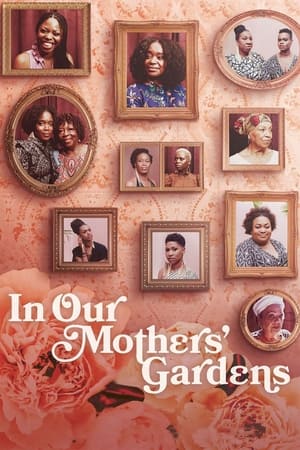
In Our Mothers' Gardens celebrates the strength and resiliency of Black women and Black families through the complex, and often times humorous, relationship between mothers and daughters.
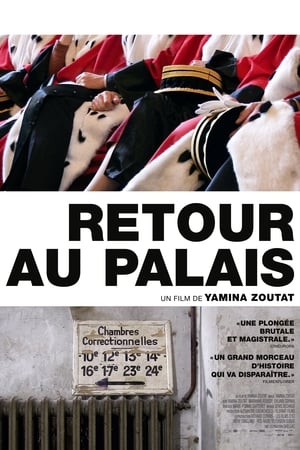
Located on the île de la Cité, in the middle of the Seine, the Paris Law Court looks like an impenetrable fortress. Like Kafka’s castle, it guards its secrets well. It is the place of power. The filmmaker, who worked there for several years as a crime reporter, is extremely familiar with its labyrinthine spaces, its practices, its ceremonies. She comes back to it now, while the Courthouse, such as she knows it, is about to disappear: its relocation is planned in 2017. So, she explores it, camera in hand, on the traces of her experience.
A farming community organizes to obtain hydro power under Manitoba's rural electrification plan. Energetic canvassing wins over those hesitant to share, for the good of all, the initial expense. The abundant return in comfort, convenience, efficiency and financial advantage is described in concluding sequences.
The Hague, the International Criminal Tribunal for the former Yugoslavia: Two ambitious lawyers face each other in the trial of Milorad Krstić, who’s accused of committing war crimes as a commander in the Bosnian war. The defender, Mikhail Finn, has managed to refute all the accusations against his client. Convinced of Krstic´s guilt, Catherine Lagrange, the prosecutor, summons a young man with incriminating evidence against Krstić. He claims to have been abandoned by his parents as a child and to have been one of Krstić’s soldiers. Defender Finn starts to investigate in order to verify the witness’ testimony – and soon encounters the young man’s family. Inspired by a true story.
The economists behind the implementation of the most extreme capitalist system in the world observe with surprise the discontent of its countrymen. For the first time, they tell the story of how they became Milton Friedman's students in Chicago in the 1950s and what were they willing to do to pursue their extreme economic ideas, aided by Pinochet's dictatorship in the 70s. Unseen images and testimonies that allow us to understand the historic process that transformed the Chilean people and Chile in the country that it is today, an image of success and discontent.
When a feminist filmmaker sets out to document the mysterious and polarizing world of the Men’s Rights Movement, she begins to question her own beliefs. Chronicling Cassie Jaye’s journey exploring an alternate perspective on gender equality, power and privilege.
A matter-of-fact documentary of the massacre of over 300,000 Chinese civilians by the Japanese in the so-called 'Rape of Nanjing' in 1937. In the name of the Japanese emperor Hirohito, the desperate soldiers, enraged by intense Chinese resistance, stormed the then capitol of China and over a six week period systematically raped, tortured, and killed many of the inhabitants of that city. This is a matter-of-fact although polemical documentary, with many of the horrifyingly intense images taken from home movies made by an American missionary who was there.
An account of the life and work of the charismatic Spanish writer Terenci Moix (1942-2003).
A portrait of the internationally acclaimed Spanish film director Isabel Coixet and an analysis of her particular world and her sensibility as a creator: her fictional universe, her career and her life through the words of actors, technicians, family, friends, journalists, specialized critics and those filmmakers who have been inspired by her work.
This short documentary is a celebration of life on planet Earth. Made from haunting visual images selected from 50 years of NFB productions, the film looks at human beings, their place on earth, and their deep interconnection with all other beings. Evocations of forces that threaten the planet and all its inhabitants also offer avenues for reflection.
Examines the resilience of residents who are profoundly overlooked by media representations and wider social responses. Interweaving intimate portraits with the residents' own historical re-enactments, landscape and architectural studies and dramatised scenes, the film asks how we might resist being framed exclusively through class, gender, ability or disability, and even through geography.
As described by Oliver Sykes, "The most offensive, vulgar, awkward, retarded band DVD of all time. But also the funniest and the best."
The portrait of a community as they face their country's economic recession.
Chronicles the adventurous life of Hungarian-born Jewish lawyer Benjamin Ferencz, who fled to the USA as a child and later became chief war crime prosecutor in the Nuremberg Trials of 1945-1949 and one of the founding members of the International Criminal Court, which entered into force in 2002.
This first-person documentary provides an inside look into the terrifying and bloody events that shook Central Europe in the 1990s, as the filmmaker takes a trip along the road that once united the disparate states of Yugoslavia, from Slovenia to Macedonia. A film about memory, hatred, love and hope.
A documentary about the efforts taken to revitalize the Wampanoag language, which almost died out.
Starting from its source, this film tells the story of the Orquil Burn, Orkney.
When Bill Babbitt realizes his brother Manny has committed a crime he agonizes over his decision to call the police.
Chronicles the largest rape tribunal in Congo's history, offering an unprecedented glimpse into the lives of its women and the unshakable strength of the human spirit.
We live in a new age. We are always rushing, rushing for no reason, rushing for nothing. As though time had sped up. Everything implies speed, urgency. But ultimately, why does time seem so short? This film is about the director’s conflict about time and the lack of it in today’s world; she reflects on civilization and the future of existence.