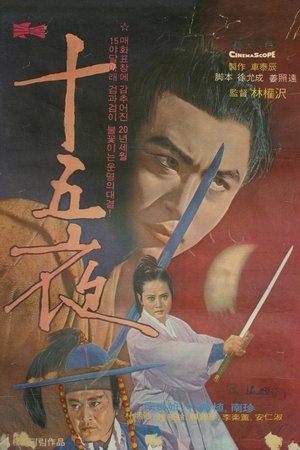
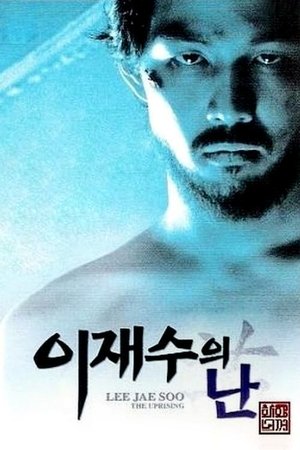
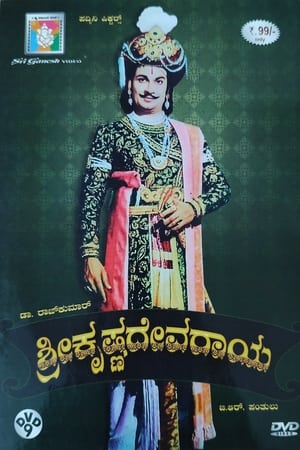
In an Edo-period retelling of "City Lights", Iyami, a poor beggar, befriends a flower-selling blind young girl. Through the ups and downs of their friendship, Iyami strives to find a way to make her see again.
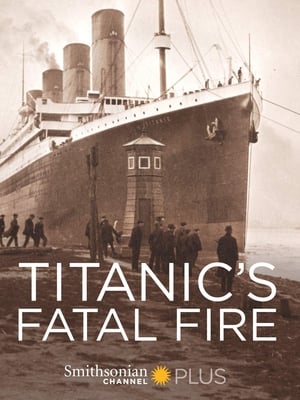
The sinking of the RMS Titanic remains one of the most enduring and mysterious tragedies of the 20th century. For decades, investigators and amateurs alike have floated theories for why it occurred and who was to blame for the extraordinary loss of life, but no one answer could fully explain what happened. Until now. To mark the 100th anniversary of the infamous disaster, Smithsonian Channel will premiere Titanic's Final Mystery. The two-hour special investigates a century of theories and uncovers astonishing new forensic evidence that proves the most likely theory for the case.
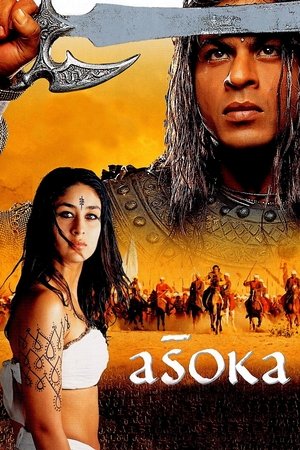
A young Prince Asoka works to perfect his skills in battle and also deals with family conflict. During a struggle with one of his step-brothers, his mother urges Asoka to escape to stay alive. While away, Asoka meets Kaurwaki and falls in love, but must use his skills as a warrior to protect her. A dangerous and heartbreaking web of conspiracy follows, which leads Asoka to embrace a Buddhist path.
In the final days of the American Civil War, an emigre Hungarian military officer attempts to map the situation of the enemy. Many veterans of the 1848 War of Independence in Hungary fought on the northern side. Experienced Fiala, Boldogh who struggles with homesickness and the reckless Vereczky all experience their enforced emigration in different ways and news of impending peace elicits different reactions from them all.
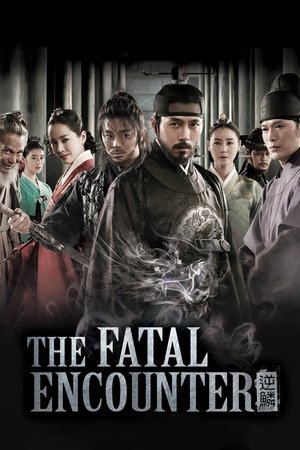
In a remote mountain village of 15th-century Joseon, humble headman Heung-do hears a rumor that any village hosting an exiled nobleman will be blessed with abundance and fortune. Hoping to bring prosperity to his impoverished community, he eagerly submits a petition to host one—unaware that his guest is none other than the fallen monarch, deposed boy-king Danjong.
During the early 16th century, idealistic German monk Martin Luther, disgusted by the materialism in the church, begins the dialogue that will lead to the Protestant Reformation.
Alexander, the King of Macedonia, leads his legions against the giant Persian Empire. After defeating the Persians, he leads his army across the then known world, venturing farther than any westerner had ever gone, all the way to India.
Ari Ben Canaan, a passionate member of the Jewish paramilitary group Haganah, attempts to transport 600 Jewish refugees on a dangerous voyage from Cyprus to Palestine on a ship named the Exodus. He faces obstruction from British forces, who will not grant the ship passage to its destination.
Kumo no Yuna
Tells the life story of Danish author Karen Blixen, who at the beginning of the 20th century moved to Africa to build a new life for herself. The film is based on her 1937 autobiographical novel.
During the 1937 Nanjing Massacre, a postman poses as a photo developer, helping Japanese forces while secretly sheltering Chinese refugees. He later risks his life evacuating them and revealing evidence of the atrocities.
In mid-19th-century Costa Rica, President Juan Rafael Mora vows to defend his nation from American filibuster and slaver William Walker, who has seized nearby Nicaragua. Flashbacks trace Mora’s rise from reformist coffee planter to national leader, modernizing his family’s plantation with fair wages and new methods. Guided by love, loss, and his cautious brother-in-law, José María Montealegre, Mora builds trade ties with British merchant William Le Lacheur. In 1856, Costa Ricans defeat Walker, but cholera devastates the land. Betrayed by Montealegre, Mora is executed—like Walker—undone by ambition and history’s cruel turns.
A dying man in his forties recalls his childhood, his mother, the war and personal moments that tell of and juxtapose pivotal moments in Soviet history with daily life.
Beginning with Guernica and the Chinese cities of Chongqing and Shanghai in 1937 and ending with the bombing of Hiroshima and Nagasaki in August 1945, World War Two saw a new art of warfare in the form of extensive, worldwide bombing campaigns.
The true story of how businessman Oskar Schindler saved over a thousand Jewish lives from the Nazis while they worked as slaves in his factory during World War II.
After Seonjo passes away, Prince Gwanghae ascends to the throne. But he indulges himself in dissolute orgies, neglecting his duties as the king. Queen Dowager Inmok begs him to behave like a king. But Prince Gwanghae torments her, arguing that she's playing a regent. Queen Dowager cannot help but enduring the king's outrageousness.
Queen Yun reigned with King Sunjong since she was just 13 years old. She hid the royal seals needed to complete an agreement between Korea and Japan which would lead to Korea's annexation. However, her patriotic display wins her many enemies.
A historical drama about the life of Prince Yeonsan of Joseon,.
Late 18th-century Joseon dynasty. The King is beleaguered and surrounded by traitors of the ruling elite. They plan to assassinate and replace him with a puppet. But the King has some aces up his sleeve that may help him defeat them all.
The Color Print of Edo is a 1939 black and white Japanese silent film with benshi accompaniment directed by Kazuo Mori. It is a cheerful period drama, sprinkled with comical scenes and tells the story of a loyal and handsome Edo period servant who fights to help his older brother marry the woman he loves. The star of this film, Utaemon Ichikawa, gained enormous popularity for his portrayal of a cheerful and chivalrous man.